QVC Charts a New Course for its 40th Holiday Season Through Omnichannel Expansion and Social Commerce Innovation

As the retail landscape undergoes a seismic shift toward digital-first engagement, QVC is preparing for a landmark 40th holiday season. The live-shopping pioneer, which has historically relied on the stability of cable television, is pivoting toward a more aggressive, multi-platform strategy that integrates traditional broadcasting with the high-velocity world of TikTok Shop. This transition represents not merely a seasonal marketing push, but a critical effort to stabilize its market position following a year defined by financial restructuring and a strategic pivot toward younger, digital-native demographics.
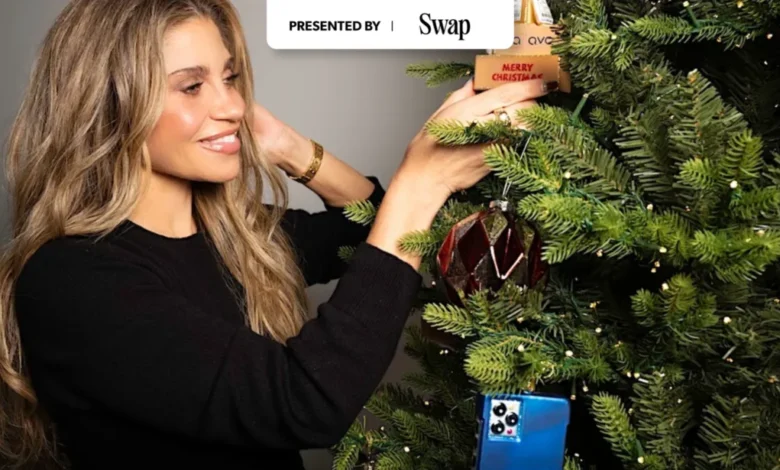
The company’s 2025 holiday strategy is multifaceted, blending legacy brand partnerships with exclusive, creator-led product launches. From November 6 through November 8, QVC will host its "Nonstop Holiday Party," a three-day, 24-hour-per-day programming event designed to catalyze early holiday spending. This event serves as a precursor to the pivotal Black Friday and Cyber Monday period, featuring celebrity appearances from Martha Stewart, John Legend, and Teri Hatcher. To bolster its consumer outreach, the brand has tapped former "Boy Meets World" star Danielle Fishel to portray Mrs. Claus, a move intended to bridge the gap between nostalgic, long-time television viewers and the newer, younger audience segments currently interacting with the brand on social platforms.
A Chronology of Modernization
QVC’s history spans nearly four decades, beginning with its 1986 launch as a revolutionary home-shopping concept. For the first thirty years, the company’s growth was inextricably linked to cable penetration. However, the subsequent rise of streaming services and the cord-cutting phenomenon forced a rapid re-evaluation of its distribution model.
The current strategy is the result of years of trial and error. In early 2025, QVC officially launched a 24/7 live-streaming presence on TikTok Shop, a move that solidified its commitment to social commerce. This milestone was preceded by a difficult financial period for the parent company, QVC Group, Inc. Faced with mounting debt and a shifting retail environment, the organization filed for Chapter 11 bankruptcy in April 2025. Through a comprehensive restructuring process, the company successfully reduced its debt load by more than $5 billion, emerging from the proceedings in August 2025 with a leaner capital structure and a renewed focus on its core digital operations.
Financial Context and Market Performance
The urgency behind QVC’s current innovation is underscored by its financial reporting. For the second quarter ending June 30, 2026, the company reported total net revenue of $1.765 billion, a decline from the $1.984 billion recorded during the same period in the previous year. This revenue compression reflects the ongoing challenge of declining cable viewership. However, the pivot to social commerce has yielded tangible growth in user acquisition. In 2025 alone, QVC and its sibling network, HSN, successfully acquired nearly 1 million new U.S. customers exclusively through TikTok Shop. These customers, many of whom had never interacted with QVC’s television broadcasts or its primary website, represent a vital new cohort for the company’s long-term sustainability.
Operational Integration and Social Strategy
The technical implementation of this hybrid model has required a complete overhaul of QVC’s production facilities. Krystyna Taheri, SVP of social commerce at QVC Group, notes that while the brand continues to produce approximately 60,000 hours of live television annually, the social commerce arm operates on an entirely different rhythm.
"We have 10 live studios specifically built for TikTok," Taheri explains. "The production is fundamentally different. On TV, we might have a seven- to eight-minute segment to build a narrative. On TikTok, we are talking about 20- to 30-second hooks. The set design is scaled down, utilizing mobile devices rather than the full robotics suites found in our primary broadcast studios."
This "test-and-learn" methodology extends to the hosts themselves. QVC is currently utilizing a blend of seasoned television veterans and social media creators. The coaching process for these individuals is rigorous, involving weekly "tape reviews" where producers and hosts dissect engagement metrics—such as click-through rates and conversion efficiency—rather than focusing solely on gross revenue. This data-driven approach allows for near-instant feedback, with hosts like Paulina launching experimental, personality-driven shows such as "Girly Girl Vibes" to test audience resonance in real-time.
Implications for the Retail Industry
QVC’s aggressive adoption of live commerce is being closely watched by the broader retail industry. While many brands have experimented with live shopping, QVC is one of the few legacy entities that has successfully leveraged its existing infrastructure to dominate a social platform. The "flywheel" effect observed by the company—where viewers cross-pollinate between TV, the QVC app, and TikTok—suggests that traditional media and social commerce can exist in a symbiotic relationship rather than as competing silos.
The demographic data provides further insight into this evolution. While QVC’s core TV audience remains older and primarily female, the TikTok demographic is significantly younger. Despite this difference in age, the behavioral data suggests that the "live-shopping" format—defined by product demonstrations, storytelling, and an established level of consumer trust—remains a powerful sales engine across both groups.
Looking toward the holiday season, QVC’s strategy relies on the creation of "urgency." The planned "mega lives"—eight- to 10-hour, high-production streaming marathons—are designed to replicate the excitement of a live sporting event. By scheduling these segments in the lead-up to Black Friday, QVC aims to maximize the "drip-feed" of product launches to keep the audience returning to the platform.
The Path Forward
As QVC enters its 40th year, it faces a complex challenge: maintaining its identity as a trusted home-shopping authority while simultaneously competing for the attention of a generation that prefers short-form, mobile-first content. The success of the "Nonstop Holiday Party" and the performance of its TikTok Shop initiatives will likely serve as a bellwether for the rest of the industry.
The company’s ability to reduce its debt and refocus its resources on high-growth areas like social commerce demonstrates a resilience that is rarely seen in the legacy media space. By treating every livestream as an "immediate focus group," QVC is positioning itself to react more nimbly to consumer trends than it ever could have during the era of cable dominance. The ultimate success of this 40th holiday season will depend on whether QVC can successfully convert its influx of 1 million new TikTok customers into repeat, multi-channel shoppers who view the brand not just as a television fixture, but as an essential, year-round component of their digital shopping habits.
The broader implications for retail are clear: the barrier between broadcast media and social commerce is effectively dissolving. As QVC continues to refine its "smaller, faster, more personal" approach to live selling, it provides a blueprint for other established retailers who are struggling to maintain relevance in a fragmented digital landscape. Whether the strategy will fully offset the decline in traditional broadcast revenue remains to be seen, but the company’s recent performance suggests that the transition from channel surfing to social scrolling is not only possible but potentially lucrative.