The global apparel and textile industry stands at a profound historical crossroads, forced to reconcile its foundational economic mandate of continuous expansion with the existential necessity of aggressive decarbonization. For decades, the business model of modern fashion has relied on rapid turnover, globalization of supply chains, and increasing consumer consumption to drive profitability. However, as the impacts of climate change accelerate and regulatory scrutiny intensifies, industry leaders, environmental scientists, and policymakers are confronting a complex and urgent question: Is it truly possible for the fashion sector to achieve meaningful, science-aligned emission reductions without sacrificing financial growth, or is the industry hurtling toward a fundamental structural contradiction?
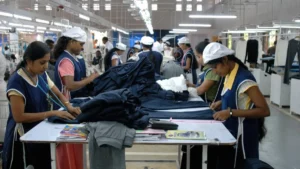
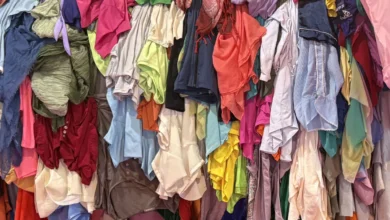
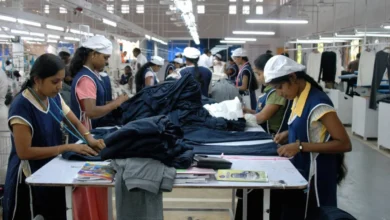
To understand the magnitude of this challenge, one must examine the sheer scale of the global apparel footprint. Accounting for roughly 2 to 8 percent of global greenhouse gas emissions—depending on the metrics and scope of the life-cycle analysis utilized—the fashion industry generates more carbon than international flights and maritime shipping combined. The vast majority of these emissions, typically estimated between 70 and 90 percent, reside within Scope 3 categories. These are indirect emissions that occur up and down the value chain, encompassing everything from the cultivation and harvesting of raw fibers like cotton and synthetic polyester production to energy-intensive wet processing, spinning, weaving, garment assembly, and international freight logistics. Consequently, any serious discussion regarding emission reduction cannot simply focus on corporate headquarters switching to renewable energy or eliminating single-use plastics in retail stores; it requires a radical, structural overhaul of how garments are manufactured, distributed, and consumed globally.
The Chronology of Commitments: From Voluntary Pledges to Hard Targets
The journey of the fashion industry toward environmental accountability has evolved significantly over the past fifteen years. In the early 2010s, sustainability initiatives were largely voluntary, fragmented, and marketing-driven, focusing on capsule collections made from organic cotton or recycled polyester. By 2018, recognizing the inadequacy of piecemeal efforts, the United Nations Framework Convention on Climate Change (UNFCCC) launched the Fashion Industry Charter for Climate Action. This landmark framework united major global brands, retailers, and industry organizations under a shared ambition: to achieve net-zero greenhouse gas emissions by 2050, aligning with the Paris Agreement trajectory of limiting global warming to 1.5 degrees Celsius.
In subsequent years, the interim target of a 30 percent aggregate reduction in greenhouse gas emissions by 2030 became the gold standard for signatories. Major conglomerates, including Inditex, H&M Group, Kering, and Burberry, established ambitious science-based targets (SBTs) vetted by the Science Based Targets initiative (SBTi). However, as the 2030 deadline draws closer, a sobering realization has emerged across boardrooms: while efficiency gains have been made, absolute emissions in many major fashion portfolios have continued to plateau or even rise alongside revenue growth. The decoupling of business revenue from carbon output—often termed absolute decoupling—remains elusive for the vast majority of market players, exposing the friction between volume-based business models and planetary boundaries.
Analyzing the Decoupling Dilemma: Efficiency Versus Volume
At the heart of the debate is the tension between relative decoupling and absolute decoupling. Relative decoupling occurs when resource use or emissions grow at a slower rate than economic output. For instance, if a fashion brand increases its revenue by 10 percent while its carbon emissions grow by only 2 percent, relative decoupling has been achieved. While this demonstrates improved operational efficiency, it does not solve the climate crisis, because total absolute emissions continue to accumulate in the atmosphere.

Absolute decoupling, by contrast, requires a brand’s revenue to grow while its total greenhouse gas emissions decline year-over-year, regardless of production volume. Achieving absolute decoupling in the apparel sector requires confronting several stubborn realities. First, the decarbonization of electricity grids across key manufacturing hubs—such as Bangladesh, Vietnam, China, India, and Turkey—is proceeding unevenly. Many of these nations continue to rely heavily on coal-fired power plants to fuel the industrial machinery required for textile dyeing, finishing, and manufacturing. Until these regional energy grids undergo a complete green transition, apparel brands sourcing from these regions will struggle to lower their Scope 3 manufacturing footprints.
Second, material dependency poses a severe hurdle. Synthetic fibers, predominantly polyester derived from fossil fuels, account for over half of all global fiber production. While recycled polyester (rPET) offers a lower carbon footprint than virgin polymer, the current supply is largely constrained by the availability of post-consumer plastic bottles rather than closed-loop textile-to-textile recycling. Furthermore, natural fibers like conventional cotton require intensive use of water, synthetic fertilizers, and pesticides, contributing to soil degradation and nitrous oxide emissions. Shifting to regenerative agriculture practices can sequester carbon in soils, but scaling these practices globally requires extensive capital investment, long-term contracts for farmers, and significant changes in agronomic supply chains.
Economic Growth Models Under Pressure
The traditional growth paradigm in fashion is predicated on volume. More units produced translate to higher economies of scale, lower per-unit manufacturing costs, and increased gross margins. Fast-fashion business models have perfected this velocity, introducing thousands of new styles weekly to stimulate continuous consumer demand.
Critics argue that maintaining this growth model while attempting to meet net-zero targets is a mathematical impossibility. A growing body of research from environmental economists suggests that efficiency improvements alone—such as LED lighting in warehouses, electric delivery vans, or minor fabric waste reductions—are routinely outpaced by the sheer compounding volume of garments produced. When a company grows its top-line revenue by expanding unit output by 15 percent annually, any 5 percent efficiency gain in manufacturing is swallowed whole by the environmental toll of the extra production volume.
Conversely, corporate leaders and industry associations push back against the notion that growth must be restricted, arguing that economic vitality is essential to fund the very innovations required for a green transition. Proponents of this view maintain that cutting growth would lead to widespread job losses in developing nations where the textile industry serves as the primary engine of formal employment and poverty alleviation. Instead, they champion qualitative growth—shifting revenue streams away from resource-heavy physical production toward digital fashion, high-value premium durability, repair services, rental models, and resale platforms.
The Regulatory Wave and Investor Pressures
The debate over growth and emissions is no longer confined to academic discussions or corporate sustainability reports; it is rapidly being codified into international law. Regulatory bodies in Europe and North America are aggressively dismantling the era of voluntary green claims and opaque supply chain practices.
The European Union has spearheaded this legislative charge with initiatives such as the Corporate Sustainability Due Diligence Directive (CSDDD), the Ecodesign for Sustainable Products Regulation (ESPR), and stringent anti-greenwashing rules. The ESPR introduces the Digital Product Passport (DPP), which will mandate transparent disclosures regarding a garment’s durability, recyclability, fiber composition, and repairability. Simultaneously, financial regulators and institutional investors are increasingly incorporating environmental, social, and governance (ESG) metrics into their capital allocation strategies. Brands that fail to demonstrate credible, verifiable pathways to decarbonization face rising costs of capital, shareholder activism, and potential exclusion from major investment funds.
Industry Responses and Strategic Adaptations
In response to regulatory tightening and escalating climate risks, forward-thinking apparel executives are experimenting with alternative business models designed to decouple revenue from resource extraction.
- Circular Economy Frameworks: Companies are heavily investing in textile-to-textile recycling technologies. Ventures partnering chemical recyclers with major brands aim to break down blended fabrics—such as cotton-polyester blends—into their original molecular components, creating virgin-quality fibers without extracting new raw materials.
- Product Longevity and Quality: A renaissance in durability is taking shape among both luxury houses and mass-market retailers. By focusing on reinforced construction, timeless design aesthetics, and lifetime warranty repairs, brands are attempting to justify higher price points per garment while slowing down the replacement cycle.
- Servitization and Secondhand Markets: Traditional retailers are increasingly integrating resale, rental, and peer-to-peer marketplaces directly into their ecosystems. By monetizing the secondary life of a garment, companies can generate transactional revenue without manufacturing new physical inventory.
- Supply Chain Partnerships: Leading brands are moving beyond auditing suppliers to actively co-investing in factory decarbonization. This includes financing solar installations on textile mill rooftops, upgrading steam systems, and transitioning wet-processing facilities to waterless dyeing technologies.
The Road Ahead: Implications for Global Stakeholders
The question of whether fashion can cut emissions without slowing growth ultimately exposes a deeper philosophical and economic dilemma for modern capitalism: Can infinite material growth coexist on a finite planet?
For the apparel industry, the answer likely depends on a fundamental redefinition of what constitutes value. If growth continues to be measured purely by physical unit volume and raw throughput, the industry’s net-zero ambitions will almost certainly fail. However, if the sector successfully decouples financial performance from resource consumption—pivoting toward service-oriented models, technological innovation, absolute supply chain transparency, and a profound cultural shift toward durability—it may chart a viable path forward.
Ultimately, consumers, investors, policymakers, and corporate executives share the burden of this transition. As regulatory frameworks mature and the physical manifestations of climate change disrupt raw material sourcing—such as cotton crop failures due to extreme droughts—business-as-usual is no longer a viable operational strategy. The fashion industry’s future will not be defined by whether it continues to grow, but by how it chooses to grow, ensuring that economic prosperity no longer comes at the direct expense of the global climate.