Rita Ora Pays Ultimate Tribute to Dolly Parton With Backwoods Barbie Halloween Costume in New York City

Rita Ora delivered one of the most talked-about celebrity Halloween moments of the season on Friday night, stepping out in New York City for the annual Frankie Shop celebration dressed as the legendary, late country music icon Dolly Parton. Held at Ella Funt in the East Village, the exclusive event—co-hosted by Unemployed magazine and titled "Dolly Lives!"—drew a star-studded crowd eager to honor the enduring legacy of the beloved Tennessee-born superstar.
Ora’s carefully curated ensemble captured Parton’s signature theatrical aesthetic, blending high fashion with classic country-glam motifs. The pop star’s outfit was a direct visual nod to Parton’s famous 2008 track and album, "Backwoods Barbie," embodying the singer’s unapologetic embrace of dramatic style, heavy makeup, and vibrant color palettes. As celebrity tributes continue to sweep the entertainment and fashion worlds following Parton’s passing earlier this year, Ora’s appearance stood out as a masterclass in thematic costuming and stylistic homage.
Main Facts: Inside Rita Ora’s Dolly Parton Costume
The pop star’s transformation into the Queen of Country was executed down to the smallest detail. Leaving her apartment before heading to the East Village venue, Ora showcased her look on Instagram, immediately drawing praise from fans and fashion critics alike.
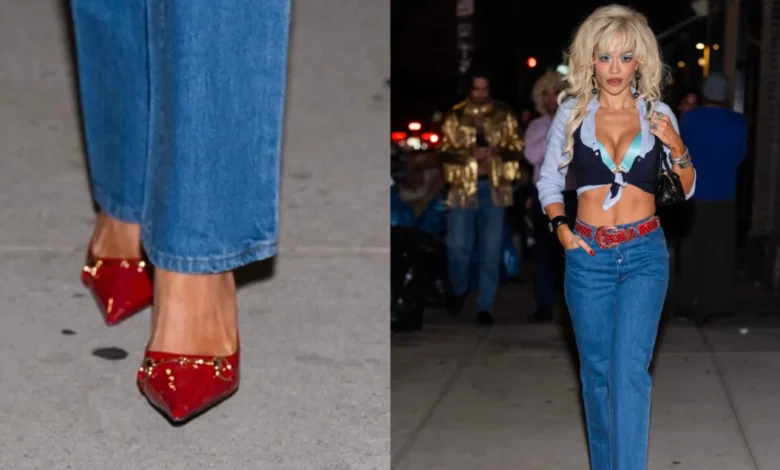
At the core of the outfit was a classic blue button-down denim shirt, expertly tied at the waist to accentuate a striking icy-blue push-up bra visible underneath. The cool-toned hue of the undergarment was meticulously matched to Ora’s heavily applied, frosty blue eyeshadow—a distinct throwback to the dramatic makeup looks popularized by Parton throughout the 1970s, ’80s, and ’90s.

Ora paired the top with classic blue denim jeans, cinched at the waist by a thick, studded red belt. The vibrant scarlet accessory served as a color-matching bridge to her footwear: a pair of luxury Gucci Donna Horsebit patent leather pumps. The statement shoes featured sharply pointed toes, towering stiletto heels, and the unmistakable gleaming golden horsebit hardware draped across the vamp. Completing the physical transformation, Ora wore a voluminous platinum blonde wig styled in the country music legend’s iconic, sky-high bouffant proportions.
The Chronology of Remembrance: A Fall Season Defined by Dolly
Ora’s tribute arrives amid a broader wave of fashion-forward mourning and celebration following the death of Dolly Parton. The legendary singer-songwriter passed away this August at the age of 80 following a brief, private battle with cancer. Her death sent shockwaves through the global music community, prompting tributes from artists across all genres who credited Parton not only as a musical pioneer but as a monumental cultural and fashion icon.
Throughout the autumn, the late singer’s influence has reverberated heavily across red carpets and major industry events. Just weeks prior to the Frankie Shop party, the 2026 Country Music Association (CMA) Awards in Nashville became a showcase of commemorative style. Country stars and performers—including Ella Langley, Carly Pearce, and Kristin Chenoweth—deliberately stepped out in Nashville wearing sparkly footwear, rhinestone-studded garments, and butterfly-themed motifs to honor Parton’s legacy.
Similarly, rising country star Lainey Wilson made headlines earlier this fall by donning a custom replica of Parton’s historic butterfly jacket, sparking widespread media coverage regarding the enduring influence of Parton’s wardrobe choices. Industry analysts note that Parton’s aesthetic—once occasionally dismissed by mainstream high-fashion critics decades ago—has undergone a massive cultural reevaluation, increasingly celebrated as an authentic, self-aware blueprint for modern camp and maximalist glamour.
Background Context: The Frankie Shop’s Annual Halloween Tradition
The venue for Ora’s grand reveal, the Frankie Shop’s annual Halloween party, has quickly established itself as a premier fixture on the New York City social calendar. Known for curating hyper-specific, highly anticipated cultural themes that attract top-tier models, designers, musicians, and influencers, the brand uses the holiday to bridge the worlds of high-end fashion and pop culture nostalgia.

Last year’s iteration of the party generated significant media buzz with an elaborate Elizabeth Taylor theme, which challenged attendees to recreate iconic moments from the legendary silver screen actress’s life and filmography. By pivoting the focus to Dolly Parton for 2026, the organizers tapped into a collective public desire for comfort, warmth, and celebration of a universally beloved figure during a time of grief for the music world.
The choice of Ella Funt, an intimate and vibrant East Village hotspot, provided an energetic backdrop for the evening. Attendees leaned heavily into the country-western and ’70s pop-culture theme, but it was Ora’s adherence to the "Backwoods Barbie" persona that captured the evening’s highest level of media attention.
Supporting Data and Cultural Analysis: The Philosophy of Country Glam
To understand the resonance of Ora’s costume, fashion historians point directly to the ethos Parton herself established. In her 2008 single "Backwoods Barbie," Parton offered a definitive manifesto regarding her appearance, famously singing about her fondness for wearing a "push-up bra and heels." In interviews surrounding the album’s release, Parton frequently addressed critics of her over-the-top outfits, famously summarizing her look as "just a country girl’s idea of glam."
This philosophy—that artificiality and high-octane glamour could be used as tools of empowerment rather than conformity—has heavily influenced contemporary pop artists. Analysts suggest that figures like Rita Ora, who frequently experiment with boundary-pushing fashion, find a kindred spirit in Parton, who famously joked, "It costs a lot of money to look this cheap."
The inclusion of luxury pieces, such as the Gucci patent leather pumps, added a modern high-fashion twist to an outfit deeply rooted in Americana and working-class roots. By blending accessible elements like a tied denim shirt with elite Italian luxury accessories, Ora successfully bridged the gap between Parton’s humble Appalachian beginnings and her status as a global billionaire icon of style.

Broader Impact and Industry Implications
The viral success of Rita Ora’s Halloween look underscores the ongoing monetization and cultural power of nostalgia within the fashion and celebrity landscapes. Following the passing of generational icons, public mourning is increasingly manifested through sartorial imitation, transforming red carpets and private parties into living museums of personal style.
Furthermore, the mainstream embrace of Parton-esque maximalism signals a shifting tide in footwear and accessory trends. The appetite for bold statements—exemplified by Ora’s vibrant red Gucci pumps, metallic finishes, and nostalgic beauty choices—points to a consumer market moving further away from minimalist aesthetics and embracing expressive, theatrical dress codes.
As holiday party season progresses and winter approaches, fashion forecasters predict that Parton’s influence on ready-to-wear collections, footwear, and celebrity styling will only continue to grow. For Rita Ora, the decision to step out as the "Backwoods Barbie" was not merely a holiday costume choice, but a timely, highly coordinated salute to a woman who taught generations of artists how to wear their identities proudly on their sleeves—and in their heels.
Related posts: