A Question of Balance: Photographer Elliot Ross Exposes the Stark Water Inequity of the Colorado River Basin

The modern American Southwest is defined by an invisible, yet profoundly violent, geography of water. While municipal planners in burgeoning desert communities engineer sprawling oases complete with massive man-made lagoons, championship golf courses, and lush suburban lawns, tens of thousands of indigenous citizens living just miles away must ration every drop. This stark disparity is the focal point of A Question of Balance, a powerful new documentary photography project and monograph by Elliot Ross. Published by KGP Monolith and supported by grants from the Magnum Foundation and the Center for Contemporary Documentation, Ross’s work investigates the divergent realities of two communities living a mere 80 miles apart, yet occupying entirely different universes when it comes to resource access within the shared Colorado River Basin.
Main Facts and the Core Divide
At the heart of Ross’s visual investigation is a glaring systemic inequality. In Washington County, Utah—a predominantly Mormon, rapidly expanding metropolitan area—residents enjoy extraordinary water abundance. Master-planned developments like the sprawling Long Valley project by D.R. Horton feature massive water-reliant infrastructure, including roughly 2,500 private swimming pools and 17 golf courses. Among these is the newly completed $2 billion Black Desert Resort, where keeping the turf alive consumes a staggering share of the local municipal supply.
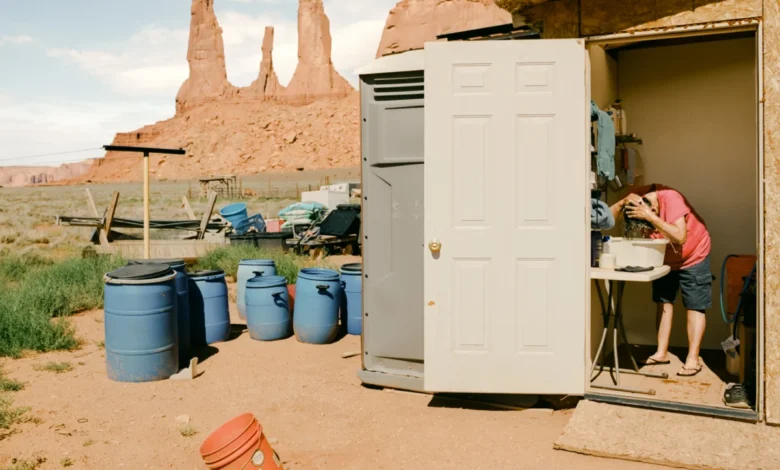
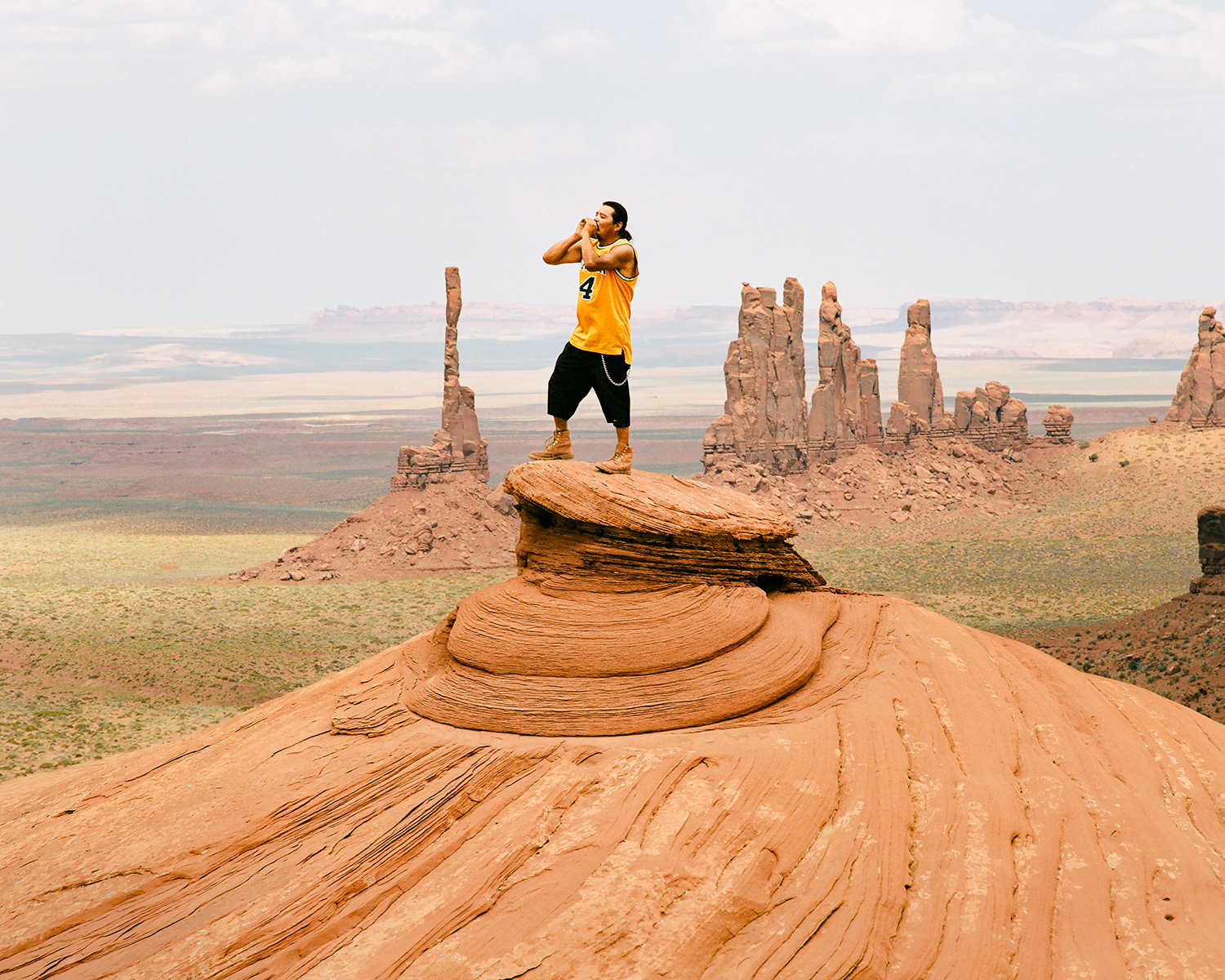
Conversely, across the state line and throughout the vast expanse of the Navajo Nation—the largest Native American reservation in the United States—more than one in three Diné residents live without indoor plumbing or running water. During scorching summer months, families rely on a laborious system of hauling water in storage tanks from centralized public spigots, sometimes driving up to an hour each way just to secure basic drinking and sanitation supplies.
"Water is life," observes Tom Holiday, a Navajo Nation resident whose life and struggles are captured in Ross’s monograph. "People in the cities take it for granted and water their plants and grass. Here it’s precious. We think of water as a deity."

Historical Context and the Legacy of Extraction
To understand the roots of the water crisis in the Navajo Nation, one must examine a complex chronology of federal policy, historical neglect, and environmental degradation. For generations, the federal government promised infrastructure developments that routinely stalled or left rural tribal allotments unconnected to major municipal grids.
Compounding the lack of basic utilities is a devastating environmental legacy left behind by the Cold War. During the mid-20th century, the United States government aggressively incentivized uranium mining on Navajo land to fuel the nuclear arms race. Mining companies extracted millions of tons of uranium ore, leaving behind hundreds of abandoned mines, unlined waste piles, and contaminated tailing sites. Today, decades after the mining boom ended, many of the region’s natural springs, aquifers, and rivers—including segments of the Little Colorado River—remain heavily contaminated with lethal heavy metals and carcinogens, such as uranium, arsenic, and nickel.

While children in suburban Utah dive into crystal-clear, multi-million-gallon private lagoons fed by deep groundwater wells, children on the reservation, such as Luna Stevens, frequently face toxic waters or are forced to make do with fractional amounts of clean water trucked in from distant distribution points. This contamination severely restricts the Diné’s ability to utilize local hydrological resources, transforming what should be life-sustaining rainfall and river systems into environmental hazards.
Chronology of Growth Versus Stagnation
The contrasting timelines of Washington County, Utah, and the Navajo Nation highlight an accelerating divergence in regional development.

Since 1970, Washington County has undergone an astronomical demographic transformation. Driven by master-planned community developments and a pro-growth economic model, the county’s population has surged by an unprecedented 1,210 percent, reaching nearly 200,000 residents by the early 2020s. According projections by the Kem Gardner Policy Institute at the University of Utah, the region has a projected ultimate carrying capacity of up to 950,000 people. This rapid urbanization requires immense hydrological engineering, massive capital investments, and complex dam systems designed to capture and redirect snowmelt and river flow from the Colorado River Basin.
In stark contrast, infrastructure development on the Navajo Nation has crawled at a glacial pace. While grid advancements occasionally reach elderly residents—such as Florence Neztsosie, who at nearly 90 years old recently had her kitchen connected to the electrical grid for the first time, yet still lacks running water—systemic investments in piped water networks remain severely underfunded. During monsoon seasons, heavy downpours provide the majority of the region’s annual precipitation. However, lacking the sophisticated multi-billion-dollar dams, reservoirs, and canals engineered for urban Utah, Navajo communities watch helplessly as the vital rainwater runs off the arid landscape without being captured for long-term agricultural or domestic use.
Data and Infrastructure Disparities

The statistical divide captured in A Question of Balance paints a damning picture of resource allocation in the American West:
- Population Growth: Washington County, Utah, stands as one of the fastest-growing metropolitan areas in the United States, scaling up dramatically over the past five decades.
- Water Consumption for Amenities: The Washington County Water Conservancy District estimates that roughly one out of every twelve gallons of municipal water goes directly toward keeping turf and golf courses alive in the middle of the desert.
- Domestic Inequity: Over 30 percent of households within the Navajo Nation lack access to running water, forcing residents to practice structural conservation by necessity.
- Infrastructure Gap: While master-planned desert communities boast multi-acre artificial lakes—such as the 2.4-acre, four-million-gallon private swimming pool at Desert Color—rural Diné families maintain outdoor dry bathrooms and haul water manually in containers to fill household storage tanks.
Official Responses and Institutional Perspectives
Local water authorities in Utah frequently defend their resource management by pointing to aggressive conservation targets, tiered pricing structures, and water-efficiency mandates implemented for new construction. Municipal leaders argue that economic expansion is vital for regional prosperity and that modern master-planned developments incorporate state-of-the-art water recycling technology.

However, tribal advocates, human rights organizations, and environmental watchdogs counter that such arguments ignore the historical inequities baked into western water rights adjudication. For over a century, the federal government and neighboring states have systematically sidelined indigenous water rights—often codified under the Winters Doctrine—relegating native nations to junior priority status during times of drought. As climate change strains the Colorado River Basin to its absolute breaking point, the structural vulnerability of tribal water systems has transformed from a persistent humanitarian issue into an urgent crisis.
Broader Impact and Policy Implications
Elliot Ross’s A Question of Balance transcends traditional documentary photography; it serves as a critical visual indictment of systemic resource inequality in an era of intensifying climate scarcity. As climate change accelerates multi-year megadroughts across the American Southwest, the fragility of the Colorado River Basin threatens to upend the status quo for all its inhabitants.

The implications of this imbalance extend far beyond regional politics. If fast-growing municipalities continue to prioritize water-intensive amenities like massive desert lagoons and manicured golf courses while indigenous populations lack basic access to sanitation and drinking water, federal and state regulators will face mounting legal and ethical challenges. The monograph forces viewers to confront uncomfortable questions about environmental justice, human rights, and the ethical distribution of life-sustaining natural resources. Ultimately, Ross’s work records not only a stark geographical divide, but a profound moral test for a modern society deciding who receives water—and who is left behind to run empty.