Poundland collapses into administration as rescue talks fail and 10,000 jobs hang in the balance

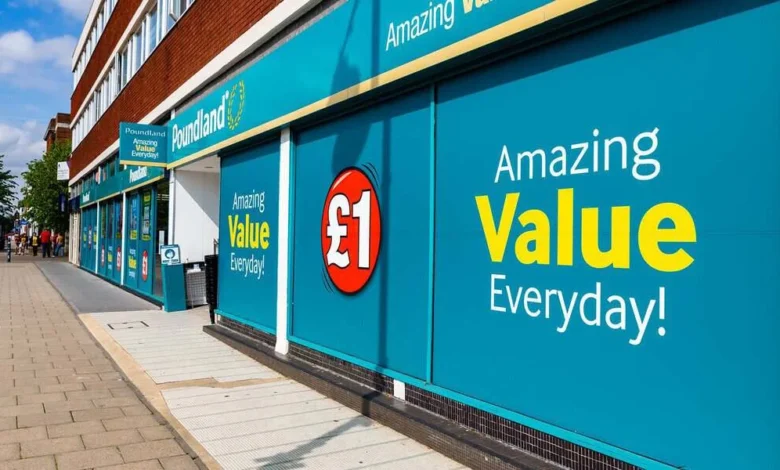
The British high street has been dealt a seismic blow following the formal entry of discount retailer Poundland into administration. Despite weeks of intense, high-stakes negotiations aimed at securing a solvent rescue deal, the chain’s owner, US-based private equity firm Gordon Brothers, has failed to reach an agreement with any of the four interested parties. This development now places over 10,000 employees at risk across a sprawling estate of 600 stores and the company’s corporate headquarters.
AlixPartners, the firm appointed to oversee the administration process, confirmed in a statement that the preceding sales efforts did not yield a "viable solvent solution for the business as a whole." While the retailer will continue to trade in the immediate term to maintain operational continuity, the prospect of a company-wide rescue has significantly dimmed. Observers now anticipate a piecemeal breakup of the business, a move that will likely trigger store closures and widespread redundancies as administrators attempt to recover value from the retailer’s assets.
A Chronology of Decline
The collapse of Poundland follows a period of mounting financial pressure that intensified over the final quarter of the year. The timeline of the firm’s final descent reflects a classic corporate struggle between operational recovery and legacy debt burdens:
- Early Autumn: Reports surface regarding a £60 million cash flow crisis, sparking initial concerns about the retailer’s liquidity.
- Late October: Gordon Brothers initiates a formal search for a buyer as market speculation mounts regarding the firm’s ability to survive the upcoming holiday season.
- Mid-November: Four credible bidders emerge: Martin Property Group, Xyra Group Holdings, Zachert Private Equity, and Premier Quality Foods. Negotiations enter an exclusive phase.
- Late November: Despite the presence of multiple bidders, the deal-making process stalls. Parliament begins to scrutinize the role of Gordon Brothers in the transaction.
- Late November/Early December: Administration is formally declared after no agreement is reached, ending the possibility of a clean, solvent sale.
The Financial Paradox: Profitability vs. Solvency
Perhaps the most perplexing aspect of Poundland’s current predicament is that the retail operations were showing signs of a genuine turnaround. In recent months, the company reported an uptick in sales and a return to underlying profitability. This has led many industry analysts to question how a business with a recognizable brand and growing revenue could plummet into insolvency.
The answer, according to insolvency experts, lies in the distinction between operational health and structural financial integrity. Kimberley Reid, an insolvency practitioner at the Liquidation Centre, notes that high brand awareness does not equate to balance sheet resilience. "A retailer can have a loyal customer base and a strong high-street footprint, but if the capital structure is built on unsustainable debt or conflicting creditor priorities, the business remains vulnerable," Reid explained.
The core of the dispute centers on a £30 million shareholder loan. Gordon Brothers, which acquired the loan for a nominal £1 when it originally purchased the business, positioned itself as both the owner and a secured creditor. Because secured creditors rank above all other entities—including unsecured suppliers and employees—in an insolvency hierarchy, the existence of this debt created a significant barrier to any deal. Prospective buyers were reportedly unwilling to take on the liability of this loan, while Gordon Brothers appeared unwilling to waive or restructure the debt to facilitate a sale.
The Question of Conflict of Interest
The dual role played by Gordon Brothers has drawn sharp criticism from stakeholders, including Poundland founder Steven Smith. In a public statement via LinkedIn, Smith noted that while serious investors had clearly expressed intent to save the business, the failure to reach a deal suggested that the incentives for the owners were misaligned with the survival of the firm.
"Everyone told me the owners weren’t interested in saving Poundland, but the results speak for themselves," Smith remarked. "Serious investors came forward wanting to buy the business, but they couldn’t get a deal across the line."
This sentiment was echoed by Liam Byrne MP, chair of the Business and Trade Committee. Byrne has been vocal in his criticism of the firm’s ownership, labeling the situation a "greed is good" approach that prioritized a fast financial return over the stability of a company with thousands of staff. The committee has since recalled representatives from Gordon Brothers to provide testimony on why negotiations failed and whether the firm prioritized its own position as a creditor over the potential for a business-wide rescue.
The Impact on the Supply Chain
Beyond the direct threat to employees, the administration of Poundland sends a shockwave through the broader retail supply chain. Suppliers who provided goods on credit are now classified as unsecured creditors. Under standard insolvency proceedings, these businesses face the reality that they may receive only a fraction of what they are owed, if anything at all.
As asset sales proceed, the proceeds are typically diverted to cover the costs of administration, secured debt (such as the £30 million shareholder loan), and other preferential creditors. Smaller suppliers, who often operate on thin margins themselves, now face the risk of a "domino effect," where the failure of a major retail partner threatens their own solvency.
Broader Implications for the Retail Sector
The collapse of such a high-profile brand serves as a sobering reminder of the volatility currently facing the UK retail sector. Even with the "discourter" model—which has traditionally thrived during inflationary periods as consumers seek lower prices—the pressure of rising operating costs, energy prices, and interest rates remains immense.
Analysts suggest that the Poundland case may prompt legislative discussions regarding the responsibilities of private equity firms in retail management. There is growing pressure for greater transparency when owners are also creditors, as such arrangements can create perverse incentives that favor liquidation over long-term recovery.
The Path Forward: Government Intervention?
While the immediate outlook is grim, the government has signaled that it may take a more active role in the coming weeks. Liam Byrne has suggested that ministers should explore ways to "bridge finance" the search for a new owner, potentially through government-backed support to keep the company’s operations viable while a long-term solution is sought.
The administration process is rarely linear. While the initial hope for a single buyer has evaporated, the administrators will now likely shift to a "break-up" strategy. This involves selling off the store portfolio in clusters to other retailers or liquidating individual assets. While this may salvage some jobs, it is almost certain to result in a significantly smaller, perhaps even unrecognizable, version of the Poundland brand.
As the Christmas season approaches, the human cost of the collapse remains the primary concern. With 10,000 livelihoods hanging in the balance, the retail industry is watching closely to see if the administrators can navigate the complex web of debt and creditor interests to achieve any form of meaningful salvation for the staff. For now, the future of the brand that became synonymous with the British bargain remains uncertain, suspended between the demands of its creditors and the desperate hope of its workforce.