Anglo American Names Global Diamond Consortium Led by Gareth Penny as Preferred Bidder for De Beers Acquisition

Anglo American has officially designated a consortium led by former De Beers Chief Executive Officer Gareth Penny as the preferred bidder for the acquisition of De Beers, marking a definitive step in one of the most significant structural shifts in the history of the global diamond industry. The announcement, which clarifies the future of the world’s most iconic diamond producer, was made by the Botswana government on Friday, signaling that the mining giant has moved into the final stages of its multi-year divestment strategy.
Moeti Mohwasa, the Minister for State President, Defense, and Security for Botswana, confirmed the selection during a briefing, noting that Anglo American had concluded a rigorous and competitive selection process. "Anglo American ran a competitive process involving three shortlisted bidders and has since identified a preferred bidder, the Global Diamond Consortium," Mohwasa stated. The Global Diamond Consortium, spearheaded by Penny, emerged as the frontrunner against other high-profile industry figures and institutional investors who had vied for control of the century-old institution.
The selection of the Global Diamond Consortium represents a potential "homecoming" for De Beers, as Gareth Penny served as the company’s CEO from 2006 to 2010. His leadership during that period was defined by navigating the global financial crisis and overseeing the company’s transition toward a more commercially focused entity. The consortium is reportedly backed by several heavyweight players in the diamond midstream, including leaders from Antwerp-based sightholders Diarough and Pluczenik, with additional participation potentially involving Rosy Blue, one of the world’s largest diamond trading houses.
The Strategic Restructuring of Anglo American
The decision to sell De Beers is the cornerstone of a massive restructuring plan initiated by Anglo American in May 2024. This strategic pivot was accelerated by several converging factors: a prolonged downturn in global diamond prices, the rising competition from lab-grown diamonds, and a broader corporate mandate to simplify Anglo American’s portfolio following a high-profile, unsuccessful takeover bid by BHP Group.
By divesting De Beers, Anglo American aims to focus its resources on its "core" commodities—specifically copper, iron ore, and crop nutrients—which are viewed as essential to the global energy transition and food security. De Beers, while prestigious, has long been a volatile asset for Anglo American. The diamond market operates on cyclical luxury demand, which often clashes with the steady, long-term industrial cycles of base metals. The sale is expected to be finalized by the final quarter of 2026, contingent upon regulatory approvals and the formal consent of the Botswana government.
A Timeline of the Divestment Process
The journey toward the sale of De Beers has been characterized by intense speculation and a shifting landscape for the diamond trade.
- May 2024: Anglo American announces its intention to demerge or sell De Beers as part of a radical overhaul to stave off a $49 billion takeover attempt by BHP.
- June – December 2024: The company begins informal talks with potential suitors, including sovereign wealth funds, private equity firms, and diamond industry stalwarts.
- Early 2025: A shortlist of bidders is established. This list reportedly included Nir Livnat, the executive chairman of Diacore, and Michael O’Keeffe, the non-executive chair of Burgundy Diamond Mines.
- July 2025: Reports emerge of Gareth Penny forming a consortium backed by major sightholders, positioning the bid as an industry-led solution to the company’s future.
- July 17, 2026: The Botswana government confirms the Global Diamond Consortium as the preferred bidder.
- Late 2026 (Projected): Finalization of the sale and transition of ownership.
Botswana’s Strategic Influence and Pre-emption Rights
Botswana’s role in this transaction cannot be overstated. As the owner of a 15% stake in De Beers and the source of roughly 70% of the company’s rough diamond supply through the Debswana joint venture, the nation holds significant leverage. Under the existing shareholder agreements, the Botswana government possesses "pre-emption rights," which allow it to match any third-party offer to increase its own stake or to veto a buyer it deems unsuitable.
Minister Mohwasa emphasized that Botswana remains in a position of strength regarding the transition. The government has "complete freedom to proceed either alongside the preferred bidder as a partner or to exercise its pre-emption rights alone or with a third party," he noted. This suggests that while Botswana is supportive of the Global Diamond Consortium, it is still evaluating the optimal structure to protect its national interests and the long-term viability of its diamond-dependent economy.
Furthermore, neighboring diamond-producing nations Namibia and Angola have also expressed interest in the proceedings. As De Beers holds significant assets in Namibia (Namdeb) and has been exploring opportunities in Angola, the regional geopolitical implications of the sale are vast.
The Global Diamond Consortium: A "Safe Pair of Hands"
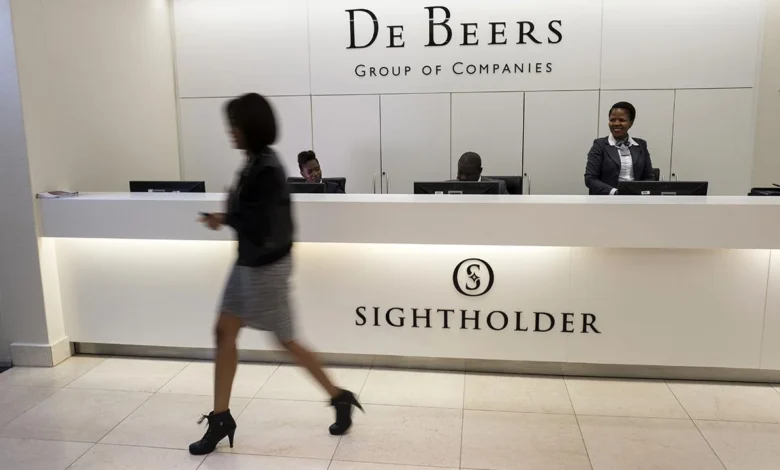
Industry analysts view the Gareth Penny-led consortium as a "safe pair of hands" for De Beers. Unlike a private equity firm that might seek to strip assets or implement aggressive cost-cutting, a consortium led by industry veterans and backed by major sightholders is likely to prioritize the stability of the "Sightholder" system.
The Sightholder system is the mechanism by which De Beers sells the majority of its rough diamonds to a select group of authorized bulk buyers. Maintaining the integrity of this system is crucial for the global supply chain. By having the buyers (the sightholders) effectively becoming the owners (the consortium), the industry could see a more integrated approach to marketing and price stabilization.
Gareth Penny’s deep familiarity with De Beers’ corporate culture and its complex relationship with the African producer nations is seen as a major asset. His previous experience managing the relationship with the Oppenheimer family (the former owners) and the Botswana government provides a level of continuity that other bidders could not match.
Market Challenges and Future Outlook
The new owners will inherit De Beers at a challenging juncture. The diamond industry is currently grappling with a "perfect storm" of economic pressures:
- Lab-Grown Competition: The rapid advancement and consumer acceptance of lab-grown diamonds have eroded the market share of natural stones, particularly in the bridal sector and lower-clarity categories.
- Macroeconomic Headwinds: High interest rates and a cooling luxury market in China have suppressed demand for high-end jewelry.
- Marketing Requirements: De Beers has historically carried the burden of "category marketing" for the entire natural diamond industry (the famous "A Diamond is Forever" campaigns). The new owners will need to decide how much to invest in stimulating global consumer demand.
Despite these challenges, De Beers remains a premier asset. It possesses the most sophisticated diamond distribution network in the world, industry-leading research and development via its Element Six subsidiary, and a retail presence through De Beers Jewellers and Forevermark.
Broader Implications for the Industry
The exit of Anglo American from the diamond sector marks the end of an era. For decades, De Beers was the cornerstone of the Anglo American empire. Its sale reflects a broader trend in the mining industry where diversified giants are shedding "non-core" assets to focus on the minerals required for the green energy revolution.
For the diamond trade, the transition to an industry-led ownership model could lead to more transparent pricing and a more agile response to market shifts. If the Global Diamond Consortium successfully closes the deal, the focus will likely shift to revitalizing the De Beers brand and reinforcing the "narrative of rarity" that sustains natural diamond values.
As the sale progresses toward its late-2026 target, all eyes will be on Gaborone and London. The final terms of the deal, the exact composition of the consortium’s financing, and the extent of the Botswana government’s increased involvement will determine the trajectory of the diamond industry for the next generation. For now, the selection of Gareth Penny’s group offers a glimpse of a future where the diamond industry takes direct control of its most legendary institution.