John Lewis Partnership leverages first-party data and strategic partnerships to redefine the future of retail media

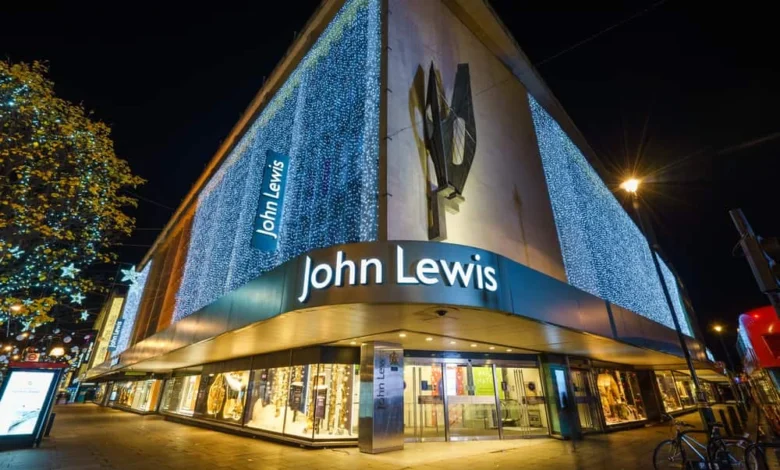
The John Lewis Partnership (JLP) is fundamentally reshaping its retail media ecosystem by transitioning from a traditional advertising model to an integrated customer data strategy. By leveraging its unique position as a dual-brand powerhouse—encompassing the Waitrose grocery chain and the John Lewis department stores—the company is positioning itself to navigate the complexities of an increasingly fragmented digital marketplace. This shift represents a move toward deep-funnel personalization, where the goal is not merely to place advertisements, but to provide consistent, value-added experiences across the entire customer journey.
Strategic Infrastructure and Technological Partnerships
At the core of this transformation are two primary technology partnerships that address the critical divide between onsite and offsite advertising. Through a collaboration with Epsilon, the Partnership is expanding its reach beyond its own digital storefronts. This initiative allows brands to deploy campaigns across a broad spectrum of external channels, including Connected TV (CTV), streaming services, online video, and programmatic display advertising. By moving into these offsite environments, JLP enables brands to maintain continuity in their messaging, ensuring that a customer’s engagement with the John Lewis brand remains cohesive, regardless of the platform.
Simultaneously, the Partnership has engaged Kevel, a retail media technology provider, to overhaul its onsite advertising capabilities. This integration focuses on three primary pillars: AI-powered targeting, self-service campaign management, and robust closed-loop measurement. By automating the targeting process through artificial intelligence, JLP is moving away from broad, demographic-based advertising in favor of hyper-relevant, intent-driven communication. These tools allow brands to serve advertisements based on granular behavioral signals, purchase intent, and the specific shopping context, effectively minimizing the friction often associated with digital advertising.
The Evolution of Retail Media: A Chronology of Integration
The move toward an insight-led retail media strategy follows a broader industry trend where retailers are increasingly capitalizing on their first-party data assets. For decades, retail media was treated as a secondary revenue stream—a simple banner advertisement on a website. However, the last five years have seen a radical evolution.
In the early stages of this shift, retailers focused on basic "sponsored product" listings. As the digital landscape became more competitive and privacy regulations—such as GDPR and the phasing out of third-party cookies—tightened, the value of retailer-owned, consented data skyrocketed. The John Lewis Partnership has been methodically building its digital ecosystem to support this, moving from siloed data sets between its grocery and department store arms to a unified, identity-based view of the customer.
By 2023 and early 2024, the focus shifted toward "closed-loop" attribution. The industry recognized that digital ad spend was often disconnected from physical store sales, a "black hole" in marketing analytics. JLP’s current investment in Research Online, Purchase Offline (ROPO) measurement is the culmination of this trend, allowing the Partnership to prove the efficacy of digital media to brand partners by directly linking ad exposure to in-store transactions.
Data-Driven Consumer Expectations
The impetus for this strategic shift is rooted in shifting consumer behavior. Recent RetailX consumer survey results highlight that modern shoppers are increasingly sensitive to the quality of personalization. More than 70% of consumers surveyed stated that they define "good personalization" as a brand that is consistently relevant across all touchpoints, rather than one that occasionally hits the mark. Furthermore, over 50% of consumers explicitly indicated that they believe loyalty memberships—such as the MyWaitrose or MyJohnLewis programs—should result in more tailored and useful communications.
This data underscores a critical insight: customers are willing to share their data and engage with brand messaging, provided the output is genuinely useful. The era of repetitive, intrusive advertising is waning, replaced by a demand for "recognition." JLP is utilizing its vast loyalty data to bridge the gap between grocery shopping—which is characterized by high-frequency, habitual purchasing—and the department store experience, which involves longer, more research-intensive purchase journeys. By combining these distinct data sets, the Partnership can now construct a 360-degree view of consumer intent that is far more accurate than any data provided by third-party cookies or general market trends.
Official Perspectives on the Strategic Pivot
The leadership at JLP views this evolution as a necessary step in the maturity of their commercial offerings. Jemma Haley, Retail Media Lead for the John Lewis Partnership, emphasized that this move is about building a comprehensive understanding of the customer journey. "This move is a big step forward in creating an insight-led retail media offer that spans both grocery and non-grocery," Haley stated. "It helps us build a detailed understanding of audiences across vastly different purchase journeys, from immediate necessities to more considered items. This will enable brand partners to target smarter audiences, powered by first-party data, helping our customers discover more relevant brands."
From the technology side, Tim Frankcom, President of Europe and APAC at Epsilon, highlights the competitive advantage of JLP’s approach. "The offsite opportunity is enormous, and connecting onsite and offsite media remains a key challenge," Frankcom noted. "It’s all too easy to rely on retail media partners that lean heavily on third-party data, but this can result in fragmented targeting and a disjointed customer experience. JLP is taking a different approach, giving brands access to real identity—not guesswork—and campaigns that truly reflect the customer."
Kaitlin Craig, Digital Retail Media Lead at the Partnership, echoed these sentiments, pointing to the 160-year history of the organization as a foundation for trust. "With over 160 years in retail, we hold really rich customer insights, and we’re now able to share this with trusted partner brands. By targeting our retail media, we can improve the experience for brands and customers alike—whether that’s reminding customers of old favourites, or helping them connect with exciting new brands."
Broader Implications and Market Impact
The implications of JLP’s investment are significant for the wider retail sector. As retailers struggle with the "fragmentation" of customer attention, the ability to offer a unified, privacy-compliant, and high-performance advertising platform is becoming a major differentiator.
- Closing the Attribution Gap: The introduction of advanced ROPO measurement is a game-changer for CPG (Consumer Packaged Goods) brands that have historically struggled to justify digital ad spend. By connecting the dots between a digital ad impression and a checkout scan in a Waitrose or John Lewis store, the Partnership provides a level of ROI transparency that is difficult to achieve in the open programmatic market.
- First-Party Data vs. Third-Party Decay: As the advertising industry moves further away from third-party tracking, JLP’s model serves as a blueprint for a post-cookie future. Because their media offering is based on verified, logged-in customer data, they are insulated from the volatility of the broader ad-tech ecosystem.
- Behavioral Intent over Demographics: The move toward AI-powered, behavioral-based targeting reflects a broader shift in marketing science. Rather than assuming that all individuals within a certain age bracket have the same interests, JLP’s system analyzes actual purchase history and search patterns to predict future needs. This results in higher conversion rates for brands and a more streamlined shopping experience for the customer.
Conclusion: Future Outlook
The John Lewis Partnership’s transition toward an integrated retail media strategy is not just an update to its advertising tech stack; it is a fundamental shift in how the organization plans to generate value for its partners and shoppers. By prioritizing long-term customer relationships over short-term ad placements, and by investing in the infrastructure to prove the value of those interactions, JLP is establishing a high bar for the industry.
As the RetailX data workbench report Reliable forecasting from mixed signals indicates, the retailers that succeed in the coming decade will be those that can master the complexity of omnichannel data. With the integration of Kevel’s AI tools and Epsilon’s offsite reach, the John Lewis Partnership is positioning itself to be a leader in this transition, effectively turning its retail media offering into a core component of its long-term commercial strategy. The initial results, according to company leadership, are promising, suggesting that this data-centric approach will be the standard for retail success in the years to come.