Mulberry cuts operating losses by 41 per cent as full-price strategy gains traction

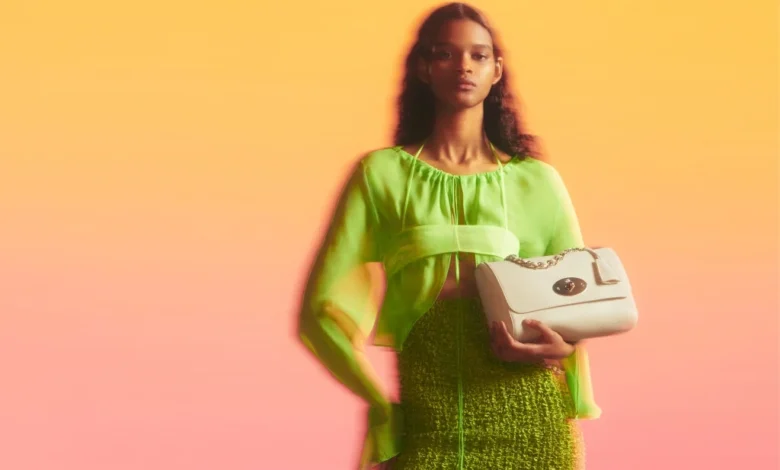
British luxury house Mulberry has reported a significant improvement in its financial health for the 26-week period ending 26 September, signaling that its ongoing turnaround strategy is beginning to bear fruit. The brand, a staple of British heritage fashion, saw its operating losses shrink to £2.9 million, a substantial improvement from the £5 million loss recorded during the same period last year. This 41 per cent reduction in operating losses comes as the company pivots away from heavy discounting, opting instead for a disciplined approach centered on full-price sales and operational efficiency.
The financial results paint a picture of a company in the midst of a delicate, yet promising, recovery. While headline figures show a widening in reported pre-tax losses, the underlying data reveals a more resilient business model. Revenue for the half-year surged by 18 per cent to £63.7 million, reflecting a renewed consumer appetite for both the brand’s core heritage products and its more recent design iterations.
Navigating the Balance Sheet: The Accounting Nuance
A critical aspect of the company’s latest report is the discrepancy between operating performance and the headline pre-tax loss, which expanded from £7.1 million to £33.4 million. Investors and market analysts have been quick to note that this figure is largely driven by a non-cash accounting charge of £27.6 million. This charge is directly linked to the valuation of convertible loan notes, which appreciated in value as a direct consequence of the recent rise in Mulberry’s share price.
When these one-off accounting fluctuations are stripped away, the underlying pre-tax loss presents a more accurate reflection of operational progress, falling 24 per cent to £5.8 million. This distinction is vital for understanding Mulberry’s current trajectory: the business is generating more cash and managing its margins more effectively, even if non-cash items create volatility in its statutory reporting.
The company’s adjusted EBITDA loss saw a particularly sharp contraction, narrowing to £500,000 from the £4.6 million reported in the previous year. This improvement was supported by a gross margin expansion from 69.2 per cent to 70.2 per cent, a direct result of tighter cost controls and a strategic move to preserve the brand’s exclusivity by limiting promotional markdowns.
Chronology of the Turnaround: The Back to the Mulberry Spirit Strategy
The current financial gains are the culmination of a rigorous strategic shift initiated in January 2025. Under the leadership of chief executive Andrea Baldo, the "Back to the Mulberry Spirit" initiative was launched to stabilize the company and restore its position in the luxury market.
- January 2025: The company introduces the "Back to the Mulberry Spirit" strategy, focusing on operational simplification and a return to the brand’s most iconic designs, such as the Bayswater and Lily handbags.
- July 2026: Mulberry reports a milestone return to positive adjusted EBITDA, signaling that its cost-cutting measures and retail discipline were successfully mitigating the impact of broader market headwinds.
- September 2026: The brand makes a highly anticipated return to the London Fashion Week runway, featuring a collection spearheaded by designer Christopher Kane. This move marked the company’s first runway show in six years, aiming to boost its fashion credentials beyond its core accessory business.
- October 2026: Initial reporting highlights an 18 per cent surge in first-half sales, confirming that the strategic emphasis on full-price selling is resonating with a global customer base.
Global Performance and Regional Growth
The geographic breakdown of Mulberry’s revenue reveals a broad-based recovery. While the UK remains a critical market, posting a 10 per cent increase in sales to £31.1 million, the brand is finding significant growth in international territories. European sales grew by 23 per cent, while the US market outperformed expectations with a 28 per cent jump in revenue.
Digital channels have acted as a significant force multiplier for this growth. The 35 per cent increase in digital revenue suggests that Mulberry’s investment in its e-commerce infrastructure is paying dividends, allowing the brand to reach consumers more effectively without the overhead costs associated with physical store expansion. Furthermore, the wholesale and franchise business segment experienced a robust 52 per cent climb, reaching £11.1 million, proving that third-party retail partners are increasingly confident in the brand’s current collection and long-term vision.
Leadership Perspective: The Baldo Mandate
Chief Executive Andrea Baldo has maintained a cautious but optimistic tone regarding the company’s performance. Addressing shareholders and stakeholders, Baldo stated: "Customers are responding to our product offer, full-price sales are growing and our continued focus on costs is helping us deliver stronger margins."
Baldo’s approach has been characterized by a "back to basics" philosophy. By focusing on the products that defined the brand’s legacy—specifically the Bayswater and Lily collections—Mulberry has successfully avoided the trap of "trend-chasing," which often dilutes a luxury brand’s identity. However, Baldo is realistic about the path forward, acknowledging that while the financial indicators are moving in the right direction, there remains substantial work to be done to ensure long-term profitability.
Beyond Handbags: The Fashion Revival
While handbags remain the bedrock of the Mulberry business, the company’s recent efforts to diversify its product portfolio are of significant strategic importance. The partnership with Christopher Kane, unveiled during the London Fashion Week comeback, is an attempt to reposition Mulberry as a comprehensive fashion house rather than a single-category brand.
The collection, which is scheduled for a retail launch in January 2027, is designed to capture the attention of a younger, fashion-forward demographic. By integrating high-fashion runway concepts with the brand’s heritage craftsmanship, Mulberry is attempting to bridge the gap between its traditional customer base and the modern luxury consumer. The success of this transition will be a critical test for the company in the coming year, as it seeks to maintain its momentum in the competitive global luxury market.
Fact-Based Analysis: Implications for the Luxury Sector
The transformation of Mulberry serves as a case study in modern luxury management. In an era where many legacy brands have struggled with over-exposure and the erosion of brand equity through excessive discounting, Mulberry’s decision to sacrifice short-term volume for long-term brand health appears to be a calculated and necessary gamble.
The market implications are twofold:
- Pricing Power: By successfully migrating away from discounting, Mulberry is testing the price elasticity of its customer base. The current results suggest that the brand retains enough prestige to command full prices, a vital indicator of luxury status.
- Operational Leverage: The reduction in operating losses shows that the company is becoming more efficient. As these cost-saving measures take hold, the company is better positioned to reinvest in marketing, creative talent, and digital expansion, creating a virtuous cycle of growth.
However, the company remains susceptible to external economic pressures. Inflationary costs, supply chain volatility, and fluctuating consumer confidence in key markets like the US and Europe remain significant variables. The non-cash charges that inflated the pre-tax loss underscore that even as operations stabilize, the financial structure of the company remains sensitive to broader capital market movements.
Conclusion and Outlook
Mulberry stands at a pivotal juncture. The transition from a period of heavy discounting to a disciplined, full-price model has stabilized the ship, and the initial data from the first half of the 2026 fiscal year suggests that the strategy is gaining traction. With a focus on core heritage products, a digital-first approach to international expansion, and a renewed commitment to runway fashion, the company is signaling its intent to reclaim its status as a leading global luxury brand.
While the statutory pre-tax loss headline may cause initial alarm for casual observers, a deeper dive into the underlying metrics reveals a business that is becoming leaner, more efficient, and increasingly attractive to its core demographic. The upcoming launch of the Christopher Kane-designed collection will be the next major litmus test for the brand’s evolution. As the company moves into the latter half of the year, the primary objective will be to convert this operational momentum into sustained, bottom-line profitability, ensuring that the "Mulberry Spirit" remains both culturally relevant and financially viable in an increasingly crowded luxury landscape.