B&M accuses Morrisons of poaching staff to copy Halloween and homeware ranges – Retail Gazette

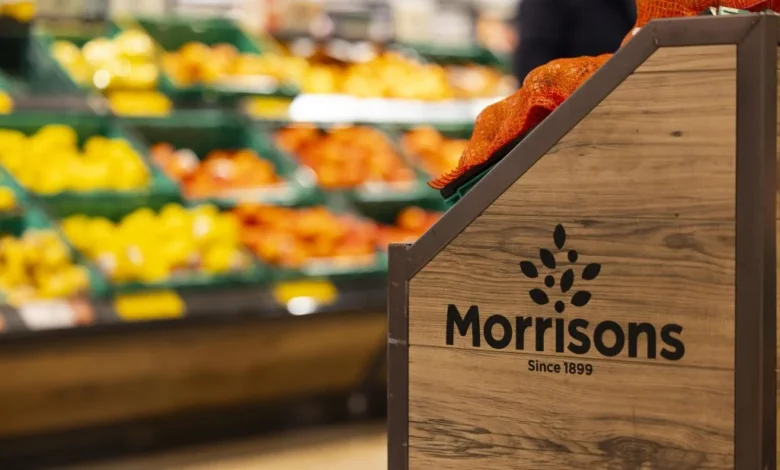
The legal battle marks a significant escalation in the increasingly competitive landscape of the UK’s retail sector. At the heart of the dispute is a claim by the discount retail giant, B&M European Value Retail, that its supermarket rival, Morrisons, orchestrated a strategic "raid" on its internal talent pool to replicate its successful seasonal merchandising strategy. High Court filings indicate that B&M believes this was not merely a series of individual career moves, but a coordinated effort to extract trade secrets, product blueprints, and commercial intelligence to bolster Morrisons’ own general merchandise department.
The Core Allegations and the Role of Simon Buckley
The case centers on the career transition of Simon Buckley, who served as the merchandising director at B&M for over 14 years. A veteran of the discount sector, Buckley was instrumental in developing the supply chains and aesthetic strategies that defined B&M’s seasonal offerings. In January, he transitioned to Morrisons to take up the role of trading director for general merchandise.
According to court documents, B&M alleges that Buckley’s move involved a breach of his restrictive covenants and employment contract. Specifically, the claimant alleges that Buckley engaged in unauthorized discussions with Morrisons while still technically under the terms of his gardening leave at B&M. Furthermore, the retailer claims that Buckley transferred sensitive proprietary information to his new employer. Central to this allegation is the claim that Buckley provided "cheat sheets"—highly specific, confidential documents that detailed B&M’s most profitable, bestselling product lines, particularly within the Halloween and autumn homeware categories.
B&M contends that these documents contained granular data, including supplier identities, pricing margins, and strategic product development roadmaps. By utilizing this information, B&M argues, Morrisons was able to bypass the costly and time-consuming process of market research and product development, effectively "cloning" successful items such as scented candles, decorative doormats, faux fur throws, and seasonal duvet covers.
A Chronology of the Alleged Talent Poaching
The timeline of events, as reconstructed from court filings and corporate records, suggests a systematic approach to talent acquisition. Following Buckley’s appointment in January, B&M alleges that seven additional members of its buying and product development teams were recruited by Morrisons.
- Pre-January 2024: Simon Buckley remains in his senior role at B&M, with access to highly sensitive trade secrets regarding seasonal product pipelines.
- January 2024: Buckley officially joins Morrisons as the trading director for general merchandise. B&M initiates investigations into his departure following concerns regarding the handling of internal data.
- Early-to-Mid 2024: A series of departures occur within B&M’s buying department, with seven staff members moving to Morrisons. B&M claims these departures were encouraged or facilitated by Buckley, creating a "brain drain" that specifically benefited the supermarket’s general merchandise division.
- October 2024: B&M formally notifies Morrisons of its concerns, demanding that the retailer cease the sale of items deemed to be copies of B&M’s intellectual property.
- Late 2024: After failing to reach a satisfactory resolution, B&M files legal proceedings in the High Court, seeking damages for breach of confidence, breach of contract, and intellectual property infringement.
Broader Context: The Seasonal Retail War
The rivalry between B&M and Morrisons is reflective of the broader "retail war" currently taking place in the UK. As inflation and cost-of-living pressures have forced consumers to be more selective with their discretionary spending, supermarkets have increasingly sought to expand their general merchandise footprint to drive higher-margin sales.
B&M has built its reputation—and its stock market valuation—on its ability to deliver high-quality, low-cost seasonal goods. Its business model relies heavily on a rapid turnaround of inventory, where product themes change drastically between seasons (Halloween, Christmas, Spring, Summer). The investment required to manage these supply chains is substantial; B&M spends millions annually on sourcing, testing, and designing these products.
For Morrisons, which has historically focused on fresh food and groceries, the general merchandise sector offers a lucrative opportunity to capture more of the "basket spend." However, building a successful homeware brand from scratch is difficult. Analysts suggest that the shortcut of hiring experienced staff from a proven leader like B&M is a common, if legally fraught, industry practice. The question for the court will be the threshold between legitimate recruitment and the misappropriation of trade secrets.
Financial and Operational Implications
The implications of this lawsuit are far-reaching for the retail industry. If B&M successfully proves its claims, the court could award significant damages, potentially setting a precedent for how retailers treat "garden leave" and the movement of senior staff between competitors.
For B&M, the motivation for the legal action is two-fold: protecting its competitive advantage and signaling to the market that it will aggressively defend its intellectual property. The company has stated that it invests heavily in its product development and that the loss of its trade secrets compromises its ability to compete fairly.
From the perspective of Morrisons, the defense is equally critical. Should the court find in favor of B&M, Morrisons could be forced to pull specific product lines from its shelves, resulting in significant revenue losses and potential damage to its reputation. Morrisons has maintained a firm stance, stating that it does not accept the merits of the claim and intends to defend its position vigorously. A spokesperson for the retailer noted, "While we will not be commenting in detail as court proceedings have now been commenced by B&M, we do not accept the merits of their claim and will be fully defending it."
Industry Analysis and Market Outlook
Industry observers note that the recruitment of buying teams is standard practice in the retail sector, where relationships with suppliers and an understanding of consumer trends are often considered the "secret sauce" of a successful business. However, the use of proprietary "cheat sheets" or confidential price lists moves the situation from standard competitive hiring into the realm of corporate espionage or unfair competition.
The legal standard for "breach of confidence" requires the claimant to prove that the information provided was indeed confidential, that it was imparted in circumstances importing an obligation of confidence, and that there was an unauthorized use of that information to the detriment of the original owner. Proving this will be a high bar for B&M, as they must demonstrate exactly what information was taken and how it directly translated into a specific product on a Morrisons shelf.
Furthermore, the case highlights the growing importance of intellectual property rights in the homeware and gift market. As consumer trends shift more rapidly due to social media influence—where products can go viral overnight—the speed at which a retailer can bring a product to market is a primary driver of profitability. Companies are increasingly protective of their designs and supply chain data, leading to a rise in legal disputes over "copycat" products.
The Road Ahead
As the case moves toward trial, the retail industry will be watching closely. The outcome could force companies to reconsider the strictness of their non-compete clauses and the level of data security applied to product development cycles. For now, the products remain on Morrisons’ shelves, and the two companies remain locked in a high-stakes standoff.
The legal proceedings are currently in the early stages, with neither side likely to seek an early settlement given the public nature of the allegations. The evidence produced in discovery, particularly the internal communications between Buckley and his new colleagues at Morrisons, will likely be the deciding factor in whether this case is resolved in court or through a private settlement agreement.
Ultimately, this dispute underscores the reality of modern retail: in a market where price parity is often difficult to achieve, the competitive edge is increasingly defined by the exclusivity of product ranges and the proprietary knowledge required to bring them to market efficiently. As B&M seeks to protect its assets, the outcome will serve as a bellwether for how far retailers can go in their quest for market share through human capital acquisition.