The Sustainability Paradox: Assessing Marks & Spencer’s London Fashion Week Debut and Ethical Standing

As Marks & Spencer makes its debut at London Fashion Week with a see now, buy now runway format, we ask: how sustainable are Marks & Spencer’s practices? Founded in 1884, Marks & Spencer (M&S) has evolved from a humble market stall in Leeds into an omnipresent pillar of British retail. For over a century, the brand has maintained a reputation for quality, spanning groceries, homeware, and fashion. However, as the global apparel industry faces unprecedented scrutiny regarding its environmental footprint and labor practices, M&S finds itself at a crossroads. Its recent foray into the high-octane world of London Fashion Week has sparked debate: can a mass-market giant successfully pivot toward a "see now, buy now" model while simultaneously claiming to pursue rigorous sustainability goals?
According to the May 2026 assessment by Good On You, the leading authority on fashion brand sustainability, M&S holds a middling rating of "It’s a Start." This classification indicates that while the retailer has implemented foundational policies to address its environmental and social impacts, the scale of its production remains a significant obstacle to achieving genuine sustainability.
A Chronology of Corporate Responsibility
The trajectory of M&S regarding sustainability is marked by both ambitious goal-setting and the logistical realities of a global supply chain. In 2007, the brand launched "Plan A," an ambitious sustainability initiative aimed at making M&S the world’s most sustainable major retailer. At the time, this was considered a pioneering move for a high-street giant.
Over the subsequent two decades, the brand integrated several circularity initiatives, including the "Shwopping" partnership with Oxfam, which encouraged customers to recycle used garments. By 2024, the company began emphasizing transparency, disclosing its Tier 1 suppliers in collaboration with the Open Supply Hub. However, the 2026 shift toward the "Love That Drop" program—a strategy prioritizing trend-led, rapid-cycle capsule collections—has introduced a new tension. By condensing production timelines to as little as two weeks, the brand has inadvertently adopted a hallmark of the fast-fashion model, prioritizing speed and volume over the slow-fashion principles often required for lower environmental impact.
Environmental Impact: The Polyester Dilemma
Environmental performance remains the most complex facet of the M&S sustainability profile. While the brand has made strides in material sourcing, the reliance on synthetic fibers remains a critical concern. M&S has stated it is on track to replace all virgin polyester with recycled polyester by the end of 2026. While shifting to recycled materials reduces dependence on fossil fuel extraction, industry analysts note that recycled polyester is not a panacea.
Synthetic fabrics, regardless of their origin, continue to shed microplastics during the laundry process, contributing to ocean pollution. Furthermore, the sheer volume of output generated by the "Love That Drop" initiative exacerbates the waste problem. Investigations by organizations such as Changing Markets and Greenpeace have previously identified M&S clothing in textile waste dumps in the Global South, particularly in Kenya and Ghana. These findings contradict the brand’s assertions that it does not export excess inventory. While M&S has introduced a one-year guarantee on children’s wear and repair services to extend product lifespans, these efforts are often dwarfed by the volume of new items entering the market each month.
Labour Rights and the Living Wage Gap
M&S maintains a robust stance on labor transparency compared to many of its high-street peers. More than 50% of its final-stage production facilities are certified by the Sedex Members Ethical Trade Audit (SMETA), which evaluates factories against international labor standards. During the height of the COVID-19 pandemic, the brand was praised for its efforts to protect supply chain workers, a success the company attributed to long-standing relationships with its factory partners.
However, a glaring gap remains in the area of wage justice. As of 2026, there is no verifiable evidence that M&S ensures the payment of a living wage throughout its supply chain. While the brand has established ethical codes of conduct, it has yet to adopt a universally recognized definition of a living wage that accounts for local inflation and the true cost of living in manufacturing hubs. For a retailer of this scale, the absence of a living wage commitment is a significant failure in its social responsibility mandate, as thousands of garment workers continue to produce mass quantities of clothing without the financial security to meet basic needs.
Animal Welfare: Progress and Persistent Usage
In the realm of animal welfare, M&S has adopted a formal policy aligned with the "Five Domains" of animal welfare. The company has made concrete commitments, such as sourcing 100% of its leather from tanneries certified by the Leather Working Group and pledging to source all wool from preferred, certified sources by 2030.
Despite these frameworks, the brand remains a significant consumer of animal-derived materials, including wool, cashmere, down, and alpaca. Critics argue that even "responsibly sourced" animal products carry inherent ethical risks and environmental costs, such as land degradation and methane emissions. To move from "It’s a Start" to a higher rating, analysts suggest the company must pivot toward innovative, non-plastic, and non-animal-based alternatives, utilizing its substantial purchasing power to drive market demand for bio-based materials.
The London Fashion Week Paradox
The debut of M&S at London Fashion Week in September 2026 serves as a microcosm of the brand’s identity crisis. The "see now, buy now" model is designed to capitalize on instant gratification, a behavioral driver that historically fuels overconsumption. While M&S executives frame the runway event as a celebration of British heritage and design innovation, environmental advocates view the event as an attempt to sanitize the image of mass-market retail.
By aligning itself with the high-fashion calendar, M&S is attempting to shed its reputation as a "staple" retailer in favor of a trend-focused powerhouse. However, the fashion industry’s current environmental trajectory suggests that the future of the sector relies on reducing, not accelerating, the cycle of consumption. The juxtaposition of a luxury-style runway show with the realities of high-street manufacturing highlights a fundamental contradiction in the modern retail business model.
Strategic Implications and Future Outlook
For M&S to elevate its standing, it must address the fundamental flaws in its "take-make-waste" model. The current strategy of increasing production volume while simultaneously claiming sustainability is, according to most life-cycle assessments, mathematically incompatible.
To transition toward a "Good" or "Great" rating, the company would need to:
- Decouple growth from volume: Implement business models that prioritize profit through service, longevity, and resale rather than sheer quantity of new units sold.
- Commit to Wage Transparency: Publish a concrete roadmap for achieving living wages across all tiers of the supply chain, including raw material harvesters and fabric mills.
- Deepen Supply Chain Mapping: Extend transparency requirements beyond Tier 1 suppliers to ensure that raw material sourcing—the most carbon-intensive phase of production—is fully traceable and regenerative.
Sustainable Alternatives
For consumers seeking alternatives to mass-market retail, several brands have emerged that prioritize ethical practices, circularity, and reduced environmental footprints:
- Toad&Co: A US-based brand that emphasizes socially and environmentally conscious manufacturing, offering a versatile range of apparel suitable for diverse activities.
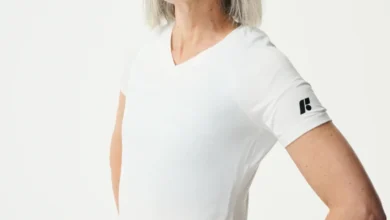
- Harvest & Mill: A standout in the basics category, this brand utilizes exclusively US-grown organic cotton, with production occurring entirely in the United States, thereby reducing the carbon footprint of transport and ensuring dye-free, low-water impact.
- Colorful Standard: A Danish brand that rejects the seasonal trend cycle entirely, opting instead for timeless, long-lasting essentials that encourage customers to buy less and keep items longer.
- Sheep Inc: Focused on the high-end knitwear sector, this brand bridges the gap between luxury and responsibility by sourcing merino wool through highly transparent, regenerative farming practices.
- SeamsFriendly: Providing a solution to the waste caused by ill-fitting clothes, this brand offers custom-made apparel based on exact measurements, reducing the likelihood of returns and discarded inventory.
- Oobi: An Australian-based brand that incorporates low-impact, non-toxic dyes and avoids animal products entirely, demonstrating that even niche childrenswear can be produced with high sustainability standards.
- Disruptor London: Focusing on the beauty sector, this brand advocates for waterless formulas and plastic-free packaging, addressing the often-overlooked environmental impacts of the personal care industry.
As M&S continues to navigate its role as a titan of the British high street, the gap between its public commitments and its operational realities remains wide. The brand has demonstrated a willingness to engage with the language of sustainability, yet the evidence suggests that it is not yet willing to compromise on the volume-driven production model that defines its bottom line. As consumers become increasingly informed, the pressure on M&S to move beyond mere disclosure and toward radical, systemic change will only intensify. Whether the brand chooses to lead this transition or remain a symbol of the status quo will define its relevance for the next century.