The Erosion of Brand Equity in the Era of Automated Marketing and the Urgent Need for Human-Centric Change Management

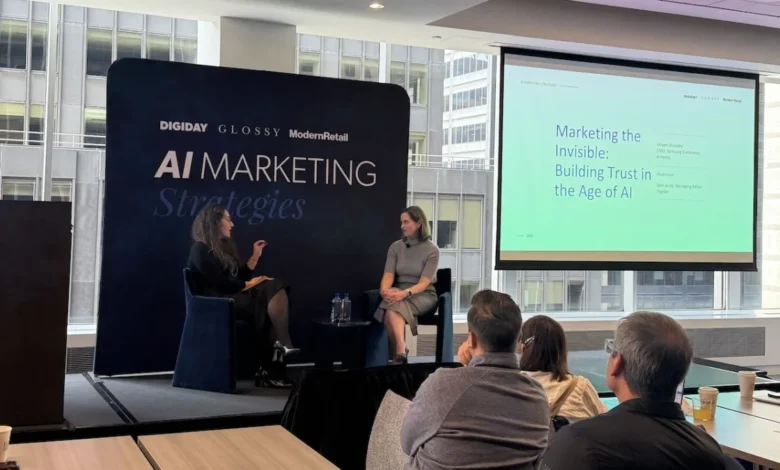
As Fall 2026 descends upon the global advertising landscape, the industry finds itself at a critical inflection point. The annual cycle of marketing conferences—stretching from the innovation hubs of New York and San Francisco to the creative capitals of Western Europe—is once again dominated by the omnipresent buzzword: “AI.” However, the tone of these discussions has shifted dramatically. Where the early days of the generative AI boom were characterized by breathless optimism regarding operational efficiency and creative scalability, the current climate is defined by a palpable sense of exhaustion and anxiety. As automated workflows become the default, the industry is grappling with the collateral damage of rapid adoption: widespread job losses, a measurable decline in creative standards, and a growing disconnect between brand identity and machine-generated output.
The inaugural AI Marketing Strategies event, co-hosted by Digiday, Glossy, and Modern Retail on September 24, served as a microcosm for these systemic tensions. Under the protection of Chatham House Rules, which allowed for unprecedented candor, senior brand-side marketers, agency executives, and technology leaders gathered to address the existential crisis facing their digital supply chains. The consensus was clear: the pursuit of "good enough" has replaced the pursuit of excellence, and the result is a fragile, diluted brand experience that threatens to alienate the very consumers these companies aim to engage.
The Declining Standard of Creative Output
The transition toward AI-driven content generation was initially pitched as a way to liberate talent from rote tasks. Instead, it has created a paradox where the volume of content has surged, but its quality has plummeted. During the town hall sessions at the event, brand-side participants expressed deep frustration with the current state of agency-led AI execution.
For premium brands, particularly in sectors such as beauty, luxury fashion, and high-end retail, brand equity is built on precision and emotional resonance. When agencies rely on automated platforms to churn out high-frequency content, the lack of human oversight becomes glaring. One participant representing a premium beauty house noted that they have effectively adopted a “10/80/10” workflow: 10% of their time is spent on precise prompt engineering, 80% is left to the AI to execute, and the final 10% is dedicated to manual human remediation to salvage the work.
This reality highlights a significant gap between agency promise and reality. Many brands reported that their agency partners, often under pressure to reduce costs, are offloading creative responsibilities to junior staff who are ill-equipped to police the nuances of brand guidelines. The result is a cavalier approach to visual identity, where fundamental errors—such as incorrect logo placement or inconsistent brand tone—have become increasingly common. This culture of “good enough” is not merely an aesthetic failing; it is a business risk that threatens long-term brand credibility.
A Chronology of the AI Disruption
To understand the current malaise, one must look at the rapid acceleration of the past three years.
- 2023: The "Experimental Phase." Agencies and brands began testing LLMs and image generators. The focus was on pilot programs, cost-saving projections, and early-stage efficiency metrics.
- 2024: The "Scaling Phase." Organizations began integrating AI into core workflows. This period saw the first major wave of layoffs in advertising, as departments deemed "redundant" were replaced by subscription-based AI software.
- 2025: The "Integration Crisis." As AI-driven content flooded the digital ecosystem, the sheer saturation led to a noticeable decline in engagement rates. Brands realized that mass-produced content was failing to break through the noise.
- 2026: The "Correction Phase." The industry is currently in a period of intense re-evaluation. The focus has shifted from "how much can we produce" to "how can we maintain brand integrity while leveraging these tools."
The Human Element and Change Management
The conversation at the AI Marketing Strategies event underscored that the most significant hurdle to successful AI implementation is not technological, but cultural. The term "change management" echoed through the halls, serving as a reminder that automation is a human-centric challenge.
Agency leaders are now tasked with justifying the value of human talent in a world where a campaign can be ideated and executed in hours rather than weeks. One small agency principal noted that the current transition mirrors the seismic shifts of the early 2000s, when the industry had to grapple with the emergence of the internet. Just as then, the challenge lies in redefining the role of the creative professional. If the machine handles the output, the human must handle the strategy, the ethics, and the nuanced brand guardianship.
However, the psychological toll of this transition cannot be ignored. The threat of obsolescence has led to widespread anxiety within the workforce. Leaders who fail to clearly define the future role of their employees risk losing top-tier talent to burnout or career pivots, further compounding the issue of declining standards.
Data, Measurement, and the "Zero-Click" World
The technical challenges are equally profound. Isabel Perry, Global EVP of Strategy at DEPT, provided a critical analysis of the current measurement landscape during her keynote. She argued that the industry is currently "drowning in measurement" while starving for insight. The reliance on generic KPIs—clicks, impressions, and views—is outdated in an environment where bot-to-bot interaction is rapidly becoming the norm.
Perry suggested that the industry must pivot toward "measuring the gaps." By identifying which parts of the consumer journey remain fundamentally human-driven, brands can allocate their budgets more effectively. This is a move away from chasing algorithmic vanity metrics and toward a strategy that prioritizes high-value human touchpoints.
Simultaneously, the industry is adjusting to the concept of the "zero-click" world. As AI-powered search agents (the "agentic audience") begin to curate information for users, brands are losing direct control over the initial discovery phase. Rajiv Ragu, VP of Digital at Thorne, emphasized that this shift necessitates a radical re-curation of legacy content. In a landscape where AI agents are the gatekeepers, content must be optimized not just for human readability, but for machine-interpretable authority. Failing to update content libraries, metadata, and authorship signals risks rendering a brand invisible to the new class of AI search interfaces.
Broader Implications and Strategic Outlook
The implications of this transition are wide-reaching. For the advertising industry, the "good enough" era is likely to be short-lived. Consumers, increasingly savvy about the difference between authentic human connection and synthetic content, are already showing signs of fatigue. Brands that continue to prioritize volume over substance are likely to see a long-term erosion in customer loyalty.
Furthermore, the legal and ethical landscape remains largely unsettled. Issues surrounding copyright, data usage, and the provenance of AI-generated content remain significant liabilities. As regulatory scrutiny increases, brands that have relied on opaque AI supply chains may find themselves vulnerable to intellectual property disputes and consumer backlash.
As we look toward 2027 and beyond, the winners in this space will be the organizations that successfully integrate AI as a tool for, rather than a replacement of, human creativity. This requires a fundamental restructuring of agency-client relationships, moving away from volume-based billing toward value-based partnerships that emphasize brand stewardship, human-centric design, and strategic agility.
The message from the 2026 conference circuit is a sobering one: the tools of the future are here, but the industry is still learning how to wield them without destroying the foundation upon which its value rests. The next phase of the AI era will not be defined by who uses the most sophisticated software, but by who best understands the boundaries of automation and the enduring necessity of the human touch.