The Evolution of Antique Jewelry Curation and the Rise of the Reimagined Talismanic Collection

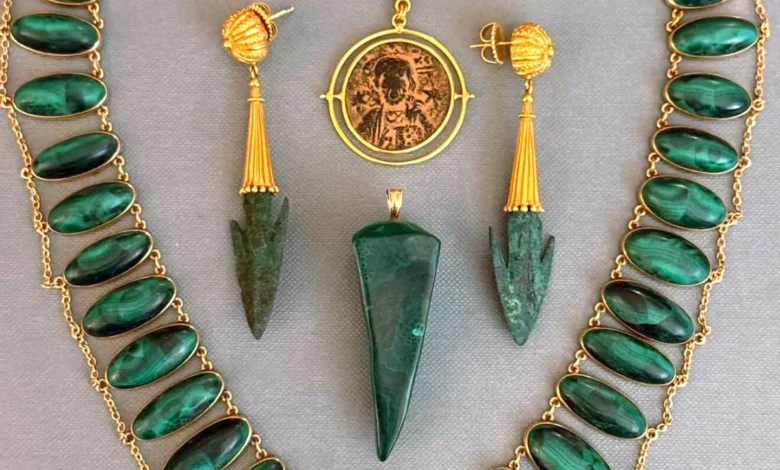
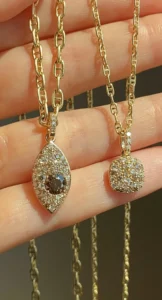
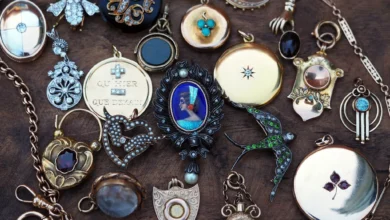
The landscape of the global antique jewelry market has undergone a significant transformation over the last decade, shifting from traditional auction house dominance to a highly personalized, community-driven ecosystem facilitated by social media platforms like Instagram. At the forefront of this movement is Cyndi, the curator behind the influential brand @TheFabNab, whose thirteen-year journey from a hobbyist collector to a respected designer and curator illustrates the broader trends currently shaping the luxury secondary market. Her approach, characterized by a "selective collective" philosophy, emphasizes the conversion of historical artifacts—such as Edwardian stick pins and Victorian brooches—into contemporary "talismans." This methodology not only preserves the craftsmanship of the past but also addresses a growing consumer demand for jewelry that offers both historical weight and modern edginess.
From Hobbyist to Curator: A Decade of Aesthetic Development
The trajectory of Cyndi’s collection began approximately 12 to 13 years ago, during a period when the jewelry industry was seeing a resurgence in artisanal, bead-based designs. Initially engaging with semi-precious materials, her focus eventually pivoted toward precious metals and stones, marking a transition into the more complex world of antiquities. This evolution began with the acquisition of antique stick pins, which, over a decade ago, were readily available at lower price points. These items served as the entry point for a broader exploration of how small-scale historical components could be adapted for modern wear.

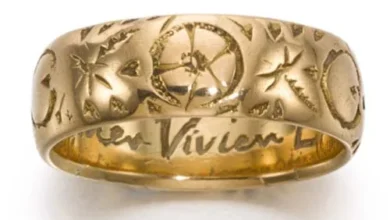
By converting these pins into rings and charms, Cyndi tapped into a niche that has since become a major sector of the jewelry market: the "conversion" piece. This practice involves taking a jewelry item that has fallen out of fashion—such as a brooch or a hatpin—and modifying its hardware to make it functional for contemporary fashion, such as a pendant or a ring. This period of early collecting established the foundation for what would become her signature style: an edgy, vintage aesthetic that favors medallions, religious iconography, serpents, and rubies.
The Art of Conversion: Breathing New Life into Edwardian and Art Deco Artifacts
A central pillar of Cyndi’s work is her "Lucky Numbers + Talismans" collection. This capsule project focuses on the reimagining of Edwardian and Art Deco components, utilizing the geometric precision of early 20th-century design to create personalized items that resonate with the wearer’s "destiny numbers." The process is more than aesthetic; it is a form of archival preservation that allows damaged or obsolete pieces of history to remain in circulation.
In the professional jewelry trade, the ethics of conversion are often debated. However, the market has shown a clear preference for wearable history over museum-locked artifacts. Cyndi’s focus on "re-dreaming" these pieces involves identifying the "good juju" or inherent luck of a piece and bringing it forward into a new context. One of her most recognizable designs is the Victorian-era ruby spike, originally an antique brooch. Finding such pieces in their original state is increasingly difficult, leading Cyndi to recreate the style using existing Art Deco pins. These "spikes" have become a staple for collectors seeking a "neckmess"—a curated, layered look of multiple necklaces—that combines toughness with historical elegance.

Historical Context and Design Motifs: The Allure of the Celestial and the Egyptian Revival
TheFabNab collection is heavily influenced by specific historical movements, most notably the Egyptian Revival and the Celestial trends of the late 19th and early 20th centuries. The Egyptian Revival movement, which saw peaks in the mid-19th century and again after the discovery of King Tutankhamun’s tomb in 1922, is represented in Cyndi’s collection through winged scarabs and brushed gold snakes. These motifs were originally symbols of rebirth and eternity, and their continued popularity in the modern market speaks to a persistent human fascination with ancient mythology.
Celestial themes also play a vital role in her curation. Cyndi’s affinity for the H.Stern Genesis line highlights a successful modern interpretation of antique stars. However, the gold standard remains the true antique star: pieces featuring old mine cut diamonds set in darkened silver over gold. This "silver-topped gold" technique was a hallmark of the Georgian and Victorian eras, used to enhance the brilliance of diamonds under candlelight before the widespread use of platinum or white gold.
Furthermore, the collection includes diamond-encrusted pocket watches and antique diamond wings. These items represent the pinnacle of miniature craftsmanship from a pre-industrial era, where the level of detail was a testament to the artisan’s skill rather than machine precision.

The Economics of the Antique Jewelry Market and the Role of Digital Community
The growth of @TheFabNab coincides with a broader shift in how antique jewelry is sourced and sold. In the early years of her collecting, Cyndi relied on traditional avenues such as eBay and local antique shops. However, the rise of Instagram has revolutionized the trade, allowing collectors to bypass traditional middle-men and build direct relationships with dealers globally.
The global antique jewelry market is currently valued at several billion dollars, with a compound annual growth rate (CAGR) that has remained steady as consumers increasingly view jewelry as a hedge against inflation and a more sustainable alternative to "fast fashion" jewelry. The digital community has fostered a "mutual support" system, where dealers and collectors share knowledge, authenticate pieces, and facilitate high-value transactions through social media. This network has transformed the act of collecting from a solitary pursuit into a collaborative social experience.
Trade Shows and the Collaborative Network of Modern Antiquarians
A significant portion of Cyndi’s professional network was forged at international trade shows, which remain the lifeblood of the antique jewelry industry. These events serve as critical hubs for sourcing and networking. Key locations mentioned in her journey include:

- The Paris Flea (Marché aux Puces de Saint-Ouen): One of the world’s most famous antique markets, offering a vast array of European historical pieces.
- Portobello Road, London: A global center for antique silver and jewelry where Cyndi established key industry connections, notably with Ishy of @IshyAntiques.
- The Miami Beach Antique Show: Often cited as the most important event for the trade in North America, where collectors and dealers from around the world meet to trade high-end estate jewelry.
- The Las Vegas Antique Jewelry & Watch Show: A major event that runs concurrently with the modern jewelry shows, serving as a primary sourcing ground for American dealers.
- The Hillsborough Show: A local California show that illustrates the importance of regional markets in building community among collectors.
These shows are where the "jewelry gang"—a term often used by this community—reunites. The relationships formed at these events, such as those with dealers like Lenore Dailey, Lindsey of @parkavenueantiques, and Laurie Geller, are essential for maintaining a flow of high-quality, authentic inventory in a market where trust is the primary currency.
Psychological Impact and the Future of Personalized Luxury
Beyond the financial and historical value, the collection curated by @TheFabNab emphasizes the "talismanic" nature of jewelry. In a journalistic analysis of the current market, it is evident that consumers are moving away from generic luxury in favor of pieces that offer "a layer of love that protects and shields." This psychological connection—the idea that a piece of jewelry can represent strength, courage, or a personal victory—is a driving force behind the success of independent curators.
The "inner badass goddess" aesthetic promoted by Cyndi aligns with a broader cultural movement toward female empowerment and self-gifting. No longer is high-end jewelry solely the province of gifts from partners; women are increasingly purchasing significant pieces for themselves to commemorate milestones.

Conclusion: The Broader Impact on the Jewelry Industry
The story of @TheFabNab is more than a personal collection narrative; it is a case study in the modern antiquarian movement. By blending historical scholarship with a keen eye for contemporary trends, Cyndi has created a brand that honors the past while remaining firmly rooted in the present. The success of her "re-dreamt" pieces suggests that the future of the jewelry industry may lie in this hybrid approach: the ethical repurposing of historical artifacts to meet the emotional and aesthetic needs of the modern collector.
As the market continues to evolve, the reliance on digital communities and international trade shows will likely deepen. The ability to identify "hidden gems" in a crowded marketplace, combined with the technical skill to convert those gems into wearable art, positions curators like Cyndi as essential figures in the preservation of jewelry history. Her collection serves as a reminder that jewelry is not merely an accessory, but a wearable timeline of human history, craftsmanship, and personal identity.