The Evolution of Generative AI in Fashion Retail and the Shift Toward Digital-First Production Models


The integration of generative artificial intelligence into the fashion industry has transitioned from a fringe experimental curiosity into a foundational element of modern retail operations. As documented in The Interline’s AI Report 2026, the sector is currently undergoing a structural transformation that mirrors the shift from physical storefronts to digital commerce platforms. By replacing traditional, resource-intensive photography workflows with synthetic media, major apparel brands are achieving unprecedented reductions in production costs while simultaneously navigating complex ethical, legal, and operational landscapes.
A Chronology of Technological Adoption in Fashion Imaging
The trajectory of AI in fashion began in earnest around 2023, when diffusion models first enabled the synthesis of high-resolution images from basic text inputs. By 2024, early adopters within the fashion sector began testing these tools to replace or augment traditional mannequin photography. At that stage, the technology was characterized by the "uncanny valley"—a psychological phenomenon where synthetic human representations appear sufficiently realistic to be unsettling, yet exhibit subtle errors in fabric texture, lighting consistency, and anatomical accuracy.
Between 2024 and 2026, the technology underwent a period of rapid refinement. Advancements in Large Language Models (LLMs) and latent diffusion models, such as Google’s Gemini Image and specialized proprietary tools developed by firms like ViZO Studio, effectively bridged the gap between synthetic art and photorealism. Today, the focus has shifted from mere existence to operational scalability, with brands integrating AI pipelines directly into their supply chain and marketing workflows.

Economic Impact: The Shift in Unit Costs
The most immediate and measurable impact of generative AI is the drastic compression of unit-economic costs for digital imagery. In a traditional high-street fashion retail model, the production of a standard campaign involves significant capital expenditure: professional models, makeup artists, photographers, studio rentals, and post-production editing.
For a typical batch of 50 products, the conventional cost structure averages approximately £2,500, or £50 per product. Under the new AI-augmented model, where garments are photographed on a neutral mannequin and subsequently rendered onto a diverse array of virtual models via generative software, that cost drops to roughly £50 total, or £1 per unit. This represents a 98% reduction in direct production expenses.
However, industry analysts note that this calculation does not account for "soft" costs, such as the initial investment in bespoke AI training, software licensing, and the specialized labor required to manage the digital infrastructure. While the per-image cost is marginal, the technical requirement for manual oversight—correcting artifacts, shadows, and consistency errors—remains a necessary, albeit diminishing, overhead.
Beyond Photography: The Third Stage of AI Integration
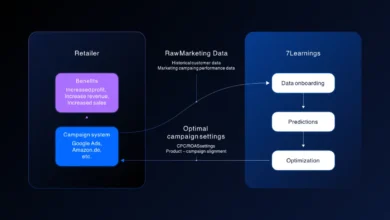
While imagery constitutes the "second stage" of AI’s integration into fashion, the industry is already entering a third, more disruptive phase: the automation of design, demand planning, and logistics. Modern workflows now allow for the upload of previous sales data into generative models to forecast upcoming trends and design new collections that are then transmitted directly to manufacturing partners.

Furthermore, AI-driven platforms linked to advertising and conversion-tracking tools are now capable of real-time adjustments to Recommended Retail Prices (RRPs) and budget allocations. By grounding AI models in specific brand context, retailers are creating a closed-loop system where design, production, and marketing are interconnected, significantly increasing operational agility.
Ethical, Legal, and Strategic Risks
The rapid adoption of these technologies has not occurred without significant debate. The industry faces three primary categories of concern:
- Intellectual Property and Data Sovereignty: The reliance on third-party generative models raises questions regarding the ownership of "synthetic faces" and the risk of competitor data scraping. As models become more personalized, the legal framework surrounding the ownership of AI-generated assets remains in a state of flux.
- Environmental and Ethical Considerations: While AI reduces the need for international travel and physical shipping of samples, the energy consumption required for massive-scale server computation is an emerging environmental concern. Additionally, the displacement of traditional creative roles—photographers, models, and stylists—has prompted calls for industry-wide discussions on workforce transitions.
- Market Volatility and Dependency: The current cost-effectiveness of these tools is, in part, subsidized by tech companies competing for market share. As these firms reach maturity or consolidation, pricing models are expected to shift. Furthermore, relying on proprietary AI platforms creates a strategic vulnerability; if a platform restricts access or undergoes service outages, a brand’s entire content pipeline could be jeopardized.
The Changing Role of the Human Professional
The role of the creative professional is not being eliminated, but rather re-engineered. The demand for traditional technical skills is being augmented by a requirement for "digital literacy." Roles such as "AI Prompt Engineer" and "Digital Art Director" are becoming essential components of modern fashion teams. These professionals act as the bridge between raw data and commercial output, ensuring that the brand identity is maintained even as the tools of production become automated.
The consensus among industry experts is that over-dependency on AI is a critical failure point. Human generalists, capable of overseeing disparate systems and navigating the complexities of brand strategy, are becoming increasingly indispensable. These individuals are required to manage the "human-in-the-loop" verification process, ensuring that AI-generated output remains consistent with the brand’s quality standards and legal compliance requirements.

Future Implications and Strategic Recommendations
The broader implication for the global fashion industry is a move toward a hyper-personalized, high-velocity production cycle. Brands that can effectively integrate AI into their supply chain will gain a competitive advantage in both cost and speed-to-market. However, the potential for market disruption remains high. As the technology democratizes, the barriers to entry for new, agile fashion brands will lower, potentially intensifying competition for established retailers.
For leadership in the fashion sector, the recommendation is a policy of informed experimentation. By investing in internal knowledge—rather than relying solely on black-box, external solutions—brands can maintain control over their creative assets and long-term infrastructure. The goal is to leverage AI as a tool for efficiency while maintaining the human oversight necessary to navigate the ethical, legal, and creative complexities of the 21st-century retail landscape.
As the industry moves toward 2027 and beyond, the divergence between brands that have successfully integrated AI into their core operations and those that remain tethered to legacy production models is expected to widen. The fundamental challenge will not be the technology itself, but the organizational culture required to adapt to a reality where the boundary between the physical garment and the digital representation is increasingly seamless.