The Hidden Cost of Glamour: Why London Fashion Week Must Confront the Global Crisis of Modern Slavery

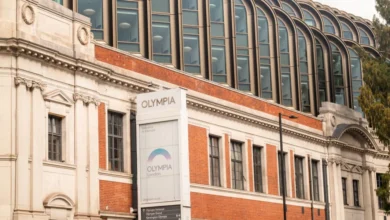
As London Fashion Week unfolds from 19 to 23 February, the global spotlight turns toward the British capital to celebrate creativity, identity, and the next generation of style. Designers, retailers, and high-profile influencers are convening to champion innovation, yet this year’s festivities occur against a backdrop of intensifying scrutiny regarding the industry’s moral foundation. While the event celebrates the aesthetic brilliance of British fashion, it also serves as a critical juncture to address a systemic failure: the persistence of modern slavery and environmental degradation within the very supply chains that sustain the industry’s luxury and high-street output.
The current narrative of "sustainability" in fashion has largely focused on eco-friendly materials and carbon neutrality. However, activists and human rights organizations are increasingly demanding that the conversation expand to include the human element. With an estimated 50 million people currently living in conditions of modern slavery worldwide, the fashion sector remains a significant contributor to this statistic. In 2021 alone, reports to the UK Modern Slavery & Exploitation Helpline indicated that 10% of cases were directly linked to businesses within the garment sector. This data point is not merely a number; it is a diagnostic of an industry that, despite public pledges, remains tethered to exploitative labor practices.
The Illusion of Ethical Luxury
A common misconception in contemporary consumer culture is the belief that exploitation is exclusively a "fast fashion" problem. While the rapid, high-volume production models of retailers like Shein have been criticized for their environmental footprint and labor intensity, luxury houses are not immune to these systemic failures. Recent scandals involving major luxury labels, including investigations into Italian workshops, have revealed that even high-end, "Made in Italy" or "Made in the UK" branding can mask the realities of sweatshop conditions, illegal subcontracting, and wage theft.
The industry operates on a complex, multi-tiered manufacturing structure that employs between 25 and 60 million people globally. Since the 1980s, the drive to maximize profit margins has pushed production into regions with minimal labor protections and weak environmental governance. When consumers pay a premium for a luxury garment, they are often led to believe that the price point guarantees ethical treatment of the makers. Investigations have proven this to be a fallacy, as the pursuit of speed and lower costs infiltrates every tier of the supply chain, regardless of the retail price tag.
A Chronology of Supply Chain Contamination
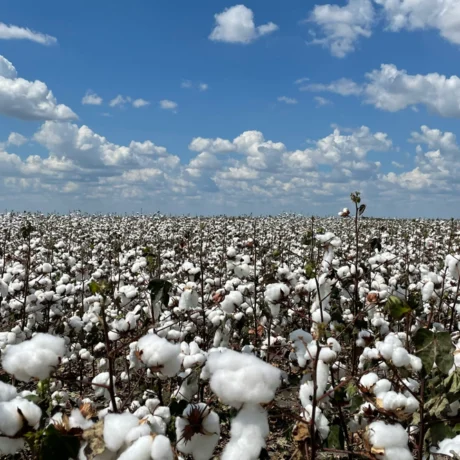
The roots of the crisis often lie at the very beginning of the production cycle: the extraction of raw materials. Cotton, the backbone of the global textile industry, is frequently sourced from regions where forced labor is state-sponsored.
A critical turning point in global awareness occurred in recent years, as researchers from institutions like Sheffield Hallam University began to document the "laundering" of cotton. Their reports suggest that more than 100 major global brands may be utilizing cotton produced under state-imposed forced labor programs in the Uyghur Region of China. Simultaneously, in Turkmenistan, the government has historically mobilized public sector workers—including teachers and medical staff—into the annual cotton harvest under threat of fines or termination.
This creates a "dirty" supply chain that is difficult to untangle. Once this cotton is processed, it is shipped globally, woven into fabrics, and sewn into garments. By the time the final product arrives in a boutique in Mayfair or an outlet in Leicester, the connection to the original forced labor is effectively obscured, leaving retailers with a plausible—if morally questionable—deniability.
Geography of Exploitation: From Leicester to Milan
The myth that labor abuses are restricted to the Global South was shattered by the 2020 investigations into the garment district in Leicester, UK. Reports exposed that workers, often immigrants, were being paid as little as £3 per hour—significantly below the national minimum wage—and operating in environments that breached basic health and safety protocols during the height of the COVID-19 pandemic.
These findings were mirrored in Italy, where labor inspectors have uncovered similar patterns in workshops producing for high-end fashion houses. These workshops frequently utilize unauthorized subcontractors to meet demand during peak seasons, allowing the parent company to distance itself from the immediate labor violations. The geographic proximity of these abuses to major fashion hubs proves that "Made in Europe" is not, by default, a guarantee of ethical production.
The Environmental and Human Cost
The environmental impact of fashion is intrinsically linked to its labor practices. The industry generates an annual carbon footprint of approximately 3.3 billion tonnes of CO2e, a figure that rivals the combined output of all 28 member states of the European Union. This environmental toll is not felt equally; it is the workers on the factory floors and the communities living in the shadow of chemical-intensive textile plants who bear the brunt of the pollution.
Water depletion, soil degradation, and the discharge of toxic chemicals are standard consequences of high-volume, low-cost textile manufacturing. The same pressure to produce more garments at a faster rate—the hallmark of the "fleeting trend" business model—forces workers into longer hours and more dangerous conditions, while simultaneously accelerating the exhaustion of local natural resources.
The Regulatory Deficit: Why Voluntary Pledges Fail
For decades, the fashion industry has relied on "Corporate Social Responsibility" (CSR) reports and voluntary ethical pledges to signal progress. However, the lack of enforceable penalties has rendered these initiatives largely performative. The UK’s Modern Slavery Act 2015 requires large companies to report on their efforts to identify slavery in their supply chains, yet it lacks the "teeth" of mandatory due diligence requirements. Companies can publish a statement, ignore the findings, and face no legal or financial consequences.
In contrast, other jurisdictions are moving toward more rigorous oversight. The European Union has recently adopted mandatory human rights due diligence rules, compelling companies to actively identify and rectify abuses within their entire supply chain. Similarly, the United States has implemented import controls via the Uyghur Forced Labor Prevention Act (UFLPA), which allows for the seizure of goods suspected of being produced through forced labor.
The UK is currently lagging behind these international standards. Without a "Business, Human Rights and Environment Act," the UK remains an outlier, effectively allowing companies to continue business-as-usual without the pressure of accountability.
Towards a Systemic Shift
The call for legislative change is growing louder within the halls of Parliament. During a debate on 12 February, Minister Chris Bryant highlighted the government’s ongoing review of Responsible Business Conduct. The expectation is that this review will culminate in robust policy recommendations that go beyond the current, inadequate framework.
Industry analysts argue that for real change to occur, human rights must be treated as a non-negotiable metric of success, equal in importance to profit margins. Several emerging, circular-model brands are already demonstrating that it is possible to maintain profitability while ensuring full transparency and worker welfare. These models prioritize longevity, sustainable sourcing, and direct oversight of manufacturing facilities.
However, these niche successes are insufficient to transform the global industry. A paradigm shift requires:
- Mandatory Due Diligence: Legally requiring brands to map their entire supply chain and disclose the conditions of every tier.
- Import Bans: Implementing stricter controls on goods linked to forced labor, effectively closing the UK market to products of exploitation.
- Transparency Standards: Standardizing how companies report on social impact, ensuring that sustainability reports are audited by independent third parties rather than the companies themselves.
Conclusion: The Future of Fashion
As London Fashion Week continues to dictate the trends of the coming season, the industry faces a reckoning. The cultural power of fashion—its ability to influence social norms and consumer behavior—must be matched by a commitment to accountability.
The current model, which relies on the "hidden costs" of exploited workers and degraded environments, is becoming increasingly untenable. Consumers are more informed than ever, and the demand for ethical products is rising. Yet, as long as exploitation remains a low-risk, high-reward strategy, meaningful change will be slow to materialize.
The legacy of this year’s Fashion Week should not be judged solely by the designs on the runway, but by the progress made toward a future where the industry is grounded in human rights. By adopting mandatory due diligence laws and ending the reliance on voluntary pledges, the UK has the opportunity to transform from a laggard into a leader in ethical fashion. Until then, the clothes worn on the catwalk remain shadowed by the realities of those who made them, serving as a reminder that the most essential trend in fashion is the protection of human dignity.