New Section 301 Tariffs Threaten Global Footwear Supply Chains and Heighten Cost Pressures for American Consumers

The global footwear and apparel industries are once again facing severe economic headwinds following the announcement of a new sweeping wave of Section 301 tariffs by the United States government. Just as shoe brands and major retail conglomerates anticipated a temporary reprieve lasting through January 10 to lobby for an extension of existing trade pauses, the U.S. trade apparatus disrupted expectations. The newly proposed duties, which could scale as high as 20 percent or more depending on the jurisdiction, stem from a comprehensive eight-month investigation conducted by the Office of the U.S. Trade Representative (USTR). The probe concluded that numerous international trading partners systematically promoted structural practices resulting in excess manufacturing and production capacity, ultimately flooding the U.S. market with unfairly subsidized goods.
The unfolding trade policy shift threatens to destabilize an already complex and fragile global supply chain network. With major manufacturing hubs across Asia and Europe squarely in the crosshairs, footwear executives are once again forced to evaluate whether another costly supply chain migration is necessary—or if the cumulative burden of tariffs has rendered manufacturing shifts economically unfeasible. As inflation-weary consumers grapple with rising expenses on everyday necessities, industry advocates warn that the newly proposed levies will translate directly into painful price hikes at the cash register, heavily impacting families purchasing essential items such as children’s footwear.
Origins of the Investigation and Targeted Economies
The foundation for the latest round of trade penalties was laid during an extensive eight-month inquiry by the USTR. First brought to public attention via reporting from The Wall Street Journal, the investigation scrutinized trade and industrial policies across 16 distinct economies. Crucially, the vast majority of the countries implicated in the probe are deeply integrated into the global apparel and footwear manufacturing ecosystems.
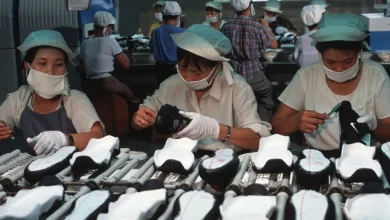
Among the 16 nations evaluated are Bangladesh, Cambodia, China, the European Union, India, Indonesia, Japan, Malaysia, Mexico, Norway, Singapore, South Korea, Switzerland, Taiwan, Thailand, and Vietnam. Of this group, eight countries—Bangladesh, Cambodia, China, the European Union, India, Indonesia, Malaysia, and Vietnam—possess robust, established shoe production capabilities that supply a substantial percentage of the footwear purchased annually by American consumers.
The USTR’s findings argue that aggressive state subsidies and industrial policies in these regions have fostered massive excess capacity, creating global market imbalances that disadvantage domestic producers. Consequently, the administration has proposed a tiered framework of tariffs designed to penalize these perceived structural inequities. Goldman Sachs economic analysts tracking the regulatory timeline note that the USTR has scheduled a formal public hearing regarding the proposal for January 25, paving the way for official implementation and enforcement by late February or March.
Chronology of the U.S.-China Trade Truce and Diplomatic Context
The timing of the tariff announcement complicates an already delicate diplomatic landscape, particularly regarding trade relations between the United States and China. Last year, shoe firms and major retail importers breathed a sigh of relief when Washington and Beijing negotiated a one-year reciprocal reprieve on tariffs covering bilateral imports. That vital agreement was originally scheduled to sunset on November 10.
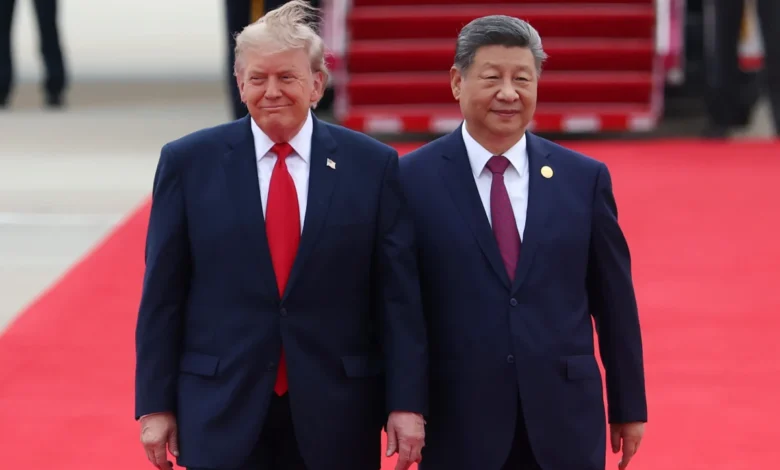
However, during a high-profile diplomatic summit at the White House in September, U.S. President Donald Trump and Chinese President Xi Jinping agreed to a short, two-month extension, pushing the expiration date to January 10. This temporary bridge provided a narrow window for industry stakeholders to lobby for a second, more permanent suspension of heightened duties.
Hopes for a diplomatic breakthrough were further fueled when President Trump traveled to Shenzhen, China, for the Asia-Pacific Economic Cooperation (APEC) summit. Industry observers anticipated that Trump and Xi would utilize an off-site bilateral meeting to discuss extending their trade truce and easing tariff rates ahead of the January deadline. While formal discussions on a secondary pause remain unconfirmed, attention has shifted to the upcoming Group of 20 summit in Florida, where Trump is expected to host President Xi. Whether trade policy and tariff relief will feature prominently in those discussions remains entirely unpredictable, leaving footwear executives navigating a landscape of acute uncertainty.
Projected Tariff Rates Across Key Manufacturing Hubs
While China remains the primary and most visible target of the U.S. trade enforcement strategy, the newly announced framework introduces significant volatility across alternative sourcing countries. According to comprehensive economic reports, the tariff burden will vary widely depending on whether individual nations successfully negotiate bilateral trade deals with Washington.
China faces the immediate prospect of an additional tariff rate reaching up to 20 percent, layered directly on top of existing Section 301 duties. This escalation could be temporarily stayed or modified only if a comprehensive trade agreement or a second extension is formally struck between Washington and Beijing.
Meanwhile, other critical sourcing destinations face equally aggressive financial penalties under the proposed USTR schedule:
- Vietnam: Projected to face tariff rates as high as 20 percent if a trade arrangement is successfully finalized. However, should negotiations stall or fail, Vietnam’s rate could surge drastically to 35 percent. Industry sources also indicate that specialized machinery and industrial components within Vietnam’s supply chain are explicitly targeted.
- European Union: Expected to confront a baseline tariff rate of approximately 15 percent on applicable categories.
- India: Slated for an initial tariff rate of 25 percent, with provisions to lower the duty if a formal bilateral trade pact is reached prior to implementation.
- Other Asian Exporters: Key regional players such as Bangladesh, Cambodia, and Indonesia are projected to face unified tariff rates hovering near 18 percent.
This intricate matrix of potential levies complicates long-term sourcing strategies. For years, footwear brands executed "China-plus-one" strategies, moving production lines to nations like Vietnam, Indonesia, and Cambodia to mitigate the risks associated with the initial trade conflicts. The revelation that these secondary manufacturing hubs are now primary targets under the excess capacity probe suggests that brands can no longer easily escape tariff exposure by simply relocating assembly plants.
Industry Reaction and Economic Implications
Trade organizations representing major footwear brands, distributors, and retailers have mobilized swiftly to condemn the new tariff proposals, arguing that past enforcement has proven the policy to be counterproductive. Matt Priest, president and chief executive officer of the Footwear Distributors and Retailers of America (FDRA), pulled no punches in assessing the real-world impact of the administration’s trade strategy.
"The federal government’s own research found that Section 301 tariffs were passed through almost dollar-for-dollar to U.S. importers," Priest stated. "That means another 10 percent tariff is another 10 percent cost increase on affected footwear imports."
Priest emphasized that the footwear sector occupies a uniquely vulnerable position within the American retail economy. Footwear already faces some of the highest baseline tariff rates embedded within the U.S. tariff code. Because shoes are an indispensable everyday commodity rather than a discretionary luxury, the primary consequence of heightened duties is diminished consumer affordability.
"Our biggest concern is affordability, especially for families buying children’s shoes, one of the most frequent and essential purchases parents make," Priest noted. He asserted that years of empirical data demonstrate that Section 301 tariffs have fundamentally failed to achieve their stated policy objectives. Instead of reshoring manufacturing en masse or altering foreign industrial policies, the tariffs have merely inflated operating expenses for American businesses while heavily penalizing consumers.
Furthermore, industry advocates point to recent domestic political signals to underscore their arguments. Priest highlighted that the outcome of recent midterm elections clearly demonstrated that American voters prioritize economic relief, demanding that policymakers focus squarely on lowering the cost of living and making everyday household necessities more affordable. Piling cumulative percentage points of taxation onto essential apparel and footwear runs directly counter to those expressed voter preferences.
The Broader Outlook for Brands and Consumers
As the industry awaits the USTR’s scheduled public hearing on January 25, executive boardrooms across the footwear sector are locked in intensive strategic planning. Supply chain architects must weigh the immense capital expenditure and operational disruption required to shift production against the certainty of absorbing steep margin compression or passing cost increases onto consumers.
For decades, the global footwear market thrived on frictionless international trade and optimized manufacturing logistics. The institutionalization of broad-based tariffs as a permanent instrument of trade policy is fundamentally rewriting the operational playbook. Whether through renewed diplomatic negotiations ahead of the January 10 deadline or through protracted legal and regulatory challenges following the expected late-winter tariff implementation, the coming weeks will determine the financial trajectory for footwear brands and the retail prices confronting American shoppers for the foreseeable future.
Related posts: