The Erosion of Brand Equity in the Era of AI-Driven Marketing Automation

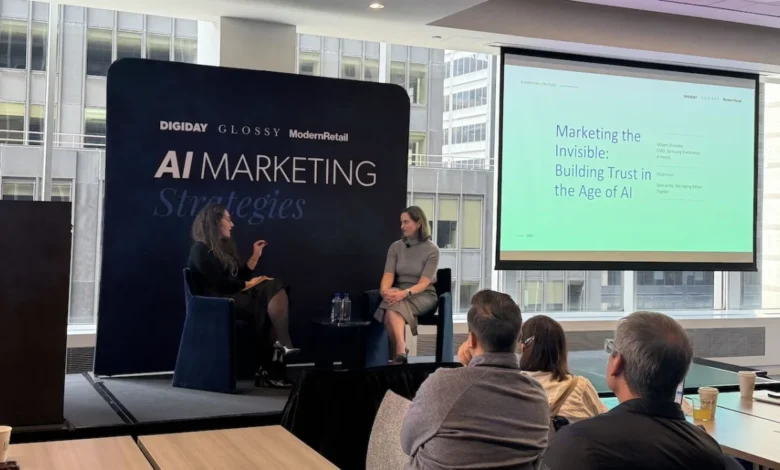
It is Fall 2026, and the global advertising industry has entered its most frantic event cycle of the year. From the glass-walled conference centers of Manhattan to the creative hubs of London and Paris, the term "AI" echoes through every keynote, panel, and networking lounge. Yet, the tenor of these discussions has shifted dramatically. Where the early days of the generative AI boom were characterized by breathless optimism regarding operational efficiency and creative "superpowers," the current mood is defined by a palpable weariness. As the industry grapples with significant workforce reductions and a discernible slide in creative standards, marketers are beginning to reckon with the unintended consequences of an "automation-first" philosophy.
The Shift from Innovation to Standardization
The inaugural AI Marketing Strategies event, held on September 24 and co-hosted by Digiday, Glossy, and Modern Retail, served as a microcosm for this industry-wide anxiety. While the official stage presentations often focused on the technical potential of autonomous agents, the real story unfolded behind closed doors. In town hall sessions conducted under the Chatham House Rule, brand-side leaders expressed profound concern over the erosion of quality control within their digital supply chains.
The primary tension identified by participants is a conflict between the speed of AI-generated output and the protection of long-term brand equity. For premium brands—particularly in sectors like luxury beauty and high-end fashion—the "good enough" culture fostered by automated workflows is proving to be a liability. One representative from a prestige beauty label characterized current AI creative output as inherently insufficient, requiring a rigorous "10/80/10" formula: 10% of time spent on precise prompting, 80% on machine-led generation, and a final 10% of high-touch human refinement to bring the work up to standard. The concern is that many agencies, incentivized by the efficiency gains of AI, are skipping the final 10% to prioritize volume over craft.
The Human Cost and the Agency Gap
The transition to AI-integrated workflows has coincided with a wave of industry layoffs, creating a talent vacuum. According to industry tracking data from late 2025 and early 2026, the marketing and advertising sector saw a 14% contraction in entry-level creative roles, often replaced by AI orchestration positions. This shift has left many agencies relying on junior staff to oversee complex, algorithmically driven campaigns—a strategy that veterans argue is failing to safeguard brand integrity.
"I have seen countless creative executions from our agency partners where the logo is misaligned, the brand voice is jarring, or the cultural context is completely absent," one brand executive noted during the event. "There is a growing acceptance of ‘good enough’ as the baseline for delivery, but for a brand that relies on prestige, ‘good enough’ is often a death knell for consumer trust."
This sentiment underscores a broader struggle for agency leadership: the challenge of change management. Just as the industry underwent a painful digital transformation in the early 2010s, the current transition to an AI-first environment requires a wholesale restructuring of labor. Agency chiefs are now finding that while AI can collapse a week-long project into a few hours of processing, the human value proposition is being forced to migrate toward strategy, brand guardianship, and high-level creative direction.
The "Zero-Click" Frontier and Agentic Traffic
Beyond creative quality, the technical underpinnings of the internet are evolving in ways that threaten legacy marketing strategies. Isabel Perry, Global EVP of Strategy at DEPT, highlighted the impending reality of an internet where non-human traffic—bots and autonomous agents—is beginning to outweigh human traffic.
In this "agentic" era, traditional measurement metrics are becoming obsolete. "We are currently drowning in data, yet we are starved for meaningful insights," Perry stated. She argued that marketers must stop chasing "semi-generic" metrics that offer little strategic value and instead focus on measuring the "gaps" in the consumer journey. This involves identifying which stages of the funnel remain fundamentally human-centric and allocating budget accordingly, while letting AI handle the commoditized, repetitive tasks.
This structural shift was echoed by Rajiv Ragu, VP of Digital at Thorne, who addressed the complexities of product discovery in a "zero-click world." As search engines and AI assistants move toward providing direct answers rather than driving traffic to brand websites, the nature of legacy content is changing. Ragu emphasized that brands must move from a model of "content creation" to "content curation." Legacy content libraries, if left unmanaged, can become brand liabilities. "You need to audit what content is still being picked up by these AI agents," Ragu noted. "Updating authorship and verifying the accuracy of long-standing content is an unglamorous but necessary investment to prevent brand damage in an era where AI-generated responses are the primary interface for the consumer."
Economic and Strategic Implications
The financial implications of this transition are substantial. As brands realize that AI automation can degrade the quality of their premium offerings, there is an emerging trend of "re-humanization" within high-end campaigns. Market analysts suggest that while AI will continue to dominate the mid-tier and lower-tier content markets, the top-tier creative sector will see a "human premium" emerge. Brands are increasingly mandating human oversight for every piece of content that touches the consumer, a move that is driving up the demand for skilled "AI-literate" creative directors who can bridge the gap between prompt-based efficiency and brand-consistent execution.
Furthermore, the "internet of two audiences"—human versus agentic—is forcing a split in SEO and content strategy. Brands must now maintain a bifurcated strategy: one that provides clean, structured data for AI agents to ingest and summarize, and another that offers deep, emotionally resonant content for human consumers who choose to bypass the AI assistant.
Conclusion: The Need for New Standards
The prevailing theme at the Fall 2026 industry events is not a rejection of AI, but a demand for discipline. The "wild west" phase of generative AI, where speed and output volume were the primary KPIs, is being replaced by a period of stabilization.
For brands and agencies, the path forward involves three critical pillars:
- Defined Quality Controls: Establishing non-negotiable brand standards that AI systems must adhere to, with mandatory human verification processes before deployment.
- Talent Reskilling: A shift away from basic content generation toward strategic orchestration, where the human role is to provide the creative intent and the final aesthetic polish.
- Strategic Measurement: A move away from volume-based metrics toward gap-based analysis, ensuring that marketing spend is focused on the parts of the consumer journey that require authentic human interaction.
As the industry looks toward 2027, the success of advertising firms will likely be measured not by how much content they can produce with AI, but by how effectively they can maintain the standard of their brand in an environment where the "human element" is increasingly rare. The transition is undeniably difficult, but for the brands that successfully navigate this, it offers an opportunity to distinguish themselves from the rising tide of automated, generic content that threatens to saturate the digital landscape.