Mayer & Cie Reaffirms Premium Commitment and Expands Market Reach Through Huixing Partnership Following Successful ITM 2026 Debut

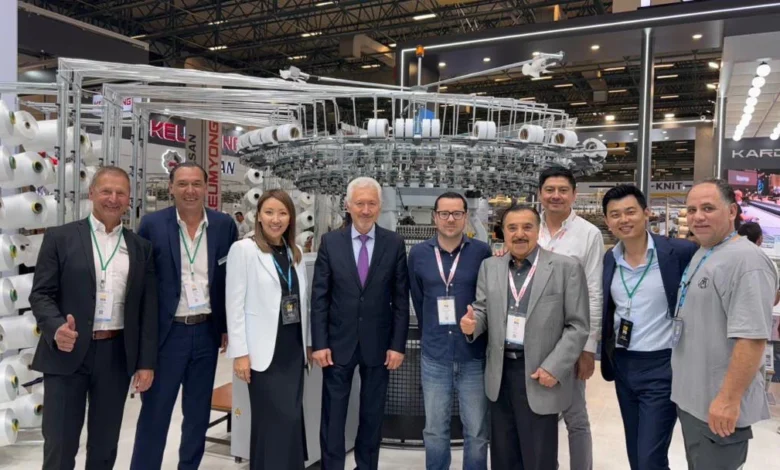
Mayer & Cie experienced a significant and overwhelmingly positive reception at the ITM 2026 exhibition in Istanbul, marking a pivotal moment for the German circular knitting machine manufacturer as it showcased its premium "Made in Germany" offerings. The company, now operating under the umbrella of Huixing, presented its advanced machinery alongside its Turkish representative, Mayer Mümessillik, engaging in crucial discussions with a diverse clientele spanning numerous global markets. The restart of Mayer & Cie, bolstered by a robust worldwide network of representatives and the assured continuity of service and spare parts supply, was met with considerable enthusiasm from customers, signaling a renewed confidence in the brand’s future.
The ITM 2026 exhibition, held in Istanbul, Turkey, from June 18th to 21st, 2026, served as a crucial platform for the textile machinery industry to reconvene and assess market trends. The event, a cornerstone for textile manufacturers in Eurasia and beyond, typically attracts thousands of industry professionals, offering a comprehensive overview of the latest innovations in spinning, weaving, knitting, and garment production. For Mayer & Cie, participation in ITM 2026 was not merely about exhibiting machinery; it was a strategic move to re-establish its presence and communicate its new operational paradigm under the Huixing group. The Turkish market, being a significant hub for textile production, provided an ideal setting to connect with existing and potential clients.
Resumption of Operations and Customer Confidence
Customers at ITM 2026 expressed strong approval of Mayer & Cie’s clear strategic direction as part of the Huixing conglomerate. The assurance of a reliable global representative network, coupled with the resumption of comprehensive service and spare parts supply, addressed key concerns that had previously cast a shadow over the company’s operational stability. This renewed confidence is a testament to the effective integration and clear communication strategy implemented by the new leadership.
The company highlighted its premium circular knitting machines, including two OV 3.2 Qce models, which were on display in Istanbul. These machines embody Mayer & Cie’s long-standing tradition of German engineering excellence, emphasizing precision, durability, and advanced functionality. These premium offerings will continue to be developed and manufactured in Germany, upholding the brand’s legacy of quality and innovation.
Expanding Market Access Through Strategic Partnership
The pivotal partnership with Huixing is designed to create significant opportunities for future customers by providing access to a broader spectrum of solutions. While Mayer & Cie remains dedicated to its premium segment, the collaboration with Huixing enables the company to offer suitable solutions from the Huixing portfolio for the middle and lower market segments. This dual approach allows Mayer & Cie to cater to a more diverse customer base with varying budget requirements and application needs.

Alton Xu, owner of Mayer & Cie, articulated this strategic advantage during a post-exhibition statement: "With our new setup, we can now support customers across a much wider range of market requirements than before. At the same time, we remain fully committed to our premium segment and Mayer & Cie’s promise of quality. Where budget constraints or specific applications require different solutions, we can now offer additional alternatives. This strengthens our market position and will enable our representatives to support and retain customers across our global network in the longer term." This statement underscores a balanced strategy that leverages Mayer & Cie’s established strengths while embracing the expanded capabilities offered by the Huixing alliance.
Emerging Technology Trends: The Rise of Five-Thread Knits
Beyond the immediate exhibition impact, Mayer & Cie is actively responding to evolving technological demands within the textile industry. Currently, there is a notable surge in demand for five-thread knitted fabrics, particularly within the interlock segment. This specialized variation of double-face fabric offers enhanced design flexibility and improved performance characteristics, making it increasingly sought after for applications in sportswear and technical apparel.
The growing adoption of five-thread knits reflects a broader trend towards performance-driven textiles and sophisticated fabric constructions. In sportswear, these fabrics contribute to better moisture management, breathability, and durability. For technical apparel, they can be engineered for specific properties such as insulation, stretch, or compression. Mayer & Cie’s proactive approach to integrating solutions for this growing niche demonstrates its commitment to staying at the forefront of textile innovation and meeting the dynamic needs of its clientele.
Industry Context and Market Implications
The acquisition of Mayer & Cie by Huixing, a significant player in the textile machinery sector, marked a transformative period for the German company. This integration, which gained momentum in late 2025, was aimed at ensuring Mayer & Cie’s long-term viability and expanding its global footprint. Huixing’s extensive manufacturing capabilities and established market presence, particularly in Asia, complement Mayer & Cie’s heritage of precision engineering and technological leadership.
The ITM 2026 exhibition served as a crucial touchpoint for validating this new strategy. The textile industry, globally, has been navigating a complex landscape characterized by fluctuating raw material costs, evolving consumer demands for sustainability and performance, and the ongoing digitalization of manufacturing processes. In this environment, companies like Mayer & Cie are under pressure to not only deliver high-quality machinery but also to offer comprehensive solutions that address efficiency, cost-effectiveness, and adaptability.
The dual strategy of maintaining premium German-made machines while offering Huixing’s more accessible options is a shrewd move. It allows Mayer & Cie to continue serving its traditional customer base that prioritizes the highest levels of quality and performance, while simultaneously tapping into new markets and customer segments that may have previously been priced out of the premium segment. This inclusive approach is vital for sustained growth and market share in a competitive global arena.

Broader Impact and Future Outlook
The implications of Mayer & Cie’s strategic repositioning extend beyond the company itself. By strengthening its service and spare parts network, it ensures greater operational continuity for its customers, reducing downtime and improving overall efficiency. This is particularly critical for manufacturers who rely on their knitting machinery for consistent production output.
Furthermore, Mayer & Cie’s focus on emerging fabric trends like five-thread knits positions it as a forward-thinking partner for brands and manufacturers looking to innovate in their product offerings. The ability to produce advanced fabrics is a key differentiator in the fast-paced apparel and technical textile markets. By investing in and developing solutions for these specialized applications, Mayer & Cie is contributing to the overall advancement of textile manufacturing capabilities.
The partnership with Huixing is also likely to foster greater technological exchange and R&D collaboration. Huixing’s broad market penetration and understanding of diverse regional needs can provide valuable insights that inform Mayer & Cie’s product development pipeline. Conversely, Mayer & Cie’s expertise in high-end circular knitting technology can enhance Huixing’s overall product portfolio.
Looking ahead, Mayer & Cie’s commitment to innovation, combined with its expanded market reach and strengthened customer support infrastructure, suggests a promising trajectory. The success at ITM 2026 is a strong indicator that the company’s new strategic direction is resonating with the industry. As the textile sector continues to evolve, driven by technological advancements and shifting market demands, Mayer & Cie appears well-positioned to maintain its relevance and continue its legacy of excellence. The company’s dedication to both its premium heritage and its expanded market offering signifies a robust strategy for long-term success in the global textile machinery landscape.
For more information, interested parties can visit Mayer & Cie’s official website at www.mayercie.com.