Luxury Jewelry Retailers Face Sophisticated Cyberattacks Combining Typosquatting and Negative SEO Strategies to Undermine Market Rankings

The luxury e-commerce sector is currently grappling with a highly sophisticated form of digital sabotage that targets brand reputation and search engine visibility rather than immediate financial data. Unlike traditional phishing or credit card fraud, this new wave of cyberattacks utilizes a combination of typosquatting and negative Search Engine Optimization (SEO) to erode the organic traffic of high-end jewelry retailers. Experts and retailers, including the team at Opulent Jewelers, have identified a coordinated pattern of hostile activity that has intensified throughout late 2024, signaling a shift in how bad actors exploit the technical architecture of search engines to disrupt the competitive landscape of the pre-owned luxury market.
The discovery of these attacks often begins not with a customer complaint or a security breach notification, but through the quiet data streams of the Google Search Console. Retailers have reported sudden, unexplained surges in referring domains—often jumping by several hundred within a single week. These domains, which typically bear no relevance to the jewelry industry, are found to be part of a coordinated infrastructure designed to link to legitimate luxury brands through a distorted mirror of typosquatted domains. This strategy represents a patient, technical threat that many independent jewelers may not notice until their search rankings begin to decline, often misattributing the loss of visibility to routine algorithm updates.
The Technical Anatomy of Typosquatting and Negative SEO
To understand the severity of this threat, it is necessary to distinguish between traditional typosquatting and its contemporary, weaponized form. Historically, typosquatting involved registering domain names that were minor misspellings of established brands—such as "Cartierr.com" instead of "Cartier.com"—with the intent of hosting a fake storefront to steal login credentials or financial information. While this "fraud-focused" model still exists, the new landscape involves a more subtle exploitation of brand signals.
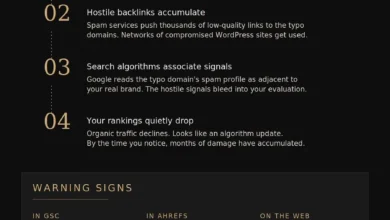
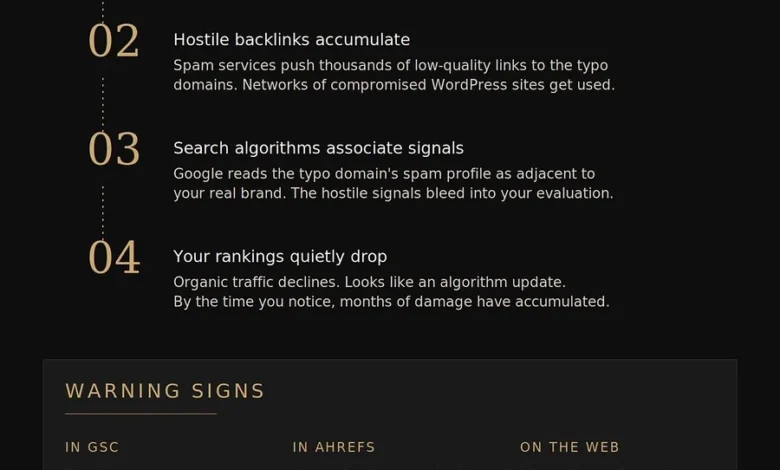
In the current attack pattern, the typosquatted domains do not host content. They are often "parked" pages with no outbound links and no visible storefront. Instead, the attacker focuses entirely on the domain’s inbound link profile. These misspelled domains are bombarded with thousands of spam-flagged backlinks from compromised networks, link-spam services, and aged-domain marketplaces. By building a hostile backlink profile for a domain that closely mimics a real brand, attackers exploit the way search engine algorithms understand brand identity.
Search engines like Google do not evaluate a domain in total isolation; they assess the broader "signal landscape" surrounding a brand name. When a domain that is nearly identical to a legitimate brand becomes associated with thousands of low-quality, spam-heavy links, the negative signal can "bleed" into the real brand’s evaluation. This leads to a decline in organic traffic and a loss of visibility for high-value search queries, effectively pushing legitimate retailers down the Search Engine Results Pages (SERPs).
Chronology of a Growing Digital Threat
The evolution of these attacks suggests a move toward more organized, industrial-scale manipulation. While negative SEO has been a known tactic for over a decade, its specific application to the luxury jewelry sector through typosquatting has seen a distinct timeline of escalation:
- 2022 – Early 2023: Initial reports of "link-bombing" appear in niche e-commerce forums, though most are dismissed as random web spam.
- Late 2023: Attackers begin focusing on high-average order value (AOV) industries, testing the effectiveness of "brand-adjacent" spam.
- Mid-2024: The luxury jewelry sector sees a marked increase in typosquatted domains that remain dormant but accumulate high volumes of toxic backlinks.
- Late 2024: Coordinated attacks intensify. Retailers report the use of aged-domain marketplaces where domains with pre-existing hostile profiles are recycled to target specific competitors in the pre-owned Cartier, Van Cleef & Arpels, and Tiffany & Co. markets.
This timeline reflects an increasing level of sophistication. Attackers are no longer just individuals using basic scripts; they are utilizing established infrastructure, including link-spam services that openly advertise their ability to manipulate rankings and networks of compromised WordPress sites used to inject commercial anchor text.
Why Luxury Jewelry is a Prime Target
The targeting of the luxury jewelry industry is a calculated economic decision based on the specific mechanics of the market. Several factors make this sector particularly vulnerable to negative SEO and typosquatting:
High Transaction Values
In the world of pre-owned luxury jewelry, individual transactions frequently range from four to five figures. A "Cartier Love Bracelet" or a "Van Cleef & Arpels Alhambra Necklace" represents a significant investment for a consumer and a high-margin sale for a retailer. Consequently, even a minor 5% drop in organic traffic can result in substantial revenue losses. The economic impact of being pushed from the first to the second page of Google results is far more severe for a jeweler than for a retailer of low-cost consumer goods.
Keyword Specificity and Commercial Intent
The keyword landscape for luxury jewelry is highly competitive but very specific. Phrases such as "authenticated pre-owned Van Cleef" or "vintage Cartier jewelry" carry immense commercial intent. There is a limited inventory of authoritative retailers who can rank for these terms because they require high levels of trust and provenance documentation. By suppressing a competitor’s ranking, an attacker can shift significant market share to other players, whether those players are the attackers themselves or parties who have hired them.
The Vulnerability of Trust-Based Content
Legitimate retailers invest heavily in authentication content, detailed product descriptions, and provenance records to build trust. This content is also what makes them rank well in organic search. Attackers exploit this by attempting to "poison" the trust signals that Google’s algorithm associates with that high-quality content.
Detection Metrics: Spotting the Early Warning Signs
For many jewelers, the symptoms of an attack are often mistaken for a general downturn in the market or a change in consumer behavior. However, specific metrics in diagnostic tools can reveal the presence of a negative SEO campaign.
In Google Search Console, the primary indicator is a sudden spike in the "Links to your site" report. Retailers should look for new URLs from unknown domains that use anchor text matching their brand combined with aggressive commercial terms (e.g., "buy [Brand Name] cheap" or "discount [Product Name]"). Furthermore, a geographic mismatch—such as a sudden surge of links from Eastern Europe or Southeast Asia for a U.S.-based boutique—is a classic hallmark of a link-spam attack.
Backlink monitoring tools like Ahrefs or Semrush provide additional clarity. Attackers often use referring URL paths that contain randomized hash strings or auto-generated patterns. Another red flag is the presence of inbound links from domains that have an unnaturally high outbound link count, which typically indicates a compromised site or a "link farm" used for SEO manipulation.
Legal and Technical Defense Strategies
Defending against this form of cyber-sabotage requires a multi-layered approach that combines technical maintenance with legal recourse.
The Disavow Process
The most immediate technical defense is the maintenance of a Google Search Console disavow file. This tool allows webmasters to tell Google to ignore specific domains when evaluating their site’s link profile. For retailers under active attack, this is not a one-time task but an ongoing necessity. Some luxury retailers have reported maintaining disavow files containing thousands of domains, which are updated weekly to keep pace with the attacker’s script-generated link building.
Administrative and Legal Recourse
When typosquatted domains cause demonstrable harm, retailers have several legal avenues. The Uniform Domain-Name Dispute-Resolution Policy (UDRP), managed by the World Intellectual Property Organization (WIPO), allows brand owners to challenge the registration of domains that are "confusingly similar" to their trademarks. While effective, the UDRP process typically takes 60 to 75 days and involves filing fees.
For more aggressive enforcement, the Anticybersquatting Consumer Protection Act (ACPA) in the United States provides a federal court remedy. The ACPA is particularly potent because it allows for statutory damages ranging from $1,000 to $100,000 per domain. This changes the economic equation for attackers; while a UDRP action might simply result in a domain transfer, an ACPA lawsuit can result in significant financial penalties. Both of these options, however, require the retailer to have established trademark rights, highlighting the importance of federal trademark registration for even small, independent jewelry brands.
Industry Implications and the Path Forward
The rise of typosquatting-linked negative SEO represents a broader challenge for the e-commerce industry. It exploits a fundamental architectural reality: search engines must rely on external signals to determine trust, and those signals can be fabricated or manipulated. Until search algorithms can more accurately distinguish between a "natural" spam profile and a "hostile" one designed to mimic a brand, the burden of defense will remain with the retailer.
For the independent jeweler, the resource asymmetry is perhaps the most daunting aspect of this trend. An attacker can deploy automated scripts to register dozens of domains and generate thousands of links for a negligible cost. In contrast, the defender must invest time in monitoring, money in SEO expertise, and potentially thousands of dollars in legal fees to protect their digital storefront.
Industry analysts suggest that the best defense is collective awareness. As jewelers share information about the patterns they are seeing and the domains involved, the industry can better prepare for these shifts. "The biggest barrier is that most jewelers don’t know this attack class exists," noted one industry expert. "Once you know what to look for, the defense is straightforward. The work is in the constant noticing."
As the luxury market continues its digital migration, the security of a brand’s organic presence is becoming as vital as the physical security of its showroom. The integration of SEO monitoring into a broader cybersecurity strategy is no longer optional for luxury retailers; it is a critical component of maintaining market share in an increasingly hostile digital environment.