Elizabeth Unique Venice Brings Contemporary Design and 17th-Century Heritage to the Cannaregio Canal

Venice’s storied hospitality landscape has welcomed a distinct new addition with the official opening of Elizabeth Unique Venice, a property that seeks to redefine luxury lodging away from the city’s heavily congested tourist epicenters. Situated along the peaceful waters of the Cannaregio Canal, the hotel occupies a meticulously restored 17th-century palazzo, marking a significant milestone as the very first Venetian member of the prestigious Design Hotels portfolio. By eschewing the overwhelming grandeur traditionally associated with the Floating City, Elizabeth Unique Venice champions an ethos of vibrant informality, deeply rooted in the authentic daily rhythms of a neighborhood known for its historic wine bars, rustic trattorias, and proximity to the Venetian Ghetto.
Architectural Restoration and Interior Vision
The realization of the hotel’s distinctive aesthetic is the result of a comprehensive architectural and interior design campaign orchestrated by renowned Milan-based architect Cristina Celestino. Tasked with breathing new life into a centuries-old structure, Celestino adopted a preservation-first philosophy. Rather than attempting to recreate a rigid, museum-like facsimile of the palazzo’s historical past, she elected to honor the building’s original architectural bones—such as intricately decorated ceilings and heavy timber beams—and utilize them as a historical backdrop for a bold, contemporary design language.
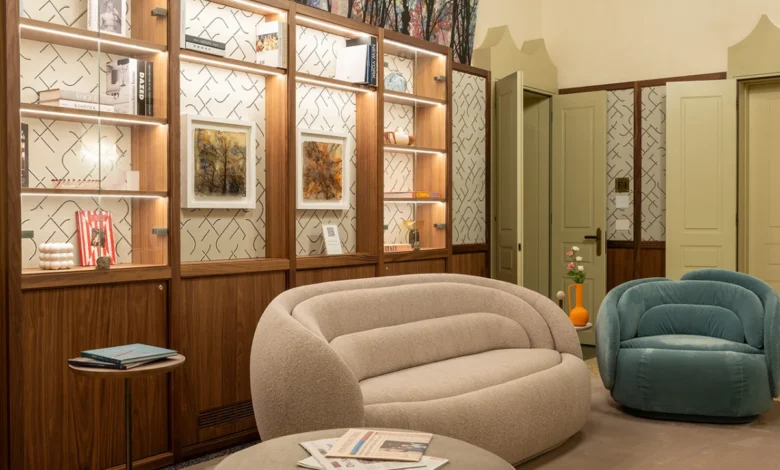
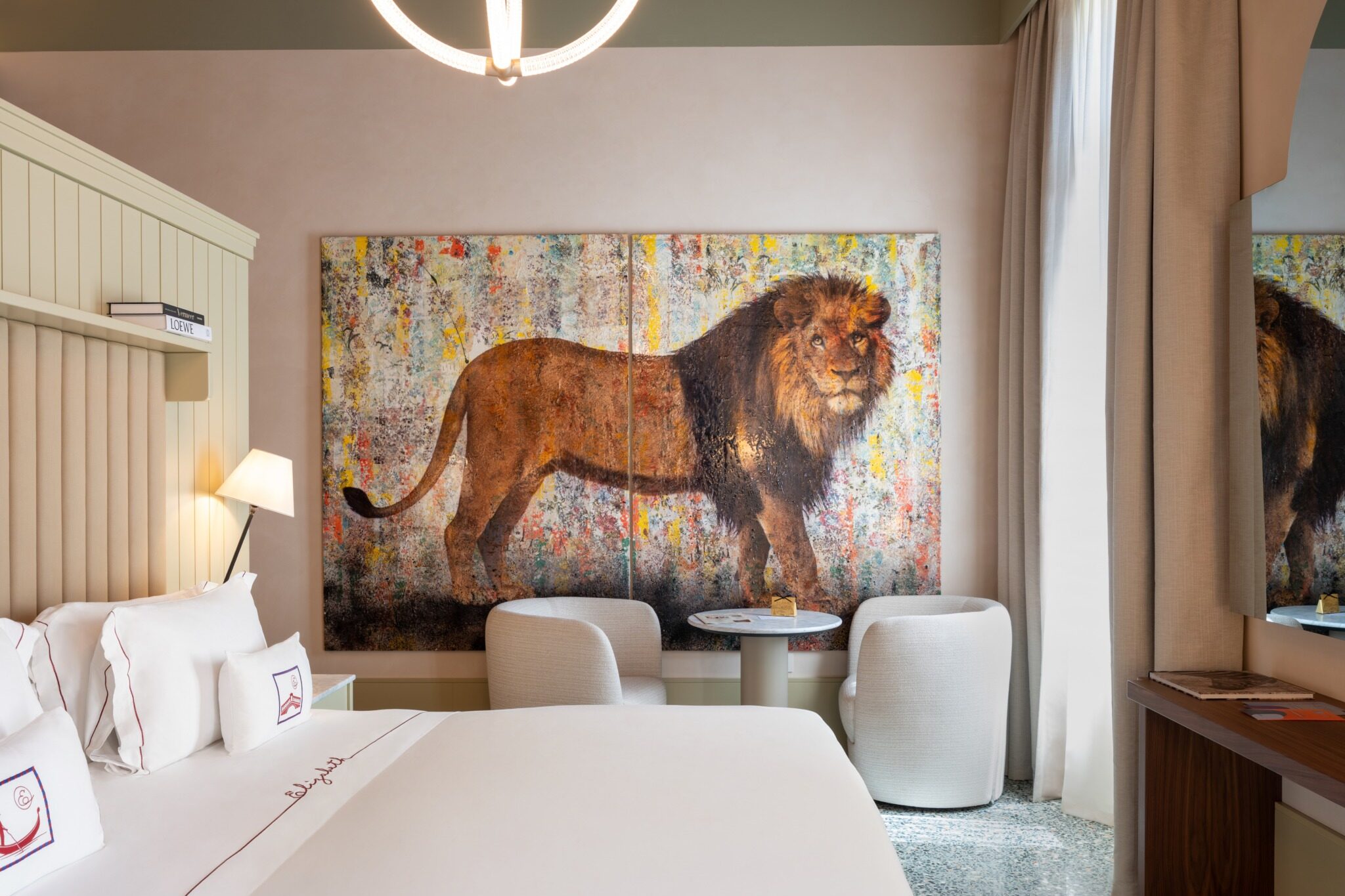
The property spans 14 distinct accommodations, ranging from intimate Initiale rooms to expansive Spa Suites. Across these spaces, Celestino deployed custom applications of Venetian terrazzo in three striking colorways: lagoon green, crimson, and soft sandy tones. These chromatic choices flow continuously into marmorino wall finishes, walnut boiserie, and CEDIT’s avant-garde Policroma wallcoverings. Full-wall wainscoting layered with padded headboards introduces a tactile, immersive dimension to the guest rooms, establishing an intimate yet sophisticated atmosphere.

Meticulous Detailing and Design Collaborations
The material palette of Elizabeth Unique Venice is defined by an uncompromising attention to detail and high-end Italian craftsmanship. Interiors feature subtle accents of Carrara and Fior di Pesco marble, complemented by luxurious textiles sourced from historic Venetian mills including Rubelli and Dedar, alongside custom-designed rugs penned by Celestino herself.
Bespoke furnishings—ranging from sculptural, multifaceted mirrors to custom bedside tables—interact harmoniously with iconic contemporary statement pieces. Among these are Pianca’s Calatea armchairs, low glass tables curated by Pulpo, and architectural lighting fixtures such as Moooi chandeliers, Fontana Arte floor lamps, and Oluce suspension pieces. In the private wet rooms, Kaldewei bathtubs and Zucchetti fittings provide a sleek, pared-back counterpoint to the rich ornamentation of the living spaces.

Furthermore, the hotel places a strong emphasis on contemporary visual arts. Through a strategic curation partnership with the historic Galleria Russo, expansive neutral stretches of wall throughout the public areas and suites provide a gallery-like canvas for expressive contemporary Italian artworks, bridging the gap between historical architecture and modern creative expression.
Public Spaces, Culinary Programming, and Slow Hospitality
The dialogue between historical heritage and contemporary intervention extends seamlessly into the building’s public areas. The ground-floor reception area pairs warm wooden paneling and traditional Venetian terrazzo flooring with a modernist check-in desk accented by sleek metallic slats. Beyond the interior public spaces lies an unexpected urban oasis: a secluded garden featuring a restaurant patio and a verdant lawn designed for afternoon aperitivo.

At the heart of the hotel’s culinary identity is da GrandMa Restaurant, an establishment named in honor of owner Vittorio Curatella’s grandmother, Elisabetta—the foundational inspiration behind the hotel’s nomenclature. Situated beneath traditional low ceilings enriched with antique glass and a soothing color palette of soft blues and yellows drawn directly from the Venetian lagoon, the restaurant is helmed by Chef Riccardo Pepe. The culinary program prioritizes classic Italian gastronomy, regional Venetian specialties, and generational family recipes. Emphasizing a philosophy of "slow hospitality," the restaurant features an all-day breakfast service designed to encourage unhurried mornings and a relaxed pace of life.
Background Context and Industry Implications
The opening of Elizabeth Unique Venice arrives at a critical juncture for Italy’s tourism capital. In recent years, Venice has grappled intensively with the pressures of overtourism, leading municipal authorities to implement various restrictive measures, including tourist entry fees and caps on tour group sizes. In parallel, luxury travelers have increasingly sought out accommodations that offer an authentic connection to local communities rather than insular, hyper-touristic bubbles.

By establishing its roots in Cannaregio—one of the city’s most densely populated residential districts—Elizabeth Unique Venice aligns with a broader shift in high-end hospitality toward neighborhood integration and sustainable local engagement. The hotel’s reliance on Italian artisans, regional suppliers, and historic preservation underscores a growing industry standard: that contemporary luxury must be anchored in cultural authenticity and respect for architectural heritage.
As the property establishes its footprint as a pioneer within the Design Hotels portfolio in Venice, its success may well serve as a blueprint for future adaptive reuse projects in historic European urban centers. By harmonizing 17th-century Venetian craftsmanship with the forward-thinking vision of modern Italian design, Elizabeth Unique Venice successfully bridges the gap between the city of the past and the vibrant, living community of today.