AGTA Urges Swift US-Thailand Trade Agreement to Protect Critical Colored Gemstone Supply Chain

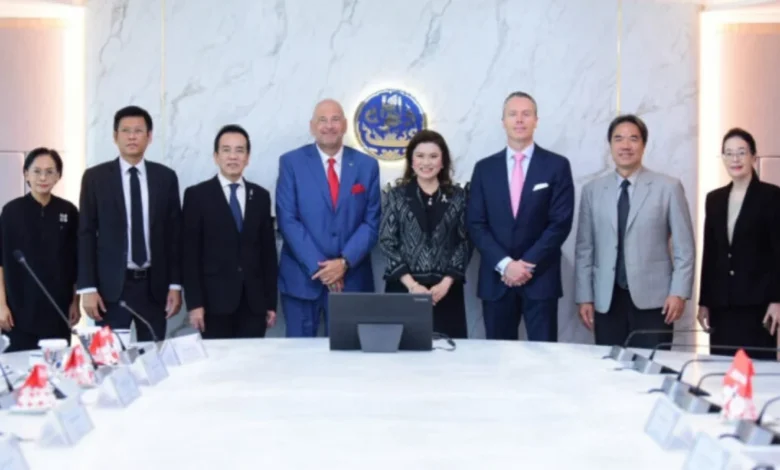
The American Gem Trade Association (AGTA) has engaged in high-level diplomatic and economic discussions with senior members of the Royal Thai Government in Bangkok, pressing for the swift conclusion of a bilateral trade agreement between the United States and Thailand. The diplomatic outreach, which took place against the backdrop of the Bangkok Gems & Jewelry Fair, underscores growing anxieties within the international jewelry sector regarding trade barriers, steep import tariffs, and the potential displacement of vital supply chains that support billions of dollars in global commerce.
At the core of the discussions is the precarious economic position facing Thailand’s robust gem and processing sector. Currently, the United States levies a significant 12.5 percent import tariff on loose colored gemstones exported from Thailand, which serves as a premier global sourcing and manufacturing hub for the American market. Furthermore, finished gemstone jewelry originating from Thailand and entering the United States faces even heavier combined duties ranging from 17.5 percent to 19.5 percent. Industry leaders warn that without a formal, reciprocal trade agreement to alleviate these financial burdens, Thailand risks losing critical market share to competing gemstone-supplying nations that may enjoy more favorable trade terms.
High-Stakes Diplomacy at the Bangkok Gems & Jewelry Fair
The meetings, which were publicly disclosed by the AGTA on Monday, brought together prominent figures from the American gemstone industry and key policymakers from Thailand’s trade and commerce ministries. The centerpiece of the engagement was a private, closed-door consultation between AGTA representatives and Kirida Bhaopichitr, Thailand’s vice minister for commerce, who spearheaded a delegation of senior government officials from various departments.
During these exhaustive sessions, the AGTA delegation explicitly outlined mounting industry concerns regarding the sluggish pace of bilateral trade talks. They detailed the severe structural and economic risks that an unresolved trade status poses to Thailand’s integrated gem and jewelry supply chain—an ecosystem that supports hundreds of thousands of artisans, gem cutters, traders, and exporters across Southeast Asia. In turn, the AGTA delegation addressed targeted inquiries from Vice Minister Bhaopichitr and her departmental representatives, offering granular data regarding American consumer demand, import trends, and the operational dependencies of US-based jewelers on Thai manufacturing facilities.
Demonstrating transparency and a commitment to bridging the gap between private industry and public policy, the AGTA subsequently transmitted comprehensive details of the Bangkok discussions directly to the Office of the United States Trade Representative (USTR). This dual-channel communication strategy is designed to ensure that negotiators in both Washington and Bangkok remain acutely aware of the real-world economic stakes riding on the diplomatic talks.
Background Context: The Quest for an Agreement on Reciprocal Trade
The dialogue in Bangkok is the latest chapter in a protracted effort by the United States and Thailand to forge a comprehensive Agreement on Reciprocal Trade (ART). For years, trade relations between the two nations have navigated a complex labyrinth of tariffs, regulatory hurdles, and changing geopolitical priorities. While Thailand has long maintained its status as a trusted and reliable economic partner to the United States in Southeast Asia, the absence of a modernized, streamlined free trade agreement has left certain specialized sectors, such as gems and jewelry, exposed to protectionist pricing structures.
For AGTA members—who comprise the leading wholesalers, importers, manufacturers, and designers of natural colored gemstones and cultured pearls in North America—Thailand is not merely a trading partner; it is the beating heart of their operational supply chain. The country possesses centuries of accumulated expertise in gemstone heat treatment, cutting, and polishing, particularly for rubies, sapphires, and spinels. American jewelry businesses rely heavily on this specialized craftsmanship to supply retail markets across the United States. Consequently, any disruption to the flow of goods or any escalation of cost due to tariff pressures reverberates immediately throughout the North American jewelry pipeline, from high-end designers to independent retail storefronts.
Economic Implications and Industry Perspectives
The urgency expressed by the AGTA stems from a fundamental desire for economic predictability. In modern global trade, supply chain stability is paramount. When tariffs remain disproportionately high, profit margins are squeezed, ultimately leading to higher costs for the end consumer and diminished competitiveness for businesses operating within the legal, ethical parameters of the formal trade sector.
"We want to see stability in trade flows, so it is important that we help Thailand move forward to reach a bilateral trade deal with the US," observed AGTA CEO John Ford, emphasizing the irreplaceable role that Thailand plays in the global gem market. "Thailand is a vital supplier of loose colored gemstones and high-quality gemstone-set jewelry to the US market."
Market analysts and trade economists point out that the stakes extend beyond simple corporate profit margins. Thailand’s gem and jewelry sector is a major engine of employment and sustainable economic development within the country, providing livelihoods for skilled artisans in both urban centers and rural provinces. If Thai exporters are priced out of the American market due to tariff differentials—perhaps losing ground to regional competitors whose governments secure preferential trade pacts—the resulting economic contraction could destabilize local communities and disrupt established ethical sourcing networks.
Furthermore, a bilateral agreement could serve to reinforce transparency standards. Legitimate trade pacts often incorporate frameworks for enhanced customs cooperation, traceability, and anti-money laundering protocols, ensuring that the gems entering the United States are responsibly mined, processed, and distributed.
Chronology of Recent Developments
To fully understand the current diplomatic push, it is necessary to examine the timeline of events leading up to the Bangkok meetings:
- Pre-2024: Sourcing and tariff friction persist between the US and Thailand, with loose colored gemstones subjected to a 12.5 percent US import duty and finished jewelry facing duties up to 19.5 percent.
- Early 2024: Discussions surrounding the Agreement on Reciprocal Trade (ART) experience fluctuating momentum, prompting industry associations on both sides of the Pacific to call for accelerated government action.
- Early October 2024: The Bangkok Gems & Jewelry Fair convenes, drawing global buyers, sellers, and industry executives to the Thai capital.
- Mid-October 2024: AGTA leadership holds formal meetings with senior Thai gem sector leaders, culminating in a high-level private conference with Vice Minister for Commerce Kirida Bhaopichitr and her governmental delegation.
- Late October 2024: AGTA formally briefs the Office of the United States Trade Representative (USTR) on the substance and outcomes of the Bangkok negotiations.
- November 2024 (Present): AGTA publicly highlights the meetings, intensifying the pressure on policymakers in Washington and Bangkok to prioritize the finalized terms of a bilateral trade framework.
Future Outlook and What Lies Ahead
As the dialogue between the AGTA, the Royal Thai Government, and American trade officials continues to evolve, all eyes are turned toward Washington and the USTR. The ball is now largely in the court of government negotiators, who must weigh the specific economic needs of the gemstone sector against broader geopolitical and macroeconomic policy goals.
For the American gem and jewelry industry, the message remains clear and unified: securing a favorable trade agreement with Thailand is not merely a localized commercial preference, but an absolute necessity for maintaining the health, pricing stability, and ethical integrity of the North American colored gemstone market. As trade talks progress in the coming months, industry stakeholders will be watching closely for tangible signs of tariff relief and regulatory modernization that can secure the future of this ancient and vital global trade route.
Related posts: