The Ultimate UK Guide to Ethical and Sustainable Dressing Gowns for Winter

As temperatures drop across the United Kingdom, millions of households turn to winter warmers to combat the seasonal chill. Among the most enduring comforts of the colder months is the dressing gown—an everyday garment traditionally pulled on during early mornings with tea or wrapped around oneself after a hot shower. However, beneath the surface comfort of these loungewear staples lies a complex supply chain often reliant on virgin synthetics and labor-intensive processes with heavy environmental footprints. In response to shifting consumer awareness, the UK fashion landscape has increasingly pivoted toward eco-friendly alternatives, balancing warmth with environmental accountability.
The Environmental Toll of Conventional Loungewear
To understand the shift toward sustainable dressing gowns, it is essential to examine the lifecycle of conventional loungewear. Many mainstream robes found on the British high street are manufactured from virgin polyester—a synthetic plastic derived directly from fossil fuels. The production of virgin polyester is energy-intensive and contributes significantly to global greenhouse gas emissions. Furthermore, synthetic fabrics are a primary vector for microplastic pollution; every time a synthetic garment is laundered, thousands of microscopic plastic fibers are shed into the wastewater system, eventually reaching rivers and oceans.
Beyond material composition, the traditional textile industry has frequently faced scrutiny regarding labor standards. Fast-fashion production lines often operate in jurisdictions where workers are subjected to unsafe conditions and substandard wages. Recognizing these dual crises of environmental degradation and labor exploitation, conscious consumers are increasingly demanding transparency, traceability, and ethical manufacturing practices from apparel brands.
The Evolution of Sustainable Textiles in the UK Market

The movement toward sustainable fashion in the United Kingdom has accelerated over the past two decades. In 2005, the British fashion brand Seasalt became the first apparel company globally to achieve certification under the Soil Association’s Global Organic Textile Standard (GOTS), signaling a turning point for sustainable textile standards in the UK. Since then, stricter regulatory frameworks, increased consumer demand, and the rise of independent certification bodies such as B Corp have reshaped the market.
Today, eco-friendly dressing gowns utilize a range of innovative, low-impact materials. These include certified organic cotton, which is cultivated without synthetic pesticides or harmful fertilizers; recycled polyester, which diverts plastic waste from landfills and oceans without requiring newly extracted fossil fuels; and Livaeco™ viscose, a traceable, biodegradable fiber derived from responsibly managed forests. Brands are also increasingly adopting closed-loop production systems, utilizing factory waste to spin new yarns and implementing strict labor audits to ensure fair compensation across global supply chains.
Curated Guide to Sustainable Dressing Gowns in the UK

Navigating the market for ethical loungewear requires an understanding of brand practices, price points, and material sourcing. Industry experts categorize sustainable purchases using standard market tiers: under £50 (£), between £50 and £100 (££), and over £100 (£££). Several notable UK brands and retailers currently lead the market in sustainable loungewear production.
Pure Earth Collection offers a 100% organic cotton vegan robe designed for maximum warmth. Utilizing a velour outer layer and a jersey cotton inner lining, the garments are dyed using non-toxic agents and shipped in plastic-free packaging. Beyond its material sourcing, the brand operates a corporate social responsibility initiative in partnership with ocean cleanup organizations, ensuring that each sold robe finances the removal of approximately 11 grams of marine plastic waste—equivalent to dozens of single-use plastic straws.
Seasalt continues its long-standing commitment to environmental stewardship by offering 100% recycled polyester dressing gowns. Featuring practical design elements such as removable waist ties and deep pockets, these vegan-friendly robes reflect the brand’s broader corporate ethos. Having achieved B Corp certification in 2024, Seasalt maintains rigorous social and environmental standards and operates a dedicated take-home recycling scheme to prevent legacy garments from entering landfills.
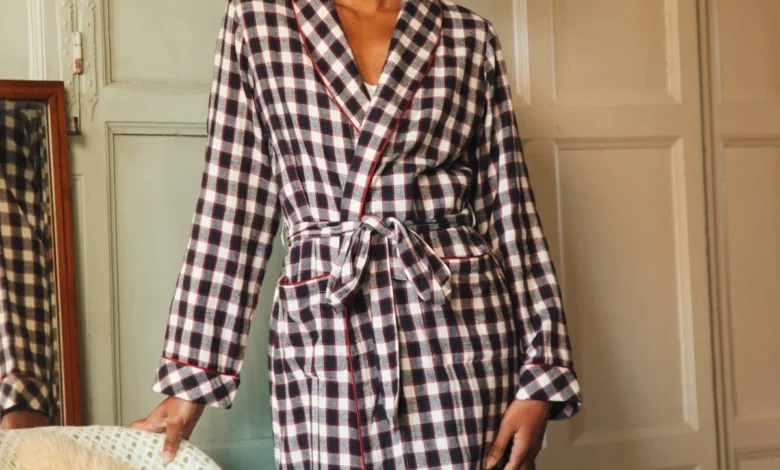
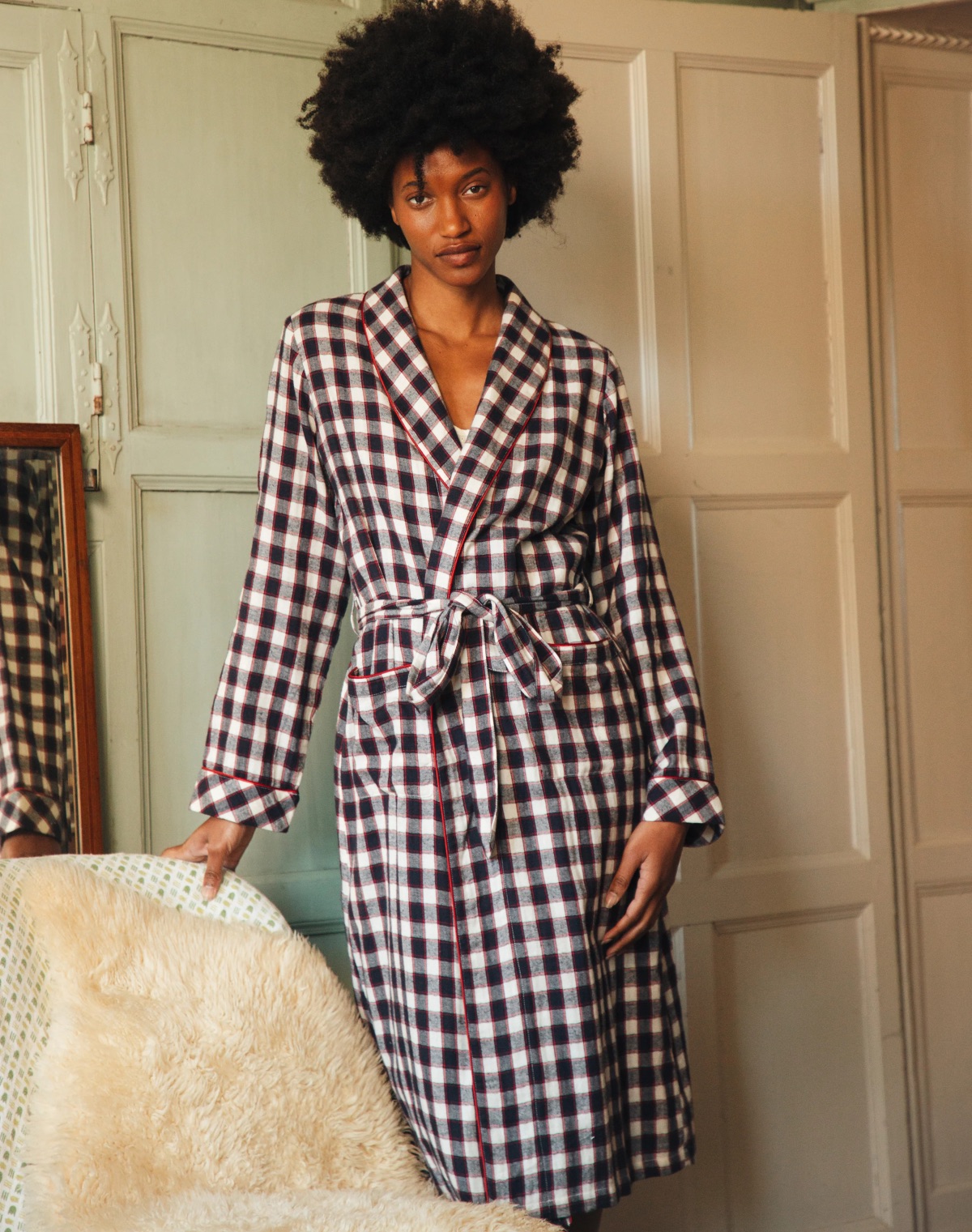
For consumers seeking luxury heritage products, Scottish brand Brora provides natural-fiber alternatives. While its traditional wool robes sit at the premium end of the market, the brand also produces mid-tier 100% cotton gingham robes lined with organic cotton and trimmed with silk. Manufactured in independently audited factories in India, Brora repurposes approximately 90% of factory textile waste into new yarn, significantly reducing industrial waste.
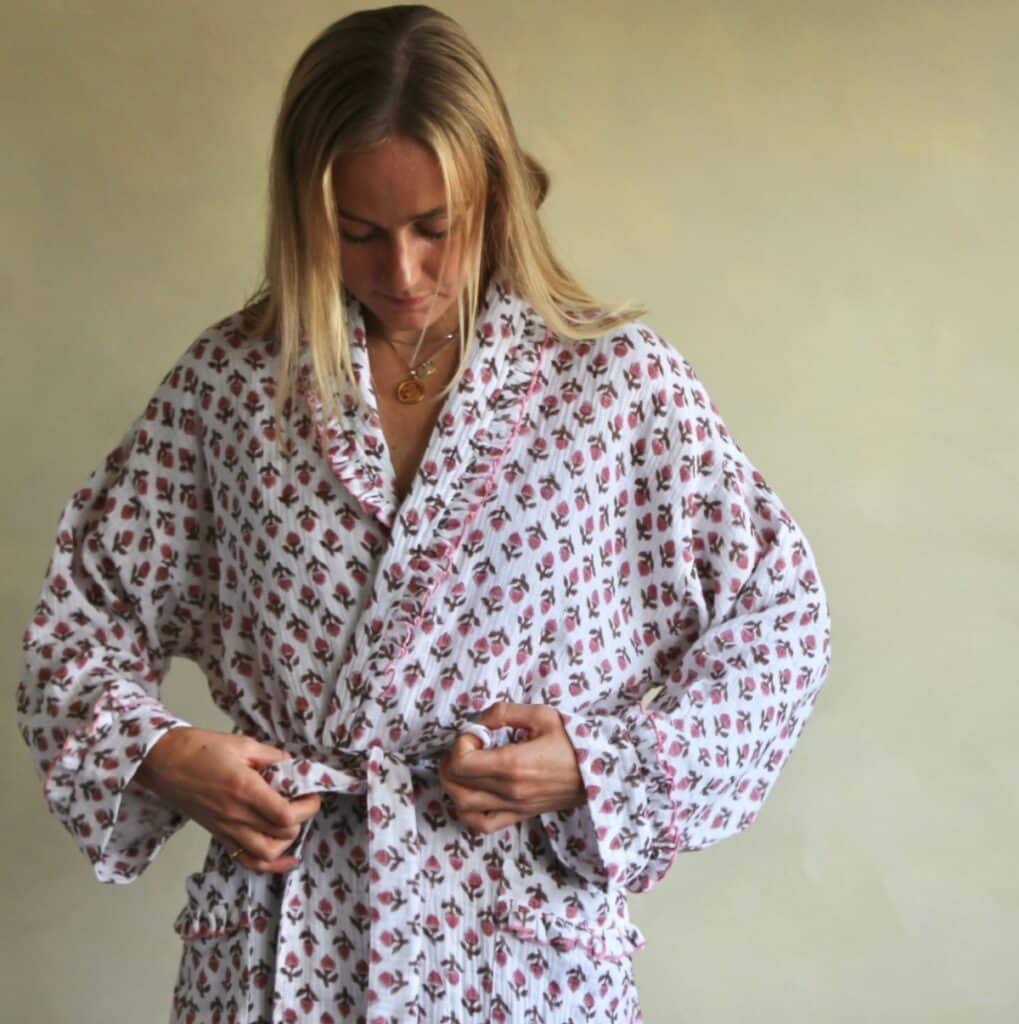
Emerging direct-to-consumer and boutique labels are also influencing the sector. WooWoo London, founded in Jaipur, India, utilizes organic muslin cotton and natural dyes to produce small-batch floral robes. By working directly with skilled local artisans, the brand preserves traditional craftsmanship while ensuring transparent supply chains and minimal overproduction. Similarly, British brand Haus of Niya partners with independent makers in India to produce GOTS-certified organic cotton robes distributed directly from the UK, eliminating secondary import customs processing for domestic buyers.
High Street Integration and Future Outlook

High street retailers are also adapting to changing consumer expectations, albeit at varying paces. White Stuff has integrated sustainable materials into its loungewear collections, utilizing blends of organic cotton and Livaeco™ viscose. According to corporate sustainability disclosures, a significant majority of the retailer’s overall product lines utilize certified materials, reflecting a broader industry trend toward mainstreaming sustainability.
However, industry analysts note that accountability remains a central challenge for the sector. While initial certifications and material switches represent positive progress, maintaining long-term transparency and adapting to evolving environmental standards will be critical as the UK transitions toward a fully circular economy. As consumer demand for ethical homewear and loungewear continues to rise, the market for sustainable dressing gowns is expected to expand further, setting new benchmarks for environmental and social responsibility in the textile industry.