French Fashion Label Coperni Ceases Operations Following Unresolved Dispute with Shareholder and Distributor Tomorrow

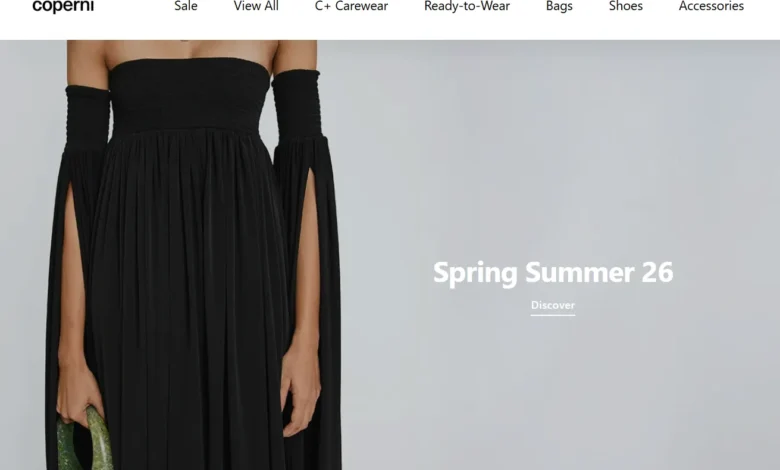
French avant-garde womenswear brand Coperni has officially announced that it is ceasing operations after failing to reach a resolution in an escalating commercial and corporate conflict with its primary shareholder and distributor, Tomorrow. The sudden collapse of the pioneering fashion house marks a significant loss for the contemporary luxury market, ending an eight-year run defined by technological innovation, viral runway moments, and high-profile industry acclaim.
The official confirmation was delivered by the brand via a joint statement on Instagram signed by founders and creative directors Sébastien Meyer and Arnaud Vaillant. The announcement brought a definitive halt to months of private speculation and corporate maneuvering, leaving the global fashion community to reflect on the sudden downfall of one of Paris’s most forward-thinking independent labels.
The Anatomy of the Corporate Conflict
At the heart of Coperni’s closure is a complex corporate restructuring and a subsequent breakdown in relations with Tomorrow, a prominent global platform for brand development, distribution, and manufacturing. Coperni’s leadership found themselves at an irreconcilable impasse with the shareholder and distributor, rendering continued operations financially and logistically untenable.
Tensions escalated significantly following corporate shifts within Tomorrow. In June 2026, Tomorrow underwent a major ownership transition when it was sold to Progetto 11, the industrial holding company that also controls ecommerce management provider The Level Group. This transaction resulted in the departure of Tomorrow’s founder and chief executive officer, Stefano Martinetto, as well as private equity firm Three Hills Capital Partners. Three Hills had held a controlling stake in Tomorrow since 2022, providing the financial backbone that supported Coperni’s rapid international expansion.
The exit of key executive leadership at Tomorrow destabilized the delicate balance of power between the distributor and Coperni’s creative founders. Meyer and Vaillant had spent the prior months attempting to negotiate a buyout or a restructuring plan that would allow them to regain autonomous control of the label they built. However, negotiations with the new stakeholders at Progetto 11 and The Level Group failed to yield a compromise.
The strain of the ongoing dispute severely hampered the brand’s day-to-day operations and creative output. Demonstrating the severity of the internal crisis, Coperni notably opted out of the official Paris Fashion Week calendars for the last two consecutive seasons. The absence of the brand from the industry’s most critical commercial showcase signaled to insiders that a deeper existential crisis was unfolding behind closed doors.
A Detailed Chronology of Coperni
To understand the magnitude of Coperni’s closure, it is necessary to examine the trajectory of a brand that quickly positioned itself at the intersection of fashion, technology, and pop culture.
2013–2014: The Foundation and Early Acclaim
Sébastien Meyer and Arnaud Vaillant first met while studying at Mod’Art International in Paris. They launched their initial brand, Coperni—named in honor of the Renaissance astronomer Nicolaus Copernicus—in 2013. The label quickly garnered critical attention for its clean, architectural silhouettes and minimalist aesthetic. In 2014, the duo was named finalists for the prestigious LVMH Prize for Young Fashion Designers, cementing their status as rising stars in the French capital.
2015–2017: The Courrèges Era and Brand Hiatus
In 2015, Meyer and Vaillant were appointed as the artistic directors of legacy French fashion house Courrèges. To focus on reviving the historic brand, the designers put Coperni on an indefinite hiatus, stepping away from their eponymous label for two years.
2017–2019: The Relaunch and Partnership with Tomorrow
The designers officially departed Courrèges in 2017 and began laying the groundwork for Coperni’s relaunch. In 2018 and 2019, the label officially returned to the market, securing a strategic partnership with Tomorrow. This alliance provided Coperni with essential infrastructure, global showroom access, production capabilities, and financial backing, allowing the brand to scale its operations rapidly and re-enter the official Paris Fashion Week schedule.
2020–2023: Viral Innovation and Global Stardom
During the post-pandemic fashion boom, Coperni became a master of digital-first marketing and viral runway spectacles. The brand introduced accessory staples like the Swipe Bag, which became an instant commercial hit worn by global celebrities and influencers.
Coperni dominated global headlines during Paris Fashion Week in October 2022, when supermodel Bella Hadid walked the runway and stood semi-nude while a liquid fabric composed of cotton and synthetic fibers suspended in a polymer solution was sprayed directly onto her body by Manel Torres, the inventor of Fabrican. The liquid instantly dried into a wearable, off-the-shoulder slip dress, creating one of the most-watched and most-discussed moments in modern fashion history. Subsequent collections featured glass handbags made in collaboration with Artisans de Paris, robotic dogs acting as runway models alongside human wearers, and accessories crafted from meteorite rock.

2022–2024: Institutional Investment and Expansion
As the brand’s cultural footprint expanded, Three Hills Capital Partners acquired a controlling stake in Tomorrow in 2022, further entrenching the institutional backing supporting Coperni’s retail and wholesale growth. The brand opened strategic wholesale accounts with elite international department stores and specialty boutiques, expanding its footprint across North America, Europe, and Asia.
2026: Ownership Shifting and the Final Collapse
In June 2026, Progetto 11 acquired Tomorrow, triggering the departure of CEO Stefano Martinetto. Friction regarding the strategic direction of Coperni and financial autonomy quickly intensified between Meyer, Vaillant, and the new corporate ownership. Following months of unsuccessful mediation, missed fashion weeks, and mounting operational hurdles, Coperni management formally concluded that survival was impossible. On November 4, 2026, the brand announced its permanent closure via social media.
Reflections from the Founders and Industry Reaction
The sudden demise of Coperni has sent shockwaves through the European luxury sector, triggering an outpouring of sympathy, tributes, and analysis from designers, editors, and industry executives.
In their final public statement, Meyer and Vaillant reflected on the eight-year journey that transformed their independent vision into a global cultural phenomenon:
"These eight years have been incredible. We have been able to bring our ideas to life, meet unforgettable people and share moments we would never have dared to imagine when we first embarked on this journey. Over the past few months, we have tried everything to preserve Coperni and find a resolution to the conflict with our shareholder and distributor, Tomorrow. Despite all our efforts, no solution could be found. It is with profound sadness that we announce today that Coperni SAS is ceasing operations."
Industry analysts have noted that Coperni’s collapse underscores the fragile financial ecosystem in which independent contemporary brands operate. While high-profile viral moments generate immense digital media value and brand awareness, translating online engagement into sustained retail profitability remains a significant hurdle without robust, long-term institutional backing.
The involvement of private equity and multi-brand distribution platforms has become a defining characteristic of modern fashion economics. When ownership structures shift at the parent or distributor level, emerging labels that rely heavily on shared infrastructure, manufacturing pipelines, and administrative support are uniquely vulnerable to sudden strategic realignments. For Coperni, a change in majority ownership at Tomorrow altered the corporate priorities of its primary business partner, leaving the creative directors without the institutional runway required to maintain independent operations.
Broader Economic Implications for Independent Fashion
The closure of Coperni serves as a cautionary case study regarding the intersection of avant-garde design and corporate finance within the contemporary luxury market. Several key structural takeaways emerge from the brand’s dissolution:
-
The Limits of Viral Marketing: Industry observers have frequently debated the conversion rate of viral fashion moments. While Coperni’s spray-on dress and glass handbags dominated social media algorithms and generated billions of impressions, the high cost of producing such experiential runway shows requires immense capital investment. If wholesale sell-through and direct-to-consumer revenues do not scale proportionally with marketing expenses, brands can quickly find themselves overextended.
-
Vulnerability in Distributor-Led Models: Many independent labels rely on third-party incubators and distribution platforms like Tomorrow to handle back-end logistics, sales, and manufacturing. While this model accelerates early growth, it also creates dependency. When disputes arise over equity, strategic control, or financial allocation, independent founders often lack the capital reserves to buy out institutional investors or pivot to alternative supply chains independently.
-
The Post-Pandemic Retail Landscape: Independent designers operating in Paris and Milan face soaring costs for real estate, material sourcing, skilled labor, and runway production. Inflationary pressures combined with cautious consumer spending in major luxury markets have reduced the margin for error for emerging fashion houses, making corporate backing essential for survival—yet potentially hazardous if alignment between creators and investors breaks down.
Conclusion and Future Outlook
The cessation of Coperni operations marks the end of an era for modern Parisian fashion. By successfully bridging high-tech engineering with sleek Parisian tailoring, Sébastien Meyer and Arnaud Vaillant proved that independent labels could capture the global imagination and challenge legacy heritage houses on the world stage.
As Coperni winds down its administrative affairs, liquidates remaining assets, and closes its doors, the broader fashion community is left to contemplate the future of independent design in an increasingly consolidated corporate marketplace. Whether Meyer and Vaillant will eventually return to the industry under a new banner or within the fold of an established luxury conglomerate remains to be seen. For now, however, the closure of Coperni stands as a sobering reminder of the delicate economic realities underpinning the glamorous facade of contemporary high fashion.