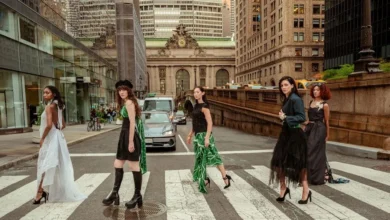
As London Fashion Week descends upon the capital from 19 to 23 February, the spectacle of creativity, innovation, and cutting-edge design once again commands the global spotlight. This annual showcase serves as a vital platform for British fashion, celebrating the industry’s ability to set cultural trends and define identity. However, as the world’s attention turns to the catwalks of London, a persistent and darker reality continues to overshadow the glitz: the systemic exploitation of human labour and the environmental degradation embedded within the global fashion supply chain. Despite an increasing consumer appetite for sustainability, the industry remains tethered to a model that often prioritizes profit margins over fundamental human rights and ecological stability.
The scale of the crisis is immense. According to data from Walk Free, an estimated 50 million people are living in conditions of modern slavery today, a significant portion of whom are trapped in the garment and textile sectors. In the United Kingdom alone, the Modern Slavery & Exploitation Helpline reported that roughly 10% of all cases in 2021 were linked directly to the garment industry. These figures represent more than just statistics; they represent millions of individuals—often women and migrants—subjected to forced labour, debt bondage, and unsafe working conditions, all to satisfy the relentless demand for new apparel.
The Myth of the Fast Fashion Monopoly
A common misconception in public discourse is that labour exploitation is exclusively a "fast fashion" problem. While the rapid-turnover production models utilized by ultra-fast fashion retailers certainly exacerbate the issue by compressing timelines and forcing workers into extreme shifts, the problem is pervasive across all market segments. Luxury houses, long considered bastions of artisanal craft and ethical standards, have also found themselves embroiled in supply chain scandals. Recent investigations, including those in Italy—the historic home of high-end manufacturing—have uncovered instances where even premium brands have utilized subcontracted workshops that engage in illegal employment practices, pay sub-minimum wages, and operate in hazardous environments.
The garment industry is one of the most labor-intensive sectors in existence, providing employment for an estimated 25 to 60 million people globally. Since the liberalization of trade in the 1980s, retailers have increasingly shifted production to regions with minimal labour regulations and lower overheads. This geographic outsourcing has created a "race to the bottom," where countries compete for manufacturing contracts by suppressing wages and weakening oversight. Even when production is "onshored" or kept within Western borders, as seen in the 2020 scandals involving factories in Leicester, UK, the risk of exploitation remains high. Investigative reports revealed that workers in these facilities were being paid as little as £3 per hour, far below the legal minimum wage, exposing the fallacy that "Made in the UK" serves as an automatic guarantee of ethical production.
The Raw Material Crisis: From Cotton Fields to Supply Chains
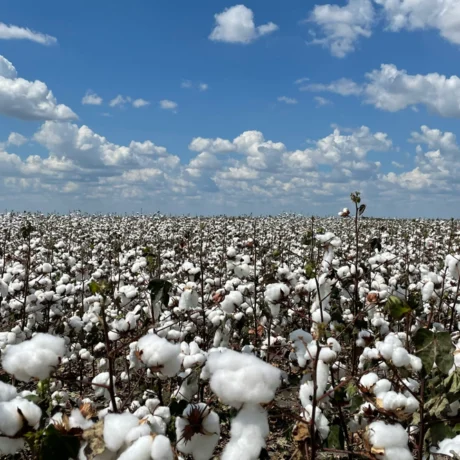
The ethical violations within the fashion industry often begin long before the assembly of a garment. The production of raw materials, particularly cotton, is a critical nexus of human rights risk. Research by Sheffield Hallam University has identified that over 100 major global brands are at high risk of sourcing cotton from the Uyghur Region of China, where state-imposed forced labour programmes have been extensively documented.
Similarly, in Turkmenistan, the state continues to mobilize public sector workers into forced labor during the annual cotton harvest. Teachers, nurses, and other civil servants are coerced into the fields under the threat of job loss or financial penalties. Once this cotton enters the global supply chain, it becomes notoriously difficult to track. As the material moves through ginning, spinning, weaving, and sewing, it is often mixed with cotton from other sources, effectively "laundering" the forced labour into international markets. The opacity of these supply chains is not an accidental byproduct of global trade; it is a structural feature that allows brands to maintain a veneer of ignorance regarding the origins of their raw materials.
Environmental Degradation as a Human Rights Issue
The systems that facilitate labour exploitation are inextricably linked to the industry’s environmental impact. The fashion sector is responsible for an estimated 3.3 billion tonnes of CO2e annually, a footprint comparable to the combined emissions of all 28 member states of the European Union. This environmental toll is not evenly distributed; it is felt most acutely by the workers and local communities surrounding production hubs.
The reliance on synthetic fibres, which shed microplastics into water systems, and the intensive use of toxic chemicals in dyeing and finishing processes, create a hazardous environment for those living in proximity to manufacturing clusters. Furthermore, the industry’s reliance on water-intensive cotton farming in regions already suffering from ecological stress—such as the areas surrounding the former Aral Sea—has led to catastrophic water depletion and soil salinization. By decoupling the environmental impact of fashion from its human cost, industry observers fail to see the holistic crisis: the same drive for hyper-efficiency that leads to overproduction and waste is the same drive that compels factory owners to cut corners on safety and pay.
The Regulatory Gap: Why Voluntary Measures Fail
For decades, the fashion industry has relied upon "Corporate Social Responsibility" (CSR) and voluntary sustainability pledges to address its ethical failings. However, the persistence of forced labour suggests that voluntary action is fundamentally insufficient. The UK’s current legislative landscape, primarily governed by the Modern Slavery Act 2015, requires large corporations to publish annual statements regarding their efforts to identify modern slavery in their supply chains. Critically, however, the Act lacks meaningful enforcement mechanisms or penalties for companies that fail to conduct adequate due diligence.
In contrast, other global powers are moving toward mandatory frameworks. The European Union has adopted the Corporate Sustainability Due Diligence Directive, which mandates that companies identify, prevent, and mitigate human rights and environmental harms across their entire value chains. The United States has utilized import controls, such as the Uyghur Forced Labor Prevention Act (UFLPA), to block goods suspected of being produced with forced labour. The UK currently risks becoming a haven for companies seeking to avoid these more stringent international standards.
A Call for Legislative Action and Accountability
The debate surrounding the fashion industry is shifting from a discussion of consumer preference to one of legislative necessity. On 12 February, a parliamentary debate in the UK highlighted the urgent need for a more robust approach. Minister Chris Bryant acknowledged the government’s ongoing review of Responsible Business Conduct, noting that the findings must lead to concrete policy shifts that protect workers from exploitation.
Anti-Slavery International and other human rights organizations have long advocated for a "Business, Human Rights and Environment Act" in the UK. Such legislation would move beyond transparency and require companies to perform "due diligence"—a proactive, ongoing process of identifying and remedying risks. The goal is to level the playing field, ensuring that responsible businesses are not disadvantaged by competitors who continue to derive profit from human rights abuses.
The Future of Fashion: Moving Toward Transparency
As London Fashion Week continues, the focus must shift from the aesthetics of the current season to the long-term integrity of the sector. There are encouraging signs of progress: a growing number of emerging brands are adopting circular models, investing in radical transparency, and shortening their supply chains to gain better oversight. These efforts prove that it is possible to create a profitable, creative industry that does not rely on the exploitation of the most vulnerable.
However, individual brand initiatives, while commendable, cannot substitute for systemic change. The power of fashion to shape cultural norms is immense, but that power carries a responsibility to reflect the values of the society it serves. If the industry is to survive and thrive in an era of heightened ethical awareness, it must embrace a future grounded in accountability.
The true test of London Fashion Week is not the success of its designers or the volume of its sales, but the industry’s willingness to confront the "hidden costs" of its production. Until rigorous, mandatory legislation is enacted to hold companies accountable for every stage of their supply chain, the fashion industry will continue to be built upon a foundation of human rights violations. For the millions of workers trapped in the cycle of modern slavery, the time for voluntary pledges has long since passed; the time for enforceable, legally binding standards is now. Only through the convergence of legislative action, corporate accountability, and informed consumer advocacy can the industry finally untangle itself from the dark legacy of exploitation and move toward a truly sustainable future.