Chester Higgins: Shared Memories Exhibition Celebrates Six Decades of Visionary Photography

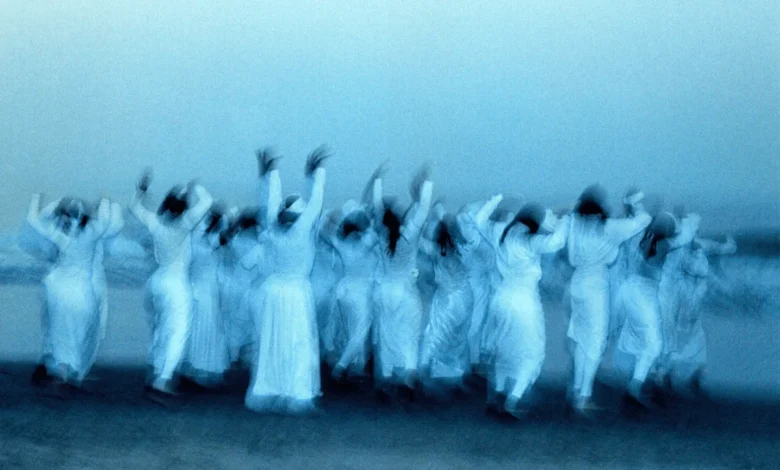
A profound visual chronicle of identity, heritage, and the unyielding spirit of people of African descent is currently on display at the Bruce Silverstein Gallery in New York City. The exhibition, "Chester Higgins: Shared Memories," which opened on May 15, 2026, and runs through June 20, 2026, offers an expansive retrospective of the distinguished photographer’s work spanning over sixty years. Higgins, whose career at The New York Times spanned nearly four decades, has consistently dedicated his lens to honoring the presence, history, and achievements of Black individuals, challenging prevailing narratives and enriching the visual landscape with a perspective described as "unique, embracing, and nonjudgmental."

The exhibition arrives at a time of heightened global discourse surrounding representation and the power of visual media to shape perceptions. Higgins, who grew up in rural southern Alabama during the intense period of the Civil Rights Movement, discovered photography as a student at Tuskegee University. This pivotal moment set him on a path that would profoundly influence how Black Americans were portrayed in mainstream media.
A Legacy of Reframing Perception
Speaking about the exhibition’s timeliness, Higgins articulated, "Absolutely. Fundamentally, my work is about identity and celebrating the search for my own African Spirit, the Spirit in life, and sharing that with others. For most people, my view of African people is unique, embracing, and nonjudgmental. A positive and loving message about any people is a balm to the daily confusion and miseducation we are subjected to."

Higgins’ tenure at The New York Times, beginning in the late 1970s, marked a significant shift in the newspaper’s visual reporting on Black communities. He consciously aimed to counteract the predominantly negative and often stereotypical imagery that characterized media portrayals at the time. "The reason that I became a publishing photographer was because I wanted to change the visual diet from exclusive negativity when the subject is my people to include a more balanced human personality," Higgins explained. "I’d like to think that my daily visual representation of my people broadened the way they were perceived."
His approach transcended mere documentation; it was an act of profound empathy and respect. Higgins sought to capture the universality of human experience, irrespective of socio-economic status. "I tried to look at poverty differently, without the lens of class, pity, or exclusion. In all of my images, regardless of their economic and social situation, I try to focus on something much larger, like their humanity," he stated. "We, humans, have simple desires; we all want to be happy. But since we humans can be complicated and defective by nature, the road from where we start and where we end up, for some, can be an exhaustive struggle. But even in our struggles and differences, we are blessed that our common denominator is a creator who is generous to all of us. Regardless of who we are, we are all afforded air to breathe, water to drink, food to eat, and emotions to season our life experience. I worked to highlight universal experiences such as celebrations, ceremonies, families, struggles, enjoyment, and aging."

The Power of the Photographer’s Intent
Higgins’ philosophy is deeply rooted in the understanding that a photograph is not merely an objective record but a reflection of the photographer’s inner world and their relationship with the subject. He famously stated, "The photograph never lies about the photographer." Elaborating on this sentiment, he said, "My statement is all about sentiment. As social beings, we process current reality through our lens of prior experiences, which determines our level of comfort with new information. If the new information facing us provokes fear or comfort, then that will color our decision of acceptance or rejection. If a photographer loves their subject, it is almost impossible to make a demeaning image of that subject. The reverse is also true. The photographer leaves their sociological contract in their photographs."
This realization was profoundly shaped by an experience during his student days at Tuskegee University. "I first realized this discrepancy while a student at Tuskegee University, the day after participating in a political protest at the State Capitol in Montgomery, protesting the racist policies of George Wallace," Higgins recalled. "The next day, photographs in the paper did not depict us students as American citizens petitioning the government, but instead showed us as potential arsonists, rapists, thugs, and thieves. To me, that was an important lesson on how what’s in the heart of the photographer can emerge in the flavor of their message about their subject."

A Shift in the Media Landscape
The impact of Higgins’ work extended beyond individual images; it contributed to a broader shift in media representation. Upon his retirement from The New York Times, the Managing Editor acknowledged his significant contribution, stating that Higgins "had changed the way the newspaper (meaning mostly white staffers) see Black people, that I expanded everyone’s horizon."
Higgins viewed his role as an "agent of expansion." He recognized the immense power of The New York Times as the "paper of record" and leveraged his position to introduce visual narratives that challenged preconceived notions and offered a more nuanced understanding of Black life in America. "It was a privilege to be able to place my images in the paper of record in front of America’s decision makers, giving them information that was not part of their usual experience, but using art to package my societal information into data that could be digested," he explained. This approach allowed complex social issues and the rich tapestry of Black culture to be presented in a format that was accessible and impactful to a wide audience, including those in positions of influence.

Seeking the Signature of the Spirit
Beyond his documentary and journalistic work, Higgins’ artistic vision is deeply informed by a spiritual and philosophical exploration of reality. He describes his process as "looking for the marriage between Nature and life," a quest to visualize "the Signature of the Spirit." This pursuit, he explained, stems from a profound personal experience in his youth.
"At a very young age, I had an out-of-body experience that changed the way I perceive reality," Higgins shared. "I came away with the feeling that life or reality travels in parallels and is multi-layered. To me, this construction of Nature is supported by invisible forces with a constantly shifting quality. It made me conscious of the fact that most of the forces in Nature that we experience, we have no name for, and the presence of those underlying forces is not obvious and below the radar of our senses."

Higgins identifies as an "ortovert," a term he uses to describe his practice of harnessing his ego and accepting that a higher spiritual force is in charge. He views experienced reality as akin to a "Marionette performance," and his artistic endeavor is to perceive the underlying forces that shape this performance. "In acknowledging natural behavior and appreciating that performance, I tend to look for the behind-the-scenes effects driving our visual reality. It is in the transitions between the Spirit world and the world of reality that I search for Signature of the Spirit where it reveals itself." This introspective and philosophical approach imbues his photographs with a depth and resonance that goes beyond the surface, inviting viewers to contemplate the unseen connections that define existence.
The "Chester Higgins: Shared Memories" exhibition is not just a retrospective of a photographer’s career; it is an invitation to engage with a visual legacy that has actively worked to broaden perspectives, celebrate humanity, and explore the profound interplay between the visible and the invisible in our world. The exhibition continues to serve as a powerful testament to the transformative potential of photography when guided by intention, empathy, and a deep respect for the subject.