Timeless Elegance: The Comprehensive Guide to Vintage and Vintage-Inspired Wedding Dresses in Modern Bridal Fashion

The modern bridal landscape is increasingly defined by a profound appreciation for history
, craftsmanship, and nostalgia, with vintage and vintage-inspired wedding dresses experiencing a remarkable surge in popularity. As brides-to-be continuously seek ways to express their individuality away from mass-market uniformity, historical aesthetics ranging from the Regency and Victorian eras to the roaring 1920s and the structured femininity of the 1950s have become central to high-end and independent bridal design. This cultural shift reflects a broader consumer desire for sustainability, storytelling, and enduring design, pushing traditional bridal wear into a renaissance of classic silhouettes, intricate lace work, and bespoke detailing.
The Evolution of Vintage Bridal Fashion and Current Market Trends
Bridal fashion trends for 2027 indicate that historical nods are no longer niche preferences but rather mainstays of contemporary collections. Designers are heavily leaning into traditional elements such as intricate French Chantilly and Italian brocade laces, corset structures, dropped waists, and the voluminous skirts reminiscent of mid-century glamour. According to industry experts and bridal houses like Hera Couture and Innocentia, modern brides are placing a premium on garments that tell a story. This encompasses everything from authentic mid-century silhouettes to newly manufactured gowns that incorporate vintage architectural lines.
The appeal lies in the duality of these garments: they offer the romantic depth of bygone eras combined with the structural integrity and comfort of modern garment engineering. This fusion addresses a primary challenge for modern brides, who desire the visual poetry of historical fashion without the sizing constraints and material degradation often associated with authentic vintage pieces.
Navigating Eras: From Regency Romance to 1920s Art Deco Glamour
Choosing a vintage-inspired aesthetic requires an understanding of the distinct cultural and stylistic markers of each decade. Each historical period offers a unique silhouette and emotional resonance:
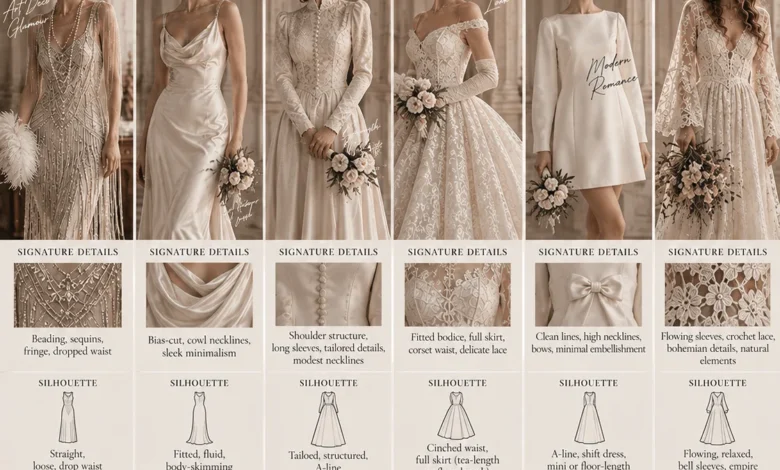
- The Regency and Victorian Eras (19th Century): Characterized by high necklines, delicate button detailing, and the dramatic architecture of the basque waist. Basque-waist gowns feature a fitted bodice that extends past the natural waistline into a sharp V- or U-shape, beautifully elongating the torso and offering a regal, structured profile.
- The 1920s Art Deco Era: Defined by the rebellious glamour of the Jazz Age, these gowns feature straight silhouettes, drop waists, cascading beadwork, sequins, feather accents, and scalloped lace trains. They appeal to brides seeking effortless movement paired with high-impact ornamentation.
- The 1950s Mid-Century Era: Marked by hyper-feminine, romantic silhouettes. Think tea-length or full-length tulle skirts paired with cinched waists and structured bodices that emphasize classic hourglass proportions.
- The 1970s Bohemian Era: Ideal for outdoor, woodland, or rustic venues, 1970s-inspired gowns prioritize ease of movement through lightweight organza, bell sleeves, crochet lace, and ethereal, free-spirited layering.
Fabric Selection and Construction: The Anatomy of Vintage Style
The tactile experience of a vintage gown relies heavily on traditional textiles that have stood the test of time. Industry standards highlight specific fabrics that instantly communicate a vintage pedigree. Silk taffeta, Mikado silk, and heavy velvet provide structured luxury, while layers of Chantilly lace, Alençon lace, and fine tulle introduce romantic texture.
Furthermore, the construction techniques utilized in these garments—such as internal boning for corset bodices and hand-applied pearl and rhinestone embellishments—require a high degree of artisanal craftsmanship. Designers note that modern brides frequently request these labor-intensive details because they offer a tactile richness that synthetic, machine-produced alternatives simply cannot replicate.
True Vintage Versus Vintage-Inspired: Weighing the Options
A critical decision for any bride exploring this aesthetic is choosing between a true vintage garment—an original piece sourced from a specific historical decade—and a vintage-inspired gown manufactured with modern techniques.
True vintage dresses offer authentic historical character, rare textiles, and a sustainable approach to fashion by giving new life to pre-existing garments. However, they demand careful sourcing. Experts advise prospective buyers to inspect potential purchases thoroughly for fabric strength, discoloration, weakened seams, missing beadwork, and structural integrity. Because historical sizing differs vastly from modern measurements, brides must rely strictly on garment dimensions rather than vintage size labels. Additionally, true vintage gowns often require specialized alterations by tailors experienced in handling delicate, aged textiles.
Conversely, vintage-inspired dresses bridge the gap between historical romance and modern convenience. Newly constructed using vintage design motifs, these gowns offer standardized sizing, easier alteration processes, and greater durability, making them a practical choice for brides who want the look without the meticulous conservation requirements of authentic antiques.
Accessorizing and Completing the Vintage Bridal Ensemble
Creating an authentic vintage bridal look extends far beyond the dress itself. According to prominent bridal designers, accessories play a pivotal role in anchoring the chosen era.
Hair accessories have seen a major resurgence, with brides incorporating Art Deco hair combs, jeweled headbands, velvet hairpins, and elaborate lace-trimmed cathedral veils or over-the-face net blushers adorned with hand-beaded pearls. Footwear, vintage-inspired bouquets, and heirloom jewelry further unify the concept. When styled correctly, these supplementary elements transform a simple white dress into a cohesive, historically resonant narrative.
Conservation, Maintenance, and Sustainable Investment
Because vintage and vintage-inspired gowns often feature delicate components—such as fragile lace, intricate beadwork, and natural silk fibers—proper maintenance is paramount. Preservation experts recommend a specialized post-wedding cleaning process tailored to the specific fabric composition of the garment. For true vintage pieces, storing the dress in acid-free tissue paper within a breathable, archival-grade box protects the textiles from yellowing, moisture, and fiber degradation over time.
As the bridal industry continues to embrace sustainable practices through the preservation of historical fashion and the choice of heirloom-quality modern garments, vintage styles remain a powerful testament to the enduring nature of classic design. Whether through an inherited Victorian silhouette, an intricate 1920s Art Deco masterpiece, or a carefully tailored 1950s-inspired tea-length dress, brides continue to look backward in time to make a definitive style statement on their wedding day.
Related posts: