The Rise of the Trendy Bakery: How High-End Pastries Became Fashion and Beauty’s Favorite Accessory

The modern urban bakery has evolved far beyond a neighborhood destination for morning coffee and flour-dusted carbohydrates. Today, high-end pastry shops function as cultural epicenters, drawing blocks-long queues for $7 cardamom buns and $8 artisan croissants. This phenomenon has not gone unnoticed by the world’s most powerful consumer brands. Driven by the explosive growth of "treat culture" among Gen Z consumers, luxury fashion houses, prestige beauty labels, and high-end fragrance companies are increasingly bypassing traditional advertising channels to partner with artisanal bakeries.
From New York and Paris to Tokyo and Mexico City, the intersection of gastronomy and style has created a lucrative marketing ecosystem. Yet, as co-branded candles, pop-up cafes, and limited-edition pastries proliferate, industry leaders are beginning to question how far the trend can stretch before hitting a saturation point.
The Anatomy of Bakery Volume and Brand Appeal
To understand the mechanics of these partnerships, one need only look at La Cabra, the Danish-style bakery and coffee shop that has mastered the art of high-volume, high-demand operations. In a given week, La Cabra sells roughly 8,000 of its signature cardamom buns at $7 apiece across its four New York City locations, according to managing director Cyril Alcazar.
This immense daily foot traffic and cultural cachet have made La Cabra a prime target for corporate partnerships. Most recently, the bakery teamed up with athletic giant Nike for the New York City Marathon. La Cabra provided complimentary treats to runners waiting to have their commemorative medals engraved at a Nike store.
"[Nike] plugged us in because they wanted to elevate that experience. So, while they’re waiting for their medal to be engraved, you have a La Cabra there," Alcazar said.
Established in Denmark in 2011, La Cabra has expanded to 15 locations worldwide. Alcazar estimates that the brand has executed roughly 60 brand collaborations over the past two years alone. These activations have taken many forms, from supplying catering for events hosted by prestige beauty brands like Glossier and Diptyque to developing co-branded merchandise lines with Japanese skincare brand Damdam.
A Chronology of Cravings: The Convergence of Retail and Gastronomy
While the current wave of bakery collaborations feels ubiquitous, the strategy is rooted in a long-standing evolution of experiential retail.
The modern obsession with queuing for hyper-specific baked goods largely traces back to 2013, when pastry chef Dominique Ansel introduced the Cronut—a croissant-doughnut hybrid that turned a humble pastry into a global status symbol. Around the same period, fashion designers began experimenting with food and beverage concepts. Streetwear pioneers like Bape operated branded cafes in Tokyo as early as the early 2000s, recognizing that lifestyle branding extended well beyond apparel.
However, the velocity and scale of today’s partnerships have accelerated dramatically, catalyzed by shifting consumer habits following the pandemic. Gen Z’s embrace of "treat culture"—the psychological coping mechanism of purchasing small, affordable luxuries in an uncertain economic climate—has heavily influenced retail strategies.
In recent months, the cadence of these cross-industry pairings has intensified:
- November: Levi’s partnered with Manhattan bakery Librae to offer select customers a free sticky toffee danish alongside exclusive Levi’s merchandise.
- November: French hairbrush brand La Bonne Brosse launched an Instagram advertising campaign in collaboration with Brooklyn Heights bakery L’Appartement 4F to promote its Carmine Red collection.
- October: Natural skincare brand Osea collaborated with grain- and dairy-free Los Angeles bakery Sweet Laurel to craft a specialty vanilla and bergamot cake inspired by a new body butter scent.
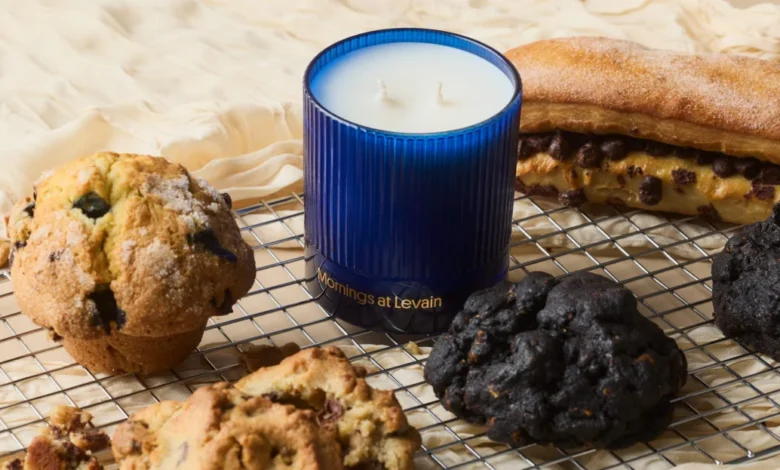
- 2025: Fragrance brand Snif teamed up with renowned New York City bakery Levain to release the "Mornings at Levain" candle, designed to replicate the olfactory experience of Levain’s famous oversized chocolate chip and walnut cookies.
The Psychology of the "Everyday Luxury" Economy
The marriage of beauty, fashion, and baking is underpinned by sound economic and psychological principles. High-end beauty and designer fashion items often sit at price points that can alienate younger or more budget-conscious consumers. By contrast, a $6 Levain cookie or an $8 artisanal pastry represents an accessible entry point into a luxury lifestyle.
"Bakeries have become a little luxury for the everyday consumer," said Snif co-founder and CEO Bryan Edwards. "Partnering with trending bakeries allows [fashion and beauty brands] to create a real emotional connection with their target demographic in a way more people can engage with."
Bryan Edwards emphasized that the modern bakery functions as a cultural hub, making it an ideal canvas for brand storytelling. Fragrance brands, in particular, find natural synergy in bakeries, where olfactory marketing—the scent of roasting coffee beans, melting butter, and baking sugar—is built into the operational DNA.
Conversely, independent bakeries benefit significantly from these alliances. Beyond the immediate financial compensation, partnerships grant artisanal food makers access to entirely new consumer demographics.
"As a business, we want all walks of life coming to our cafes and spaces," Alcazar explained. "With collaborations, that’s the whole point of it. Second is to create some cool experiences through that collaboration. And then third is the financial aspect of it, because to do these collaborations, we get paid to do it."
The Global Expansion and Ultra-Luxury Backlash
As demand for experiential retail grows, stylish bakeries are expanding their footprints into major international markets. La Cabra inaugurated a new location in Mexico City, while Librae announced plans to open a sprawling outpost in Williamsburg, Brooklyn.
Yet, this rapid commercialization has sparked debates over how far the premium bakery concept can stretch. The pursuit of peak artisanal exclusivity has occasionally crossed into territory that draws public skepticism. In September, the opening of Austrian bakery Rye in New York City’s Soho neighborhood generated intense online intrigue—and widespread ridicule—for offering $60 loaves of bread. Such pricing underscores the tension between genuine culinary craftsmanship and runaway luxury inflation.
Navigating Oversaturation and Protecting Core Identity
With beauty brands, clothing labels, and lifestyle companies all vying for space on the bakery counter, industry veterans are sounding notes of caution regarding market oversaturation. Excessive corporate branding risks alienating the core clientele who visit bakeries for their primary purpose: exceptional coffee and daily bread.
Recognizing this risk, leading bakeries are adopting a highly selective approach to partnerships. For La Cabra, the filtering process has become stringent.
"We’re in the stage now that we probably say no nine times and say yes once, because we’re very intentional in the brands that we work with," said Alcazar. "At the end of the day, these are all marketing and communication initiatives. The most important are regulars who come into our doors."
Implications for the Future of Retail
The intersection of fashion, beauty, and baking highlights a broader transformation in how physical retail spaces operate. As traditional department stores and brick-and-mortar clothing shops face headwinds, experiential retail has become a vital survival strategy. By turning bakeries into cultural venues and clothing stores into hospitality destinations, brands are transforming passive shoppers into active participants in a lifestyle ecosystem.
Whether this trend will endure as a permanent fixture of modern commerce or fade as a transient marketing fad remains to be seen. For now, however, the formula of pairing high-end aesthetic branding with the comforting aroma of fresh pastries continues to yield powerful cultural and financial dividends.
Related posts: