J.C. Penney Faces Steep Second-Quarter Sales Decline as Retail Rivals Edge Ahead and Market Share Slips

The retail landscape remains a crucible for legacy department stores, and J.C. Penney is currently finding itself under renewed pressure. In the second quarter, J.C. Penney experienced a rougher financial period compared to its key department store competitors. While rivals such as Dillard’s and Macy’s managed to eke out small top-line gains during the quarter—and Kohl’s limited its sales decline to under 1%—J.C. Penney’s trajectory pointed downward. Compounding this sluggish quarterly performance, the retailer’s total net sales for the first half of the year fell by 6.5%, highlighting deep-seated challenges in capturing consumer wallets in a recovering market.
This divergence from sector trends has drawn scrutiny from retail analysts. According to Neil Saunders, managing director of GlobalData, the year-over-year sales contraction is particularly concerning given the broader economic context. The market, even within the constrained department store segment, actually experienced growth during the quarter. Consequently, J.C. Penney’s sales dip translates into a tangible and serious loss of market share. Saunders noted that despite creative marketing campaigns and noticeable, incremental improvements inside the physical brick-and-mortar stores, a persistent lack of commercial momentum remains. Internally, J.C. Penney management attributed the apparel sales slump to lower unit inventory levels, frustrating in-stock gaps on the sales floor, and softer overall consumer demand within seasonal categories.
Bright Spots Amidst Structural Headwinds
Despite the overarching sales decline, the company’s Q2 financial report was not without notable operational bright spots. Certain product categories and strategic divisions significantly outperformed expectations, offering a glimpse of resilience and adaptability within the legacy brand’s ecosystem.
Active apparel emerged as a standout performer, registering a robust 12-year-over-year sales increase of approximately 12%. This growth was propelled by strong consumer reception toward Nike merchandise, team sports apparel, and select Adidas footwear lines. Industry observers highlighted J.C. Penney’s effective merchandising strategies surrounding the World Cup as a key catalyst for this athletic wear surge. Furthermore, the home and lifestyle categories showed remarkable strength. Furniture sales jumped by an impressive 41%, jewelry grew by 9%, and the salon division—encompassing both retail product sales and in-salon services—saw a healthy 7% increase.
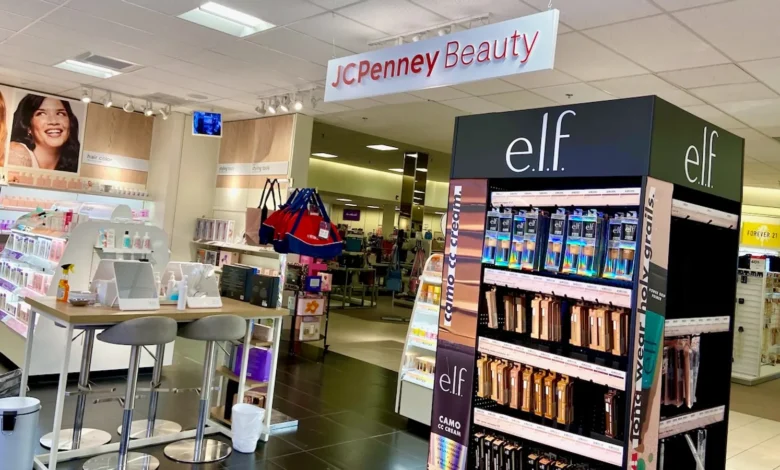
Perhaps most strategically significant is J.C. Penney’s successful pivot in the beauty sector. Nearly four years after the high-profile termination of its long-standing partnership with Sephora—which subsequently moved its lucrative shop-in-shops to rival Kohl’s—J.C. Penney has mounted a credible recovery. While Sephora’s integration into Kohl’s has paradoxically acted as a sales drag in recent quarters, J.C. Penney reported that its Q2 beauty sales received a vital boost from skincare lines and successful new color cosmetics launches, including popular brands like Milani and an expanded selection of K-beauty products. Saunders commended the retailer for being quite thoughtful about creating a modern proposition to replace Sephora.
However, Saunders cautioned that beauty alone cannot carry a traditional department store. The fundamental operational challenge of the department store model is that it requires almost all of its diverse departments to fire on all cylinders simultaneously. Because J.C. Penney’s operational execution remains uneven across its vast product matrix, the company continues to experience severe financial and strategic pressure.
The Evolution and Context of J.C. Penney
To fully understand J.C. Penney’s current operational standing, one must examine the turbulent historical trajectory of the company over the past decade. Founded in 1902 by James Cash Penney, the department store chain grew to become an American retail institution, anchoring shopping malls across the United States. However, the advent of e-commerce, shifting consumer preferences toward fast fashion and online marketplaces, and heavy debt burdens pushed the company to the brink of financial insolvency.
In May 2020, at the height of the COVID-19 pandemic, J.C. Penney filed for Chapter 11 bankruptcy protection. To survive, the company underwent a radical corporate restructuring. Later that year, a rescue deal was struck when its primary landlords—major real estate investment trusts Simon Property Group and Brookfield Asset Management—partnered to acquire J.C. Penney out of bankruptcy. This unique landlord-owner arrangement fundamentally altered the company’s corporate governance and real estate dynamics. According to retail analysts like Saunders, this structural uniqueness means that unlike other traditional chains that might hastily shutter underperforming physical locations to stanch financial bleeding, J.C. Penney is far less likely to execute massive store closures, given that two of its primary landlords hold a direct ownership stake in the enterprise.
Furthermore, the brand’s stability has been reinforced by its inclusion in Catalyst Brands, a broader retail operating collective formed when J.C. Penney joined forces with the operator of Brooks Brothers, the Sparc Group. This coalition provides crucial financial backing, operational synergies, and supply chain efficiencies. Analysts emphasize that J.C. Penney remains financially stable due to this institutional backing. Unlike historical retail failures such as Sears—which critics argue was systematically mismanaged and run into the ground—J.C. Penney is benefiting from sustained capital investment and deliberate operational efforts to modernize its infrastructure.
Digital Expansion and E-Commerce Initiatives
Recognizing the vital importance of digital channels in contemporary retail, J.C. Penney has actively sought to expand its e-commerce capabilities. A major milestone in this digital evolution occurred late in the second quarter with the quiet rollout of the JC Penney Marketplace.
According to executive statements, the newly launched digital marketplace has noticeably outperformed internal expectations during its nascent operational phase. The platform is strategically designed to broaden the company’s online product assortment without requiring the traditional heavy capital expenditures associated with holding physical inventory. Management anticipates that the marketplace will contribute steady, incremental growth to e-commerce sales over the long term, positioning the brand more competitively against digital-first giants and multi-vendor platforms.
Looking Ahead: Holiday Strategy and Market Implications
As J.C. Penney looks toward the critical upcoming holiday shopping season, executive leadership has outlined a pragmatic and defensive roadmap. The company plans to double down on value-focused pricing activities, recognizing that inflation-weary consumers are increasingly sensitive to price points and promotional offers. Holiday marketing presentations and in-store merchandising will center squarely on clear value propositions and family-oriented moments, aiming to resonate with the core demographic that has historically anchored the brand’s customer base.
Moreover, management has committed to maintaining a vigilant, real-time posture regarding the broader consumer economic environment. By closely monitoring customer response metrics throughout the holiday quarter, the retailer intends to make agile, strategic adjustments as necessary to protect its profit margins and market share.
From a broader analytical perspective, the implications of J.C. Penney’s Q2 performance extend beyond a single company’s balance sheet. The results underscore the profound bifurcation occurring within the American department store sector. While upscale and differentiated players find avenues for growth through targeted merchandising, mid-tier department stores face relentless margin compression. For J.C. Penney, the path forward requires bridging the gap between its successful niches—such as activewear and beauty—and its underperforming foundational categories like traditional apparel.
Nevertheless, industry experts stress that the retailer’s narrative is one of transformation rather than terminal decline. Backed by the financial muscle of Catalyst Brands and insulated by its unique landlord-ownership structure, J.C. Penney possesses the runway necessary to execute its long-term turnaround strategy. While the road ahead remains steep and demanding of operational consistency, the retailer’s institutional foundation ensures it will remain a prominent fixture of the American retail landscape for the foreseeable future.