Neighborhood Intelligence Restructures Fathom Holdings Acquisition to Leverage $130M Digital Asset Portfolio Following Canceled Deals

Neighborhood Intelligence, the corporate entity formerly known as Bed Bath & Beyond Inc., is pivoting its strategic roadmap once again, moving to overhaul its previously announced acquisition of real estate platform Fathom Holdings. Under a newly proposed agreement announced in September 2026, the company intends to leverage substantially all of its high-value digital assets—valued at a minimum of $130 million—in exchange for a controlling interest in Fathom Holdings. This reworked agreement marks a sharp departure from the original all-stock merger terms struck earlier in the year, signaling a deeper integration of digital securities infrastructure, tokenization concepts, and traditional real estate brokerage services.
The structural redesign comes on the heels of a turbulent few months for Neighborhood Intelligence, which has aggressively sought to diversify its business model beyond traditional home goods retail. As the company transitions away from its historical roots as a brick-and-mortar household goods retailer, its leadership team is actively pruning and reshaping its portfolio of mergers and acquisitions to optimize long-term shareholder value, even as broader market headwinds and transaction hurdles force a reevaluation of past commitments.
Anatomy of the Reworked Fathom Holdings Deal
Under the newly proposed terms, Neighborhood Intelligence will contribute an extensive portfolio of digital assets to Fathom Holdings. Most notably, this contribution includes approximately 40% direct and indirect ownership interest in tZERO Group, a prominent alternative trading system and digital securities pioneer. Additionally, the package incorporates Medici-related fund assets and a direct, strategic investment in GrainChain, an agricultural data and supply chain fintech company.
By attributing a baseline valuation of at least $130 million to these digital assets, the revised deal structure establishes a different economic framework than the original June agreement. Rather than relying solely on Fathom’s current public market capitalization—which has experienced downward pressure and trades lower than it did when the merger was first unveiled—the transaction utilizes newly issued Fathom shares allocated to Neighborhood Intelligence. While the final share count will be locked in as legal terms reach completion, Neighborhood Intelligence anticipates maintaining a controlling stake in the combined entity.
Executive Chairman and CEO Marcus Lemonis defended the strategic rationale behind the adjustment, noting that despite the software and real estate platform’s depressed share price, Fathom’s underlying brokerage and title operations have demonstrated meaningful operational progress. According to joint statements released by the companies, the redesigned structure is specifically calibrated to reward that operational improvement while unlocking the latent value embedded within Neighborhood Intelligence’s digital holdings.
Furthermore, the updated framework leaves room for Fathom Holdings to pursue targeted, synergistic acquisitions designed to bolster its day-to-day operating businesses in the residential and commercial real estate sectors.
Strategic Vision: Merging Real Estate with Digital Securities
The core thesis uniting Neighborhood Intelligence and Fathom Holdings centers on the intersection of physical real estate and distributed ledger or digital tokenization technologies. Leadership from both organizations have publicly articulated their belief that the real estate industry represents a prime, highly scalable application for tZERO’s digital securities infrastructure.
Among the use cases highlighted by the companies are the potential tokenization of commercial real estate assets and single-family rental portfolios. Proponents argue that tokenization can introduce fractional ownership, create more flexible capital structures, and establish entirely new, frictionless pathways to market liquidity for asset owners. Over a longer time horizon, the corporate partners intend to investigate how these technologies might streamline title services, escrow operations, and individual homeownership documentation, potentially modernizing legacy processes that have remained largely unchanged for decades.
Neither Neighborhood Intelligence nor Fathom Holdings immediately responded to requests for clarification regarding the final timeline for closing the transaction, leaving analysts to monitor regulatory filings for updates on the definitive agreement.
A Timeline of Transition: From Bed Bath & Beyond to Neighborhood Intelligence
To understand the current maneuvering surrounding Fathom Holdings, observers must examine the rapid, tumultuous evolution of the corporate entity formerly known as Bed Bath & Beyond. Following its high-profile Chapter 11 bankruptcy filing and subsequent liquidation of physical store leases in 2023, the brand name and digital properties were acquired by Beyond Inc. (formerly Overstock), which later transitioned its branding strategy toward Neighborhood Intelligence to reflect a broader, tech-forward holding structure.

The recent chronology of corporate actions underscores an aggressive, albeit volatile, M&A strategy spearheaded by Lemonis and his executive team:
- June 2026: Neighborhood Intelligence initially announces a definitive agreement to acquire Fathom Holdings in an all-stock transaction valued at approximately $53 million, with an anticipated closing date in the second half of the year.
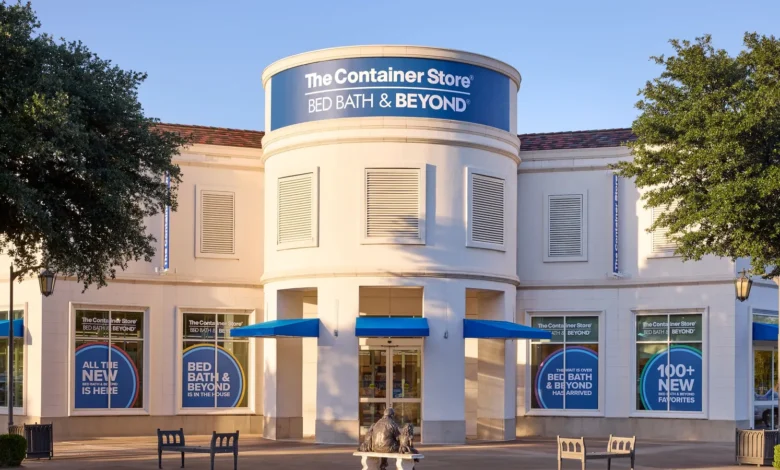
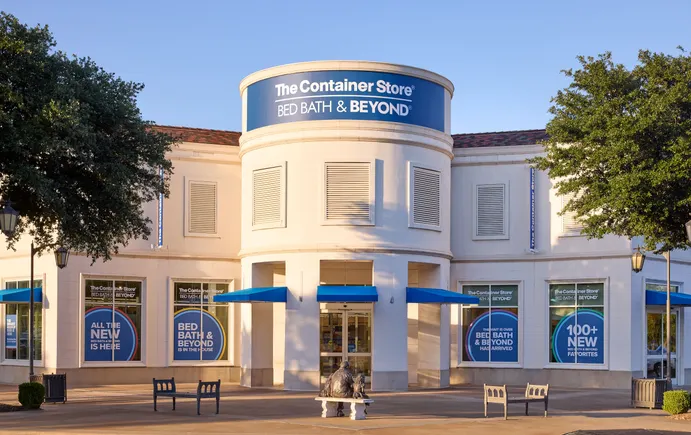
- Summer 2026: Management pursues parallel expansion paths, including high-profile partnerships such as co-branded retail concepts with The Container Store (the first of which opened in Fort Worth, Texas) and investments across various lifestyle and retail sectors.
- Early September 2026: Neighborhood Intelligence abruptly cancels a $150 million deal to acquire F9 Brands—the parent company of Cabinets to Go and Lumber Liquidators. The cancellation is attributed to F9’s inability to satisfy necessary closing conditions within the agreed-upon timeframe.
- Late September 2026: Recognizing shifts in public market valuations and the unrealized potential of its fintech investments, Neighborhood Intelligence proposes an alternative structure for the Fathom Holdings acquisition, substituting the original all-stock buyout with a $130 million digital asset contribution package.
The Shadow of Canceled Deals and Retail Transformation
The pivot toward Fathom’s digital asset integration follows closely on the heels of the collapsed F9 Brands transaction. The aborted acquisition of Cabinets to Go and Lumber Liquidators was intended to anchor Neighborhood Intelligence’s physical home-improvement footprint, serving as a cornerstone for its broader ambition to transcend traditional retail. When F9 Brands failed to meet closing stipulations, it forced leadership to recalibrate how quickly and through what vehicles the company could scale its presence in the home services and homeownership ecosystem.
By walking away from the F9 acquisition and shifting focus to the revised Fathom transaction, Neighborhood Intelligence is signaling a strategic preference for asset-light, technology-enabled platforms over heavy, capital-intensive manufacturing and specialty retail chains. The company’s earlier integration efforts—such as its alliance with The Brand House Collective (formerly Kirkland’s Inc.) and its retail partnership with The Container Store—demonstrated an ongoing commitment to physical retail touchpoints, but the tZERO and GrainChain maneuvers show a concurrent push into high-margin fintech and real estate technology.
Market Implications and Industry Analysis
Financial analysts and retail industry experts are closely watching these developments to gauge the viability of Neighborhood Intelligence’s reinvention. The decision to inject $130 million worth of digital assets—featuring tZERO and GrainChain—into a publicly traded real estate brokerage like Fathom Holdings creates a novel corporate hybrid.
On one hand, the strategy allows Neighborhood Intelligence to monetize illiquid or specialized digital holdings by wrapping them inside an operating company where they can theoretically be deployed as capital-raising or liquidity-generating tools. tZERO’s expertise in blockchain-based trading and compliant digital asset issuance could provide Fathom with a distinct competitive advantage in a crowded real estate brokerage market, particularly if tokenized real estate gains mainstream regulatory approval and investor traction.

On the other hand, skeptics point out that integrating complex fintech assets into a traditional residential real estate brokerage carries execution risks. Real estate brokerages are notoriously sensitive to macroeconomic cycles, interest rate fluctuations, and housing inventory constraints. Coupling a cyclical brokerage business with volatile digital assets and tokenization initiatives creates a complex corporate structure that may challenge traditional equity analysts attempting to value the combined enterprise.
Furthermore, maintaining a controlling interest while relying on newly issued shares introduces questions surrounding potential share dilution for existing Fathom investors. Much will depend on the finalization of the definitive agreement terms, the ultimate share count determination, and the reception of the deal by regulatory bodies such as the Securities and Exchange Commission (SEC).
Broader Outlook for the Corporate Entity
As Neighborhood Intelligence continues its journey away from the ashes of Bed Bath & Beyond, the company stands as a unique case study in corporate restructuring and brand metamorphosis. What began as a desperate struggle for survival in the face of insurmountable retail debt has morphed into a sprawling, experimental holding vehicle experimenting with e-commerce, home organization retail, supply chain fintech, and digital securities.
Whether the restructured Fathom Holdings deal will serve as a triumphant blueprint for modernizing the real estate sector or a cautionary tale of over-diversification remains to be seen. For now, leadership remains steadfast in its belief that marrying Fathom’s on-the-ground brokerage network with tZERO’s digital infrastructure will unlock value that neither company could capture independently. As the dust settles on a hectic third quarter of 2026, all eyes remain on the final execution of the definitive documents and the market’s ultimate verdict on this digital-real estate convergence.