Six seasons, four summers: Inside fashion’s high heat problem and how to solve it

As climate change continues to alter weather patterns across South Asia, the structural resilience of the global garment supply chain faces an unprecedented and escalating threat from rising temperatures. A comprehensive new university research report has revealed that strategic investments aimed at mitigating extreme heat inside Bangladesh’s vital garment factories could fully recover their capital costs within a period of one to four years. Furthermore, these targeted interventions would simultaneously curb worker exposure to dangerous thermal environments and deliver measurable improvements in daily operational productivity.
The study, titled “Six seasons, four summers: Inside fashion’s high heat problem and how to solve it,” was conducted by Cornell University in close collaboration with BRAC University, YGEN Engineering, and the Bangladesh Centre for Worker Solidarity. By combining rigorous indoor and outdoor environmental data collection with direct worker surveys and detailed engineering assessments, the research provides an exhaustive look at how climate-driven heat stress impacts the world’s second-largest apparel exporting nation.
Methodological Approach and On-the-Ground Findings
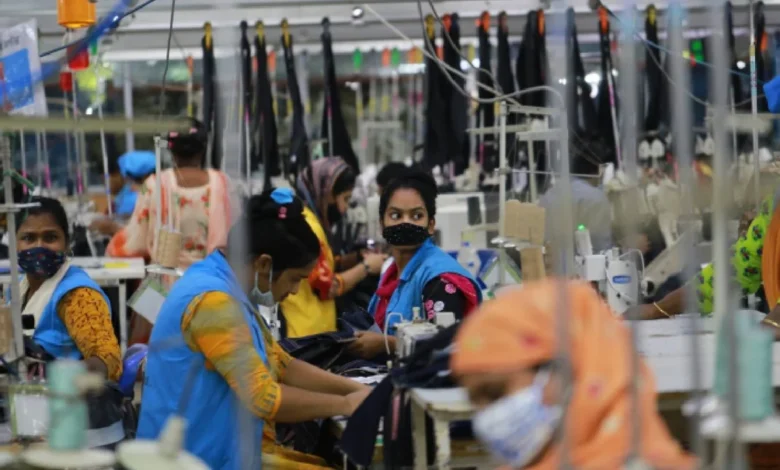
To accurately measure the scope of the thermal crisis, the research team monitored temperature and humidity readings across eight distinct garment manufacturing facilities located in Dhaka over a continuous twelve-month period. In addition to workplace monitoring, researchers tracked environmental conditions inside the homes of 37 garment workers to understand the round-the-clock cumulative toll of rising temperatures.
The findings indicate that heat stress is directly linked to an average 4.1% loss in working-time productivity across the evaluated facilities. More alarmingly, the data established that Dhaka endured a punishing seven-month heat-stress season in 2025—a meteorological reality that researchers formally designated as “the new norm” for the region.
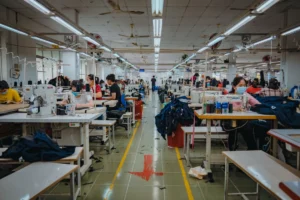
Indoor manufacturing conditions consistently outpaced outdoor temperatures, with specific production zones bearing the heaviest burden. Ironing and finishing sections were identified as the most hazardous areas within the factories, recording the highest levels of thermal exposure. Workers stationed in these specific departments spent significant portions of their shifts during the hottest months trapped within caution, high, or severe heat-stress zones. Despite these hazardous and physically punishing conditions, survey results highlighted a troubling systemic trend: workers routinely continued their laboring tasks in extreme heat, driven by strict production quotas, piece-rate incentives, and financial necessity.
Engineering Interventions and Financial Viability
Engineering audits conducted as part of the research project demonstrated that practical, readily available architectural and mechanical solutions could drastically reduce indoor temperatures and worker exposure. Key mitigation measures highlighted in the report include the installation of advanced roof insulation, enhanced natural and forced-air ventilation systems, and targeted mechanical cooling units designed to alleviate conditions in the most intensely heated zones.
Crucially, the report dispels the notion that factory cooling is an unrecoverable operational overhead. By factoring in the financial gains generated by restored productivity and the parallel reduction of health- and safety-related workplace disruptions, researchers mapped out a highly favorable return on investment (ROI).
Under a conservative financial projection modeled as a “headwinds” scenario—which accounted for higher-than-average capital expenses, elevated energy costs, and more modest productivity improvements—the average payback period across the surveyed factories stood at 2.9 years. Even within the most pessimistic worst-case scenario examined by the study, the capital outlay was fully recovered in slightly more than four years. The empirical data confirms that the business case for factory thermal adaptation remains overwhelmingly positive under various economic pressures.
Sector-Wide Scale and Macroeconomic Context
Scaling these critical heat-mitigation measures across the entirety of Bangladesh’s vast apparel export industry would require a substantial financial commitment, but one that remains modest relative to the sector’s overall economic footprint. The report estimates that a comprehensive national rollout would necessitate approximately $239 million in total capital expenditure.
When distributed across a three-year implementation timeline, this investment equates to a mere 0.2% of the apparel sector’s projected 2025 export revenue. Industry analysts point out that this minimal percentage represents a minor insurance policy against catastrophic operational disruptions and labor shortages.
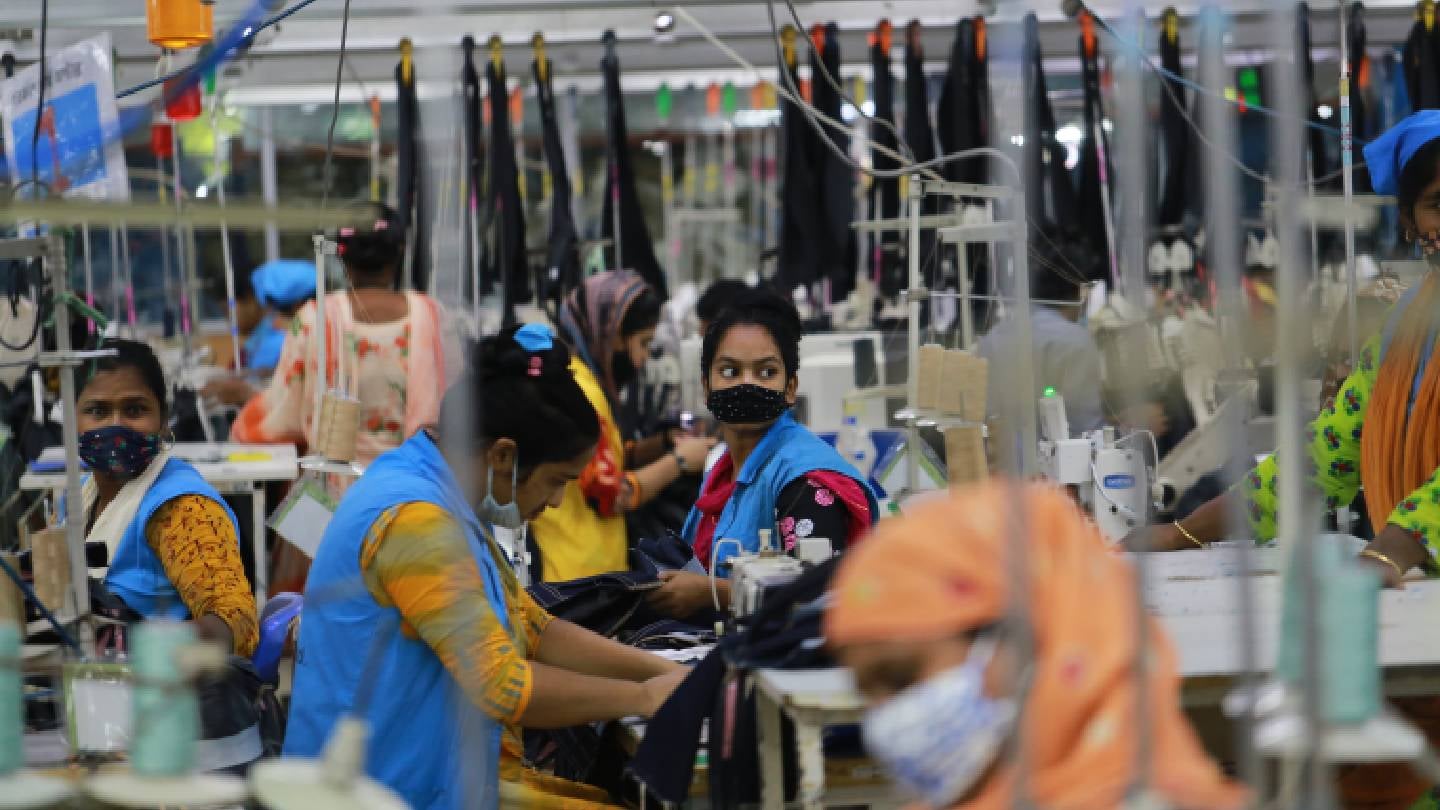
This new study builds directly upon foundational research published in 2023. Cornell University’s earlier “Higher Ground” project, conducted in partnership with Schroders, warned that chronic extreme heat and climate-induced flooding could place a staggering $65 billion in apparel exports at risk across four major manufacturing nations—Bangladesh, Cambodia, Pakistan, and Vietnam—by the year 2030. For Bangladesh specifically, the earlier macroeconomic analysis calculated that $27 billion in exports and up to 250,000 potential jobs are directly imperiled by unchecked climate hazards.
Beyond the Factory Floor: The Domestic Toll
The Cornell-led study deliberately expanded its lens beyond the factory gates, investigating how nighttime thermal environments impact the recovery and well-being of garment workers. The research revealed that persistently hot nights severely disrupt sleep architecture, inhibiting physical recovery between grueling shifts.
This domestic heat burden compounds the financial pressures faced by low-wage workers. To cope with soaring nighttime temperatures and the physiological toll of heat stress, workers reported resorting to desperate financial measures. Many incurred heavy debts, pawned personal belongings, or slashed household spending on vital nutrition and education to pay for electric fans, higher electricity bills, and essential healthcare during the peak summer months.
Stakeholder Responses and Industry Accountability
Addressing the media following the release of the report, Jason Judd, executive director of Cornell University’s Global Labor Institute, emphasized the immediate imperative for collaborative action.
"The problem is urgent and we already know what can be done to reduce heat stress," Judd stated. "There are practical solutions available to manufacturers. Addressing heat stress makes sense from both business and worker health and safety perspectives. The challenge now is deciding how to share the costs fairly and scaling these solutions across the industry. This means acting together—employers, buyers, workers, government—including through mandatory programmes such as the International Accord, which provide a framework for putting solutions into practice and spell out how responsibility is shared."
Echoing the call for structured, localized implementation, Tareq Ahmed Robin, managing director of YGEN Engineering in Dhaka, underscored that a blanket approach will not succeed.
"There is no one-size-fits-all solution to heat stress," Robin noted. "Every factory is different, so measures need to reflect the factory’s design and production processes. The important thing is to start now, with practical steps—insulation, improved airflow, active cooling for the hottest areas—and to build on these measures as heat stress rates go higher."
Chronology of Climate-Driven Labor Research in South Asia
- November 2023: Cornell University and Schroders publish the "Higher Ground" report, predicting that extreme climate events could jeopardize $65 billion in apparel exports across South and Southeast Asia by 2030, with Bangladesh facing $27 billion in export risks.
- Throughout 2025: Dhaka experiences an unprecedented seven-month heat-stress season, establishing prolonged high-temperature conditions as a permanent operational challenge for local textile and garment manufacturers.
- Late 2025 to Early 2026: Cornell University, alongside BRAC University, YGEN Engineering, and the Bangladesh Centre for Worker Solidarity, executes a year-long field study monitoring internal factory microclimates and residential worker environments across eight major manufacturing plants in Dhaka.
- September 2026: The formal research report, "Six seasons, four summers: Inside fashion’s high heat problem and how to solve it," is released, detailing the 4.1% productivity loss, the 2.9-year average investment payback period, and the $239 million sector-wide adaptation cost.
Strategic Implications and Future Outlook
The findings mark a critical turning point in how global fashion brands, local factory owners, and policymakers must view climate adaptation. For decades, environmental sustainability in the fashion supply chain has largely focused on reducing carbon footprints, water usage, and chemical runoff. This research forcefully repositions occupational heat stress not merely as an acute humanitarian concern, but as a paramount supply chain vulnerability that threatens economic viability, product delivery timelines, and workforce stability.
Experts argue that treating heat adaptation as an isolated, factory-level expense is no longer tenable. Because international fast-fashion brands and retail giants dictate tight profit margins and rapid turnaround times, the financial burden of retrofitting factories with advanced insulation, ventilation, and cooling cannot rest solely on the shoulders of local manufacturers operating in developing economies.
Instead, a multi-stakeholder framework is required—one that successfully distributes capital expenditures across international buyers through fair pricing models, government-backed incentives, and legally binding compliance frameworks. As global temperatures continue to climb and multi-month heat-stress seasons become entrenched across manufacturing hubs in South Asia, proactive investment in workforce thermal safety will determine the long-term survival and stability of the global apparel trade.