Louis Erard x Vianney Halter Futur Antérieur: A Masterclass in Accessible High Horology

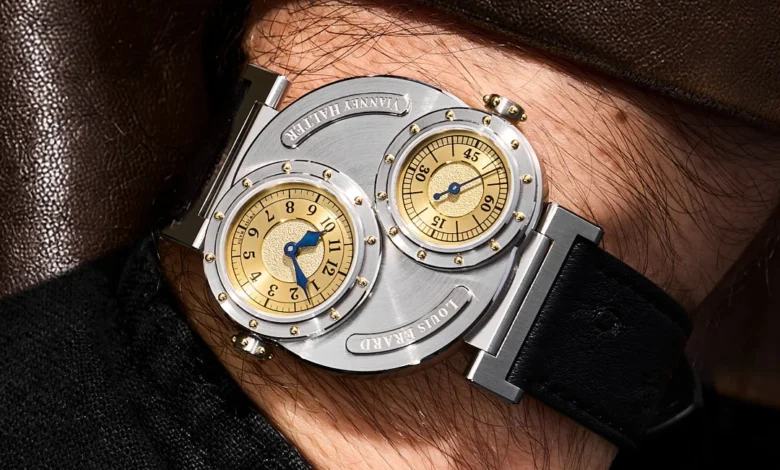
The horological landscape has welcomed a striking and unexpected addition with the official unveiling of the Louis Erard x Vianney Halter Futur Antérieur. Marking the third creative partnership between independent Swiss watchmaker Louis Erard and legendary master horologist Vianney Halter, this limited-edition release breaks significantly from the mold of their previous collaborations. Rather than simply reinterpreting an existing Louis Erard silhouette with Halter’s distinct artistic flourishes, the Futur Antérieur serves as a faithful, scaled-down homage to one of the most iconic, avant-garde timepieces in modern independent watchmaking history: Vianney Halter’s seminal Antiqua perpetual calendar, originally launched in 1998.
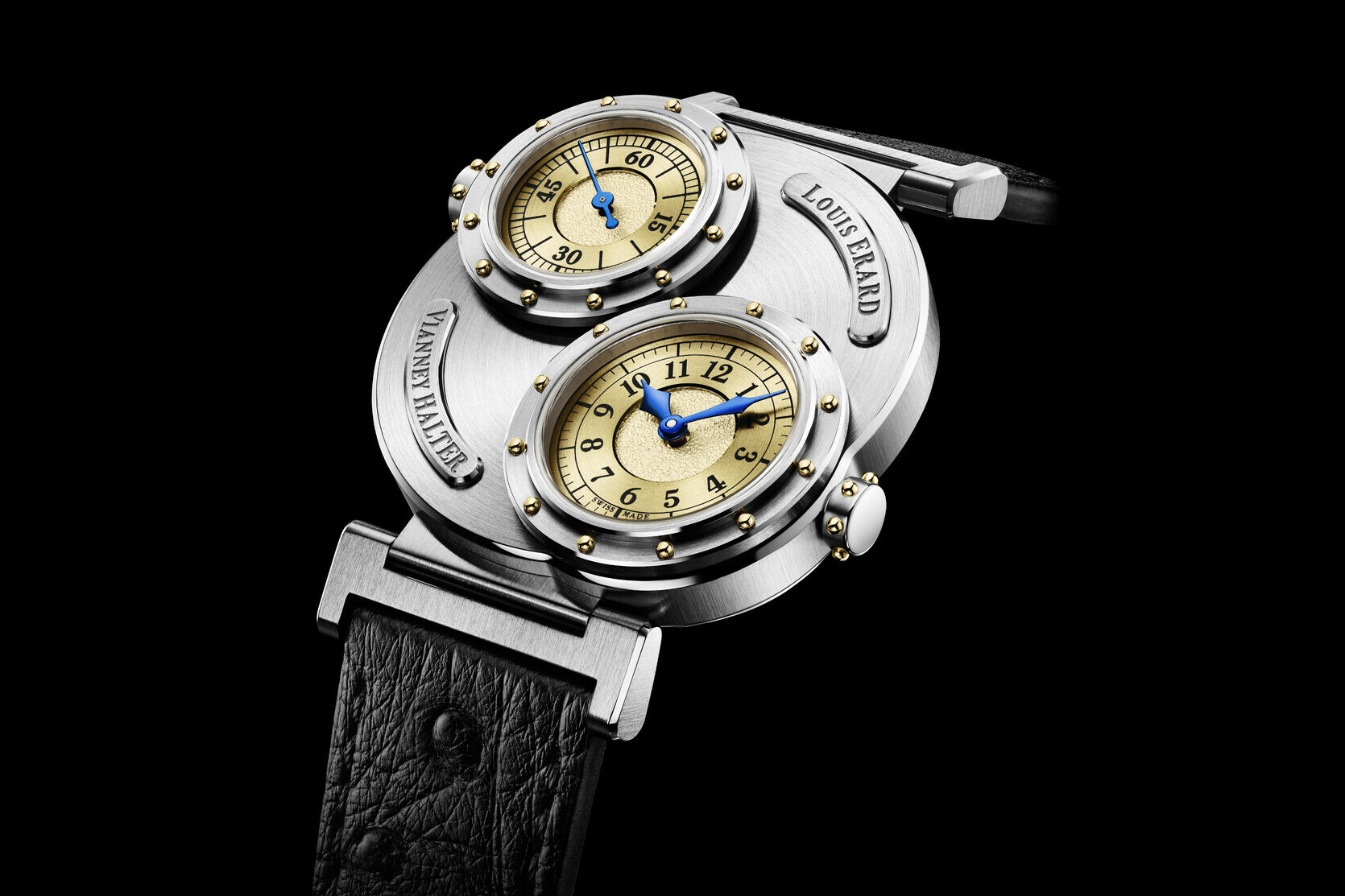
Priced accessibly at approximately $6,000 USD (before local taxes), the watch bridges the chasm between ultra-exclusive independent haute horlogerie—where vintage or rare pieces can command upwards of $200,000—and the broader collector market. By combining distinct steampunk-inspired aesthetics with a clever dual-movement architecture, the Futur Antérieur has instantly positioned itself as one of the most talked-about releases of the year.
Design Evolution and Architectural Ingenuity
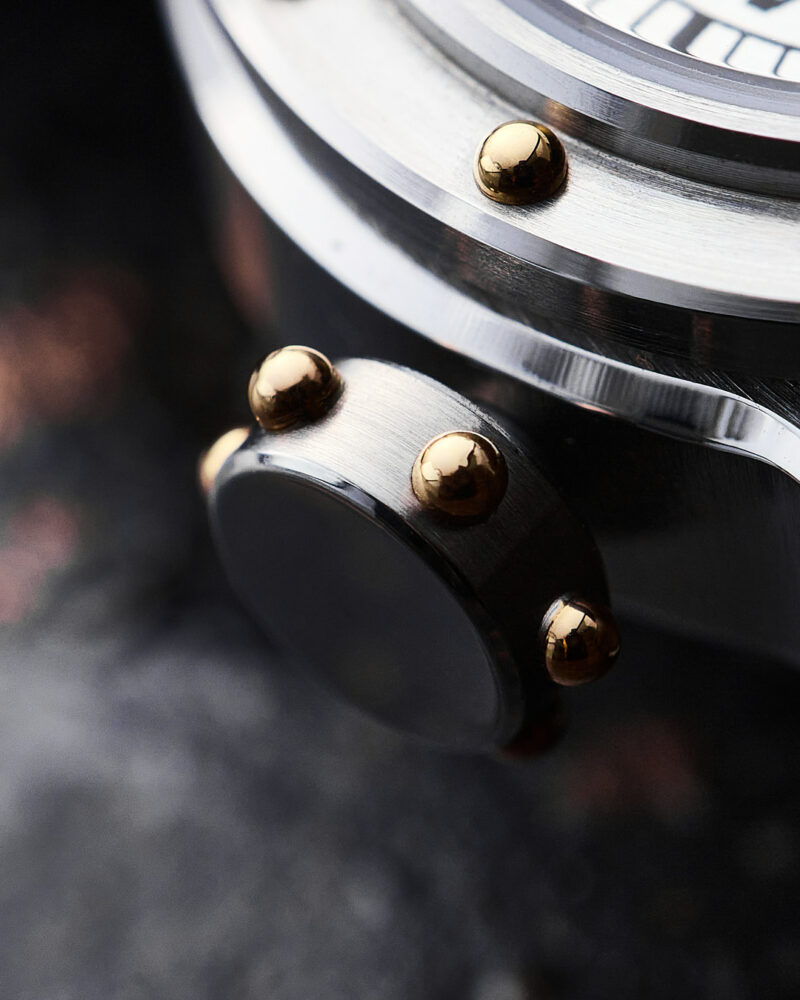
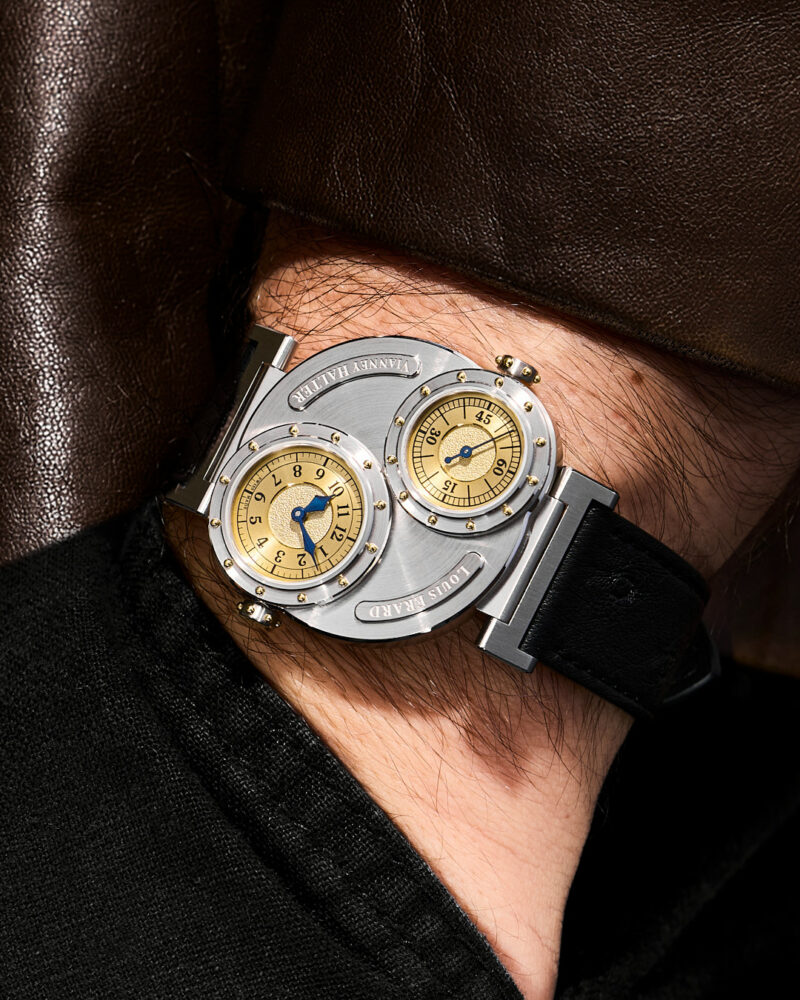
At first glance, the visual DNA of the Futur Antérieur is unmistakably Vianney Halter. The timepiece borrows heavily from the architectural language of the 1998 Antiqua, most notably through its porthole-style dial windows, gold-plated rivets adorning the porthole bezels and crowns, and a radically unconventional dial and hand configuration.
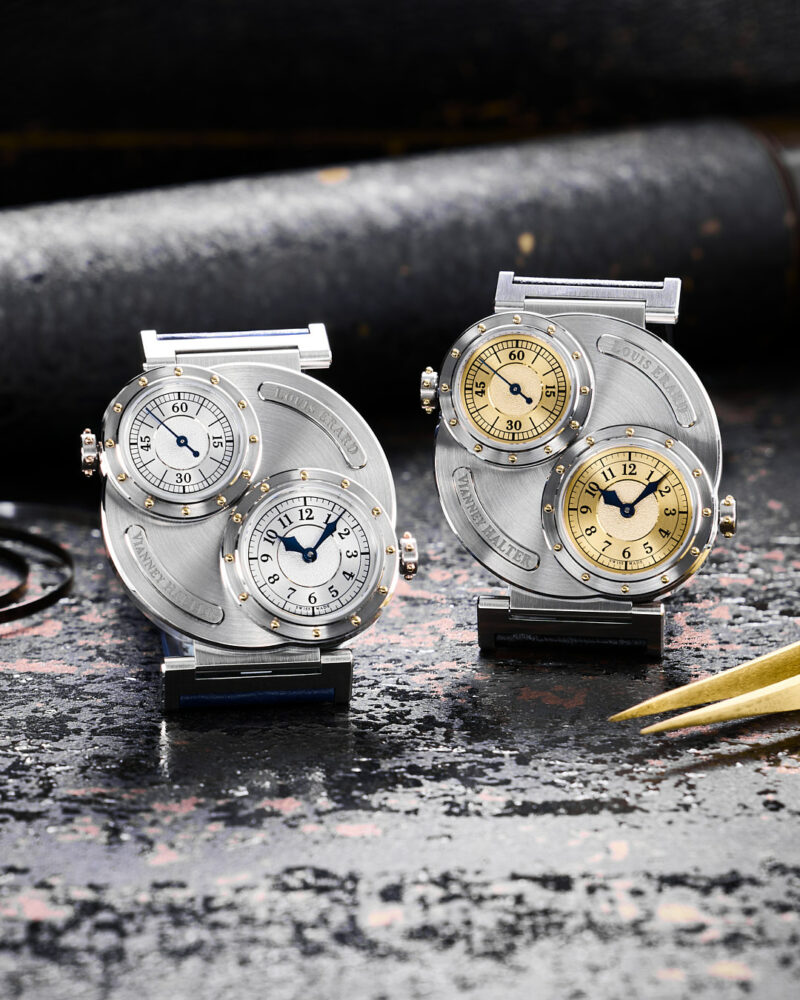
Because the watch carries a retail price point of $6,000, it obviously omits the complex mechanical wizardry of a true perpetual calendar. Instead, it achieves its visually striking split-dial layout via an unorthodox yet brilliantly straightforward engineering solution: each distinct dial is driven by its own independent Sellita SW100 automatic movement.
This dual-engine approach solves a major spatial challenge, allowing the watch to maintain a remarkably slender profile. The case measures a modest 38 millimeters in diameter and an ultra-thin 8.85 millimeters in thickness. Furthermore, the inclusion of articulating lugs ensures that the watch conforms comfortably to a wide spectrum of wrist sizes. Hands-on evaluations have revealed surprising versatility, noting that the watch pairs exceptionally well with single-pass fabric and NATO straps—an unorthodox pairing for a design rooted in high-end steampunk aesthetics.
The Engineering Rationale: Why Two Movements?
The utilization of two separate mechanical movements naturally invites questions from purists and technical enthusiasts. Chief among them: if the watch is powered by dual movements, why did Louis Erard and Vianney Halter opt for a running seconds hand rather than a dual-time complication that could track two different time zones?
From a purist’s perspective, sticking to a running seconds configuration mirrors the intended vision of the original Antiqua, where each porthole displayed a distinctly separate function rather than redundant timekeeping data. Introducing a second time-zone display would have marked a radical, arguably unnecessary, departure from the visual harmony of Halter’s foundational design.
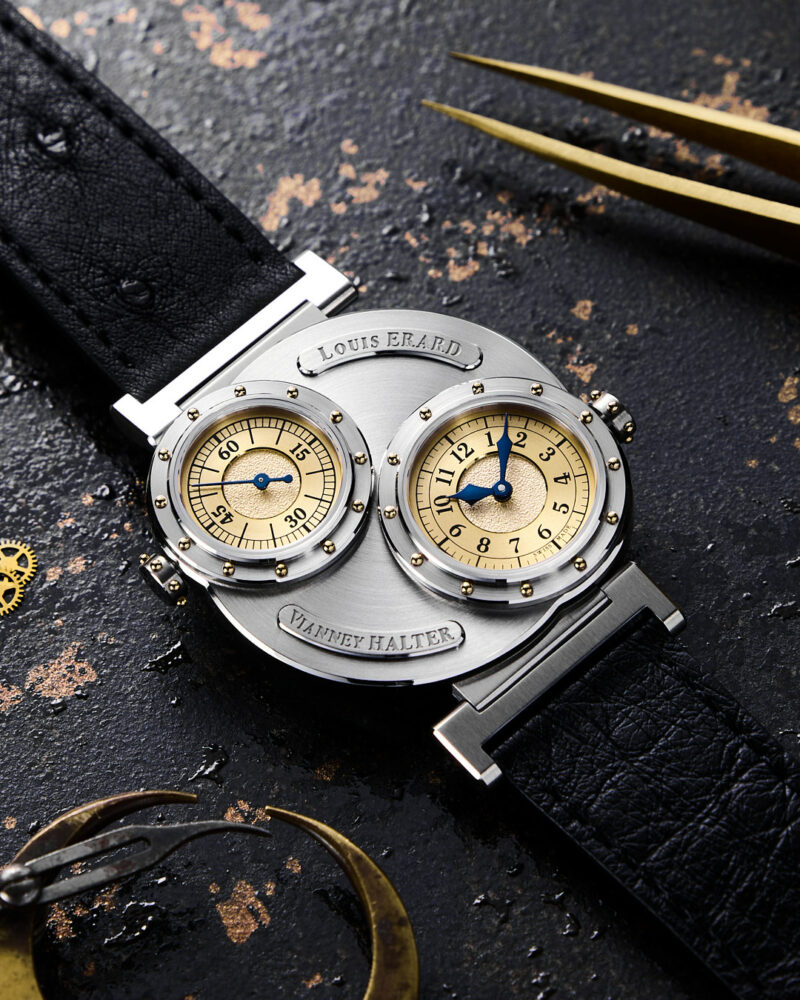
From a practical and manufacturing standpoint, the decision was driven by the realities of movement regulation. The Sellita SW100, while chosen for its compact dimensions that permit a slim case, is not inherently designed to maintain the hyper-precise, synchronized accuracy of an integrated dual-time or master-slave movement. Ensuring that two separate automatic movements ran in absolute, locked harmony would have exponentially increased development costs and pushed the retail price far beyond the brand’s targeted accessibility threshold. By dedicating one sub-dial to hours and minutes and the other exclusively to running seconds, the watchmaker builds in mechanical tolerance, allowing for slight variances in daily rate between the two independent calibers without disrupting functionality.
Industry analysts note that while consumers seeking absolute chronometric precision at the $6,000 price point might lean toward METAS-certified timepieces—such as select models from Tudor, which guarantee strict daily deviations of 0 to +5 seconds—or high-end quartz and Spring Drive technology from Grand Seiko, the Futur Antérieur occupies an entirely different category. It is primarily a wearable sculpture and a statement piece celebrating independent design heritage.
Production Scale, Availability, and Market Impact
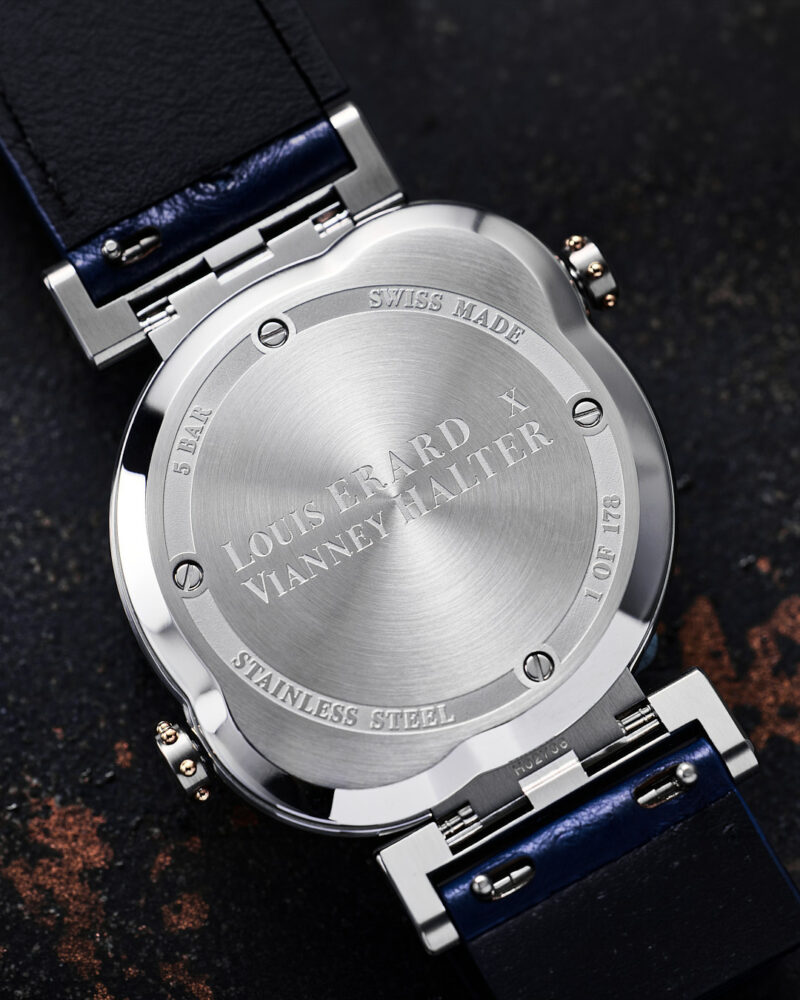
Exclusivity remains a cornerstone of the Louis Erard x Vianney Halter collaboration strategy. Production of the Futur Antérieur is strictly limited. Louis Erard has manufactured just 178 individual pieces for each dial configuration. Additionally, the brand curated a limited run of 78 exclusive collector’s box sets containing both dial variations, retailed at CHF 9,900 (approximately $12,075 USD).
Given the immense popularity of Vianney Halter’s design language and the relatively small production numbers, initial market allocations were swiftly claimed by dedicated collectors and enthusiasts, making primary-market availability virtually non-existent shortly after launch.
Broader Implications for Independent Collaborations
The success and industry reception of the Futur Antérieur underscore a growing trend within the watch industry: democratizing haute horlogerie. By partnering with celebrated master watchmakers like Vianney Halter, brands like Louis Erard are successfully bridging the gap between mass-market Swiss manufacturing and the ultra-exclusive realm of independent master artisans.
Historically, owning a piece of Vianney Halter’s visionary design universe required a six-figure investment, locking out the vast majority of emerging watch enthusiasts. The Futur Antérieur proves that exceptional design, historical reverence, and independent horological storytelling can be successfully packaged at a price point accessible to a broader audience without compromising the artistic integrity of the master creator. As the secondary market absorbs these limited allocations, the Futur Antérieur is poised to remain a benchmark for successful cross-brand collaborations in contemporary watchmaking.