The Silent Sabotage: How Typosquatting and Negative SEO are Targeting Luxury Jewelry Retailers

The first sign that a major shift was occurring in the digital luxury market did not arrive as a customer complaint or a sudden drop in transaction volume. Instead, it surfaced as a cryptic anomaly in the Google Search Console reports of several high-end retailers. Disavow logs, typically stagnant, began to show a surge in referring domains—dozens, then hundreds—all pointing toward luxury jewelry sites. Upon closer inspection, these domains were entirely unrelated to the jewelry industry. They were part of a coordinated, stealthy offensive designed to erode the search engine visibility of legitimate brands. This phenomenon, which has been escalating over the past eighteen months, represents a sophisticated fusion of traditional typosquatting and negative Search Engine Optimization (SEO).
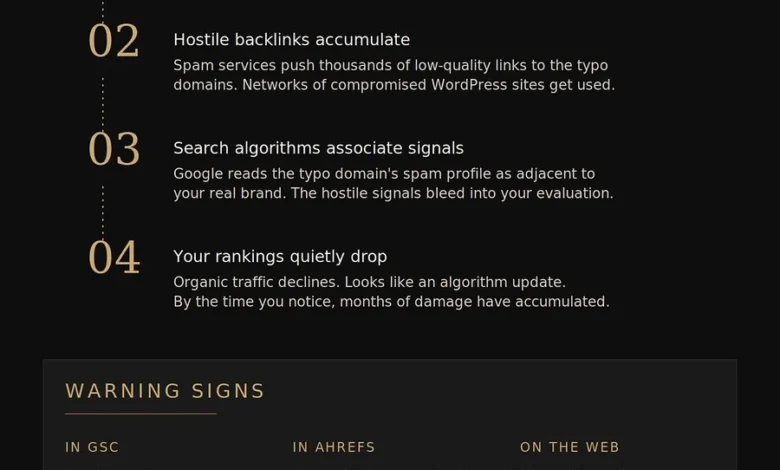
The strategy does not mirror the crude phishing schemes of the past. It does not attempt to steal credit card numbers or hijack user credentials. Rather, it is a patient, technical, and largely invisible campaign aimed at compromising the brand identity and search authority of luxury jewelry retailers. For many e-commerce business owners, the impact is only realized once their organic search rankings begin to decline—a slide often misinterpreted as a routine search algorithm update rather than a calculated, malicious attack.
The Mechanics of the Attack: Typosquatting Reimagined
Typosquatting has historically been defined by its predatory intent: registering domain names that are slight misspellings of established brands—such as swapping a letter, omitting a character, or adding an extra one—to facilitate fraud. In the traditional sense, these sites were built to mimic legitimate storefronts, tricking consumers into entering sensitive information.
The new breed of attack targeting the jewelry industry eschews these high-profile traps. The typosquat domains in this current wave are often hollow; they do not host functional websites, phishing pages, or e-commerce storefronts. Instead, they sit as "parked" domains, empty of content and devoid of legitimate outbound links.
However, they are not idle. The attackers behind these domains aggressively build thousands of inbound links from low-quality, spam-flagged sources. By constructing a hostile backlink profile around a domain that is nearly identical to a reputable jewelry brand, the attackers are exploiting how search engines calculate brand authority. Search algorithms do not merely analyze the links pointing to a primary domain; they assess the "signal landscape" surrounding a brand name. When a domain one letter removed from a legitimate retailer accumulates thousands of spam-riddled backlinks, that "toxic" signal can bleed into the reputation of the real brand, resulting in a degradation of search rankings and a loss of organic traffic.
A Targeted Economic Strategy
The jewelry industry has become a primary target for these operations for several distinct reasons, primarily driven by the high-value nature of the goods involved. In the luxury pre-owned jewelry market, where individual transactions frequently reach four or five figures, even a minor percentage decline in organic traffic can equate to significant, immediate revenue losses.
Furthermore, the keyword landscape for high-end jewelry is remarkably specific and highly competitive. Terms such as "pre-owned Cartier Love bracelet" or "authenticated Van Cleef & Arpels Alhambra" carry immense commercial intent. Because there are a limited number of authoritative retailers competing for these top-tier spots, even a marginal decrease in a competitor’s ranking on the Search Engine Results Page (SERP) can shift a substantial portion of consumer traffic toward other, perhaps less reputable, actors.
The reliance on "authentication" as a selling point has inadvertently created a unique vulnerability. Luxury retailers distinguish themselves through detailed provenance documentation, authentication content, and high-quality imagery. This content is inherently rich and valuable, making it a prime target for negative SEO. By undermining the trust signals that Google uses to rank this content, attackers can effectively neutralize a brand’s strongest competitive advantage.
Chronology and Evolution of the Threat
The intensification of this trend was first observed in late 2024. What initially appeared to be sporadic, low-level spam traffic was identified as a broader, synchronized effort. Investigations into these patterns revealed that the attackers were utilizing professional-grade infrastructure, including automated link-spam services that openly marketed their ability to manipulate search rankings.
The attackers leveraged networks of compromised WordPress sites to inject commercial anchor text, and they frequently utilized aged-domain marketplaces to recycle previously established, "hostile" backlink profiles. By deploying multiple variants of typosquatted domains simultaneously, the attackers create a "clustering" effect, amplifying the negative impact on the target brand.
Identifying the Warning Signs
For retailers, early detection is the only effective defense. The symptoms are often buried within data that businesses already monitor.
In Google Search Console, stakeholders should look for:
- Anomalous Spikes: A sudden, unexplained jump in referring domains that does not correspond to any marketing or PR activity.
- Suspicious Anchor Text: The emergence of new links containing the brand name paired with aggressive commercial modifiers, such as "discount" or "buy," often originating from obscure, irrelevant domains.
- Geographic Mismatches: A surge in traffic or inbound links from regions where the brand does not conduct business or have an established presence.
- Ghost Indexing: The appearance of new pages in search indexes that were not created or linked to by the company’s own internal architecture.
Advanced backlink monitoring tools, such as Ahrefs or Semrush, provide further insight. Retailers should flag referring domains that are categorized as "spam" by automated detection, or URLs that contain randomized strings, which are hallmarks of automated link-generation software.
The Defensive Playbook: A Layered Approach
Countering this threat requires a multi-faceted approach, as there is no single "magic bullet" to instantly resolve the issue.
- Systematic Disavowal: Maintaining a robust and updated Google Search Console disavow file is the first line of defense. By proactively identifying and reporting malicious referring domains, retailers can instruct Google’s algorithms to ignore these signals, effectively neutralizing the "toxic" influence of the spam campaign.
- Formal Spam Reporting: Google provides a specific portal for reporting quality issues, including "paid links" or manipulative link schemes. While this does not result in immediate removal, it feeds into the broader spam-detection intelligence of the search engine, helping to isolate the attacker’s infrastructure over time.
- Legal Recourse: For brands suffering significant reputational and financial damage, legal avenues such as the Uniform Domain-Name Dispute-Resolution Policy (UDRP) or the Anticybersquatting Consumer Protection Act (ACPA) can be utilized. While UDRP is a more efficient, administrative process to reclaim domain names, the ACPA allows for potential statutory damages. Both paths, however, require a strong foundation of registered trademark rights.
- Rigorous Documentation: The importance of maintaining a chronological record of the attack—including screenshots of WHOIS data, backlink exports, and evidence of the typosquat domains—cannot be overstated. This documentation is essential for winning legal disputes and for filing successful reconsideration requests with search engines.
Pitfalls to Avoid
In their haste to rectify the situation, some retailers inadvertently exacerbate the problem. It is strongly advised that businesses avoid "defensive registration"—the act of purchasing the typosquat domains themselves. Because these domains are already tainted by a hostile backlink profile, acquiring them essentially means inheriting a poisoned asset. Furthermore, engaging in public confrontation with suspected attackers is generally ineffective, as it often encourages the adversary to double down on their efforts. Finally, misusing reporting tools, such as filing typosquatting reports through phishing-specific channels, is counterproductive and may result in the dismissal of valid claims.
Future Implications for Digital Commerce
The persistence of these attacks highlights a fundamental gap in how search engines currently weigh trust and authority. As long as link velocity and brand association remain core pillars of search ranking algorithms, they will remain susceptible to manipulation.
For the luxury jewelry sector, this creates a challenging environment where the burden of security falls squarely on the retailer. While industry-wide awareness is growing, the resource disparity between the attackers and the defenders remains a point of concern. The attackers rely on low-cost, automated scripts, while the defenders must dedicate significant time, legal resources, and technical expertise to monitor and mitigate these threats.
Ultimately, the most effective defense remains a combination of vigilance and collective intelligence. By sharing information regarding emerging threats and maintaining a disciplined approach to SEO health, the luxury jewelry community can better insulate itself against these sophisticated, evolving tactics. As one industry expert noted, the greatest barrier to protection is simply the lack of awareness; once a brand knows how to look for the signs of a coordinated attack, the path to remediation becomes clear. The era of "passive" SEO is ending, replaced by a need for active, defensive digital asset management.