Retail Giants Grapple with Persistent Freight and Diesel Cost Pressures Threatening Profit Margins Across the Sector

Major retail corporations including Burlington Stores, Abercrombie & Fitch, Kohl’s, Urban Outfitters, Gap Inc., and Dollar Tree have sounded a unified alarm during their recent quarterly earnings calls, pointing to soaring diesel and freight costs as a primary threat to their operating margins. Despite varying degrees of resilience and strong consumer demand that drove net sales higher for many of these companies in the third quarter, the lingering financial burden of elevated fuel surcharges and domestic transportation expenses has forced leadership teams to reassess their full-year financial outlooks, recalibrate supply chain strategies, and prepare for continued cost headwinds heading into the next fiscal year.
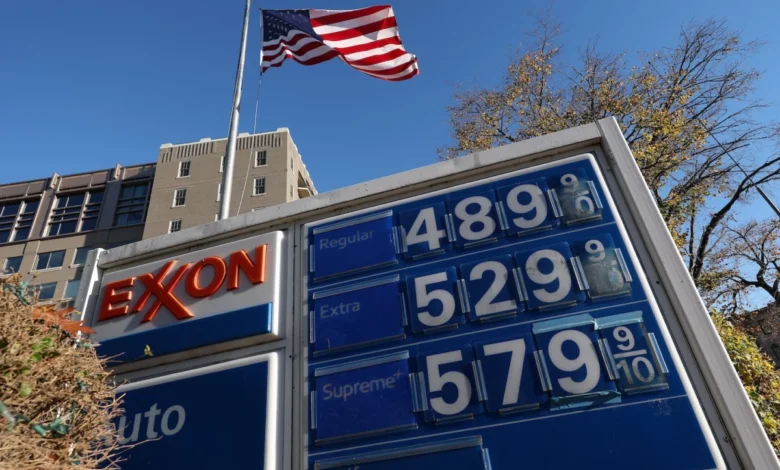
The roots of the current transportation crisis trace back to macroeconomic shocks and geopolitical conflicts, notably ongoing tensions in the Middle East that have exerted severe upward pressure on global energy markets. According to data from the U.S. Energy Information Administration (EIA), diesel fuel prices spiked significantly following geopolitical escalations earlier in the year, such as conflicts involving Iran. While prices have experienced minor fluctuations and localized relief periods, they remain stubbornly high compared to pre-crisis baselines. During the peak of the third-quarter reporting period—spanning from August 1 to October 31—diesel costs averaged roughly $5.95 per gallon. Although prices receded to approximately $5.695 per gallon by late autumn, the figure represents a staggering increase of nearly 50 percent compared to the $3.809 per gallon recorded just days before the onset of the conflict in February. For major national retailers operating massive distribution networks and continuous fleet movements, these sustained high energy prices translate directly into inflated supply chain expenses, squeezing gross margins and forcing executives to deploy aggressive mitigation playbooks.
Corporate Responses and Financial Impact
The impact of these freight pressures has manifested unevenly across the retail landscape, depending on each company’s pricing power, inventory management, and operational efficiency. Off-price giant Burlington Stores felt the impact acutely, prompting management to trim its full-year earnings outlook. Burlington anticipates a direct $17 million negative impact to its margins in the fourth quarter alone. Consequently, the company revised its full-year adjusted earnings outlook to a range of $11.70 to $11.80 per share, down slightly from its previous projection of up to $11.97. This adjustment came despite positive top-line growth; Burlington reported an 8 percent increase in total third-quarter sales, reaching $2.9 billion on a net income of $106 million. However, the company’s gross margin contracted to 43.7 percent, representing a 50-basis-point decline year-over-year that executives attributed entirely to inflated freight expenses driven by diesel rates.
Similarly, Dollar Tree confronted margin compression despite posting solid financial metrics. The discount retailer announced net sales of $5.1 billion, marking a 6.9 percent year-over-year increase, alongside a net income of $232 million. Yet, its gross margin fell 10 basis points to 35.7 percent due to escalating transportation costs. Dollar Tree CEO Mike Creedon provided stark context regarding the fuel sensitivity of discount retail operations, estimating that every $1 shift in the price of diesel translates to roughly $40 million in annual domestic transportation costs—a category that accounts for two-thirds of the company’s total freight spending. To combat product cost inflation stemming from these logistics hurdles, Creedon outlined a five-point mitigation strategy: aggressive supplier negotiations, product and pack-size reengineering, geographic sourcing diversification, the discontinuation of underperforming items failing to meet margin thresholds, and strategic price optimization. Bolstered by these operational adjustments, Dollar Tree raised its full-year adjusted earnings per share outlook from a range of $7.70–$8.05 to $8.05–$8.25.
Adaptability and Strategic Resilience
Not all retailers were forced to lower their overarching financial guidance, as several brands successfully leveraged pricing power and operational efficiencies to absorb the shock. Abercrombie & Fitch reported a strong third quarter, with net sales climbing 11 percent to $1.4 billion and net income reaching $164.4 million. The apparel retailer successfully offset higher freight expenses through elevated average unit retail (AUR) prices. Although Chief Financial Officer Robert Ball noted that freight costs are projected to create an additional 100 basis points of margin headwind in the fourth quarter compared to previous summer estimates, the company still anticipates modest gross margin improvement relative to the prior-year period.
"Freight is a real cost pressure, and we’ve navigated it before," Ball stated during the investor call, emphasizing the strength of the company’s operational model. "Our teams have a pretty strong playbook in place, and our operating model ultimately works. We’re not assuming any rates reverse in 2027." Abercrombie’s operating margin expanded notably to 15.5 percent in the third quarter, up from 12 percent a year prior.
Urban Outfitters also navigated the turbulent freight environment with favorable financial results, despite acknowledging significant headwinds. Francis Coletti, co-president of Urban Outfitters, reported that the parent company of Anthropologie and Nuuly faced elevated costs across inbound freight, domestic logistics, and final-mile deliveries due to fuel surcharges tied to Middle East conflicts. These expenses depressed initial markups by roughly 55 basis points and impacted outbound delivery costs by about 20 basis points. Conforti noted that this combined 75-basis-point headwind is expected to persist through the fourth quarter and into the first quarter of the following year before stabilizing. Despite these pressures, Urban Outfitters posted record net sales of $1.67 billion—an 8.9 percent increase year-over-year—and a net income of $134.1 million. The company’s gross margin actually improved by 26 basis points to 37.1 percent, aided by efficiencies in picking, packing, and shipping online orders that reduced delivery expenses as a share of total sales.
Broader Sector Implications and Future Outlook
The broader retail ecosystem continues to display a fractured response to macroeconomic logistics pressures. Kohl’s reported that increased trip frequency to brick-and-mortar stores during the busy fourth-quarter volume surge will amplify supply chain and fuel cost pressures, though the company ultimately raised its full-year guidance. Conversely, Gap Inc. experienced a 30-basis-point margin headwind directly attributable to soaring fuel costs, though it managed a slight 10-basis-point increase in gross margin to 42.5 percent, even as it chose to lower its forward-looking outlook.
As retail executives look beyond the immediate holiday shopping season, industry analysts are increasingly focused on the dual risks of fluctuating diesel spot rates and upcoming contract renewals in the logistics sector. While a continued cooling of diesel prices could offer welcome relief to operating margins, supply chain experts warn that upcoming contract resets in the spring could introduce new cost pressures as carriers seek to lock in higher baseline rates to offset equipment and labor inflation. For retail leadership teams, the overarching challenge remains balancing consumer price sensitivity against an unpredictable and volatile transportation market that shows few signs of returning to pre-pandemic cost structures in the near term.