Umbro overhauls global digital strategy with mobile-first website relaunch targeting Gen Z and Alpha consumers

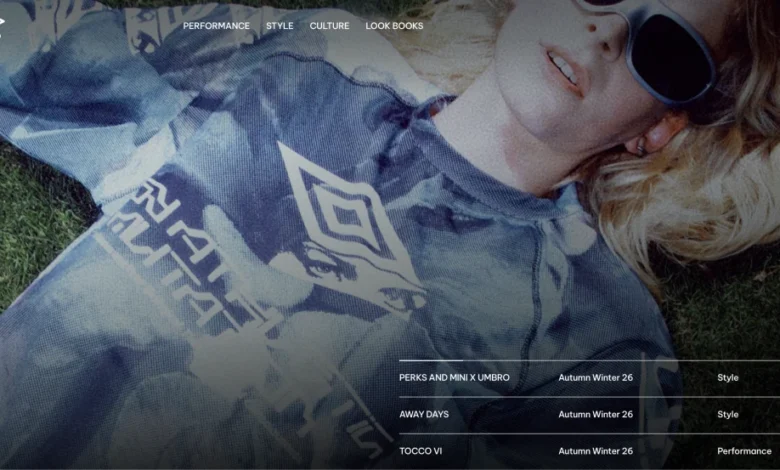
Iconic sportswear heritage brand Umbro has officially launched a redesigned global digital platform, signaling a strategic pivot toward a mobile-first consumer experience. The project, executed in collaboration with Manchester-based digital studio Absurd, aims to align the brand’s online presence with the browsing habits of younger demographics, specifically Gen Z and Gen Alpha. By moving away from traditional, static e-commerce structures, the new umbro.com adopts a dynamic, social-media-inspired interface that prioritizes visual storytelling and frictionless navigation.
The redesign is the culmination of a decade-long evolution for the brand, which has sought to balance its deep-rooted history in football and sportswear with the demands of a high-speed, digital-first retail environment. The platform is now live, serving as a centralized hub for Umbro’s global marketing initiatives, product collections, and high-profile collaborations.
A Chronology of Digital Transformation
The partnership between Umbro and Absurd serves as the backbone of this digital transformation. The relationship began in 2020, a year that forced many legacy retailers to accelerate their digital roadmaps due to the COVID-19 pandemic. Initially, the collaboration focused on building standalone campaign microsites, which allowed Umbro to test localized content strategies.
Following the success of these targeted initiatives, the two companies moved to consolidate Umbro’s fragmented digital footprint. At the time, the brand operated a series of disparate, independent WordPress websites across different international markets, leading to inconsistent user experiences and operational inefficiencies. The subsequent consolidation into a single, unified global platform on Umbraco Cloud marked the first phase of this long-term digital architecture project.
The current overhaul represents the second phase, characterized by a fundamental shift in user experience (UX) design. Over a 10-week sprint, the design and development teams at Absurd worked to dismantle the conventional "click-heavy" architecture of the previous site. The result is a platform that functions less like a digital catalogue and more like an immersive feed, reflecting the shift in how younger consumers interact with brands through social media platforms such as TikTok and Instagram.
Reimagining the User Experience
The technical architecture of the new website is built on Umbraco Cloud, a decision intended to provide Umbro’s global marketing teams with greater operational agility. In the past, managing large-scale global campaigns across different regions required significant technical overhead and reliance on external development teams for minor updates. The new CMS allows for decentralized content management, meaning local marketing offices can deploy regional campaigns, manage product launches, and update visual assets with increased autonomy.
From a design perspective, the site prioritizes high-fidelity visual assets. Visitors are greeted by a continuous scroll interface that prioritizes campaign videos and editorial photography over static product grids. This "content-first" approach is designed to keep users engaged with the brand narrative before they are prompted to transact. By integrating the "story" behind the product directly into the navigation flow, Umbro aims to reduce the bounce rate typically associated with long-form retail pages, allowing users to transition from browsing to purchasing with significantly fewer clicks.
Supporting Data and Market Context
The move to a mobile-first strategy is supported by prevailing trends in the retail sector. According to recent industry data, mobile commerce (m-commerce) is projected to account for nearly 73% of total global e-commerce sales by the end of 2024. For brands like Umbro, which have historically leaned on wholesale and third-party retail partners, direct-to-consumer (DTC) digital platforms have become vital for maintaining brand equity.
Furthermore, demographic research indicates that Gen Z and Gen Alpha consumers—who now hold significant purchasing power—demonstrate a low tolerance for friction in the online shopping process. Studies suggest that these cohorts are 40% more likely to abandon a purchase if the mobile site navigation is unintuitive or slow. By adopting a "social-feed" layout, Umbro is actively reducing the cognitive load on the user, mirroring the platforms where these demographics spend the majority of their digital time.
The 10-week development window also highlights a broader shift toward "agile" digital transformation in the retail sector. Rather than the year-long, multi-million-pound "re-platforming" projects that were common in the early 2010s, modern retailers are opting for incremental, rapid updates that can be scaled or adjusted based on real-time user analytics.
Perspectives from the Stakeholders
Helene Hope, head of global brand marketing at Umbro, emphasized that the relaunch is a strategic response to changing consumer expectations. "We partnered with Absurd to reimagine umbro.com around the way our consumers discover brands today: visually, editorially and on their own terms," Hope stated. She noted that the objective was to create a "global brand showcase" where every page serves as a destination in itself, rather than merely a conduit to a checkout page.
Oli Taylor, co-founder and design director at Absurd, provided further insight into the behavioral psychology driving the design decisions. "The way people discover and explore brands online has changed a lot in the last five years," Taylor observed. "We took cues from how people scroll through social feeds, making it easy to go from watching a campaign video to exploring the collection and the story behind it."
The collaboration highlights the growing importance of specialized digital studios in helping legacy brands compete with "digital-native" disruptors. By leveraging the expertise of a studio that understands both the technical constraints of CMS platforms and the nuances of Gen Z consumer behavior, Umbro has effectively modernized its storefront without losing its identity as a historic sportswear institution.
Broader Implications and Future Outlook
The relaunch of umbro.com is not merely a cosmetic update; it is a long-term investment in the brand’s infrastructure. The platform has been designed to remain relevant for the next five years, a long time-horizon in the fast-moving digital retail landscape. This indicates that Umbro is planning for a future where digital interactions are the primary driver of brand loyalty and cross-border commerce.
For the wider retail industry, Umbro’s transition serves as a case study in how heritage brands can stay relevant in a digital-dominated market. The key challenge for such brands is often "digital legacy," where older systems and outdated brand perception hinder growth. Umbro’s strategy of consolidating its tech stack while simultaneously adopting a mobile-first, content-rich design offers a blueprint for other sportswear brands looking to compete with modern direct-to-consumer giants.
Looking ahead, the platform is expected to integrate further social-commerce features, allowing for seamless integration between the website and the various social channels the brand utilizes. As the brand continues to scale its digital operations, the data gathered from the new site—regarding user journey, conversion rates, and content engagement—will be crucial in refining future product lines and marketing campaigns.
The successful rollout of this platform, while seemingly a singular event, reflects a fundamental shift in the retail sector: the death of the static homepage. In its place, brands are moving toward interactive, narrative-driven digital ecosystems that prioritize engagement over immediate transaction. As Umbro continues to integrate its global operations, the brand’s ability to maintain a consistent yet localized digital presence will likely determine its success in the fiercely competitive global sportswear market. The new umbro.com stands as a testament to the fact that even established, century-old brands must constantly evolve their digital identity to remain at the forefront of the consumer consciousness.