B&Q Becomes First Major UK Retailer to Integrate Renewable BioLPG Across Propane Gas Cylinder Range

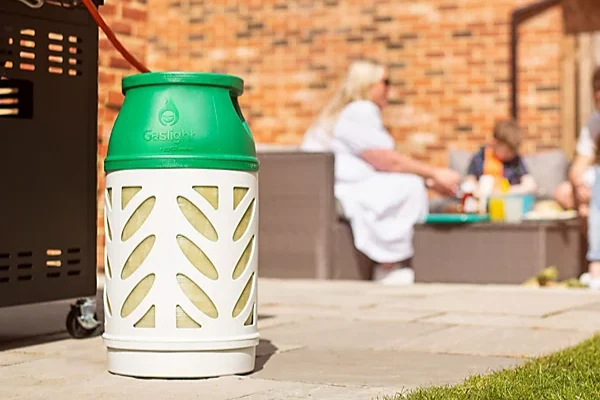
B&Q has officially announced a strategic shift in its supply chain, becoming the first major home improvement retailer in the United Kingdom to incorporate renewable BioLPG into its Flogas propane gas bottle inventory. This move, which utilizes a certified mass-balance approach, marks a significant milestone in the retailer’s ongoing efforts to decarbonize its product offerings and aligns with broader corporate sustainability targets aimed at reducing Scope 3 emissions—the indirect greenhouse gas emissions that occur throughout a company’s value chain.
The initiative involves the procurement and allocation of BioLPG equivalent to 10 percent of the total propane gas volume sold through B&Q’s extensive retail network. By leveraging existing supply chain infrastructure and the established Flogas network, B&Q is demonstrating a practical, scalable model for lowering the carbon footprint of everyday consumer products without necessitating any changes in hardware or usage behavior for the end customer.
Understanding the Mass-Balance Approach
A central component of this initiative is the use of the mass-balance chain-of-custody method. Because renewable BioLPG is chemically identical to conventional fossil-based LPG, it is often blended into the existing gas infrastructure rather than being stored in isolated, dedicated tanks.
Under the mass-balance model, B&Q ensures that for every volume of propane sold, a corresponding volume of renewable BioLPG is introduced into the supply chain. This does not imply that every specific gas canister purchased by a customer contains 10 percent renewable gas; rather, it guarantees that the overall carbon intensity of the retailer’s gas portfolio is reduced by that proportion. To maintain integrity, this process is rigorously verified, ensuring that the renewable attributes are tracked, recorded, and prevented from being double-counted.
Regulatory Standards and Certification
The BioLPG allocated to B&Q is sourced from renewable feedstocks and adheres to strict international standards. The primary certification governing this initiative is the ISCC EU (International Sustainability and Carbon Certification), which verifies that the products meet the greenhouse gas saving criteria established by the EU Renewable Energy Directive (RED).
Furthermore, the cylinder volumes are supported by the Green Gas Certification Scheme (GGCS). This scheme provides an additional layer of transparency, allowing for the tracking of renewable gas volumes from the point of production to the point of retail consumption. By adhering to these frameworks, B&Q provides consumers and stakeholders with verifiable evidence of their carbon reduction efforts, mitigating concerns regarding "greenwashing" and ensuring that the environmental benefits claimed are scientifically substantiated.
The Role of Flogas Britain
The partnership with Flogas Britain is pivotal to the success of this transition. Flogas, a major player in the energy sector, has been instrumental in scaling up the availability of renewable fuels. By utilizing existing supply chains, the company avoids the need for massive capital expenditure on new infrastructure, which is a common barrier to renewable adoption in heavy and light industry.
Emma Dodds, business development manager at Flogas Britain, highlighted the strategic importance of this collaboration. According to Dodds, the partnership serves as a blueprint for how businesses can transition toward a lower-carbon future while utilizing legacy equipment. By integrating renewable energy into current product lines, retailers can begin the process of decarbonization immediately, rather than waiting for the total phase-out of fossil-fuel-based infrastructure.

B&Q’s Sustainability Strategy and Market Position
This initiative is a tangible output of B&Q’s comprehensive sustainability strategy. As a cornerstone of the Kingfisher Group, B&Q has been under increasing pressure to demonstrate progress in environmental, social, and governance (ESG) metrics. This includes reducing its reliance on high-carbon products and working more closely with vendors to source sustainable alternatives.
Samantha Dyer, head of responsible business at B&Q, emphasized that the retailer’s role is to act as a catalyst for change within the home improvement market. By taking the lead in the LPG sector, B&Q is setting a precedent for other retailers. The move is not merely a symbolic gesture; it is an attempt to address the "hidden" emissions embedded in the products stocked on shelves.
The timing of this announcement coincides with B&Q’s recognition within the industry, as the retailer has been shortlisted for Sustainability Retailer of the Year at the upcoming RG Excellence Awards, scheduled for October 14, 2026, at the Underglobe in London. This nomination, alongside nods for the Digital Initiative of the Year and the Retail Excellence Diamond Award, underscores the retailer’s multifaceted approach to modernizing its operations.
Implications for the Home Improvement Industry
The decision to adopt BioLPG has several broader implications for the UK retail sector:
- Decarbonizing Hard-to-Abate Categories: Propane gas for barbecues, patio heaters, and portable stoves is traditionally viewed as a fossil-fuel-reliant category. By introducing a renewable alternative, B&Q is proving that even "hard-to-abate" categories can be improved through supply chain innovation.
- Consumer Engagement: The transition requires zero change from the consumer. This "frictionless" sustainability is crucial for mass adoption. If customers had to purchase new equipment or change their habits, the uptake would likely be lower. By keeping the interface the same, B&Q ensures that sustainability does not come at the cost of convenience.
- Supply Chain Leverage: By demanding renewable volumes from suppliers like Flogas, large retailers can drive demand for renewable feedstocks. This, in turn, helps to stimulate the market for BioLPG production, potentially lowering costs over time and making renewable energy more accessible to the broader public.
- Data-Driven Transparency: The reliance on ISCC EU and GGCS standards reflects a shift toward higher levels of reporting accuracy. As regulators and investors demand more granular data on environmental impact, the use of certified mass-balance systems will likely become the gold standard for retail sustainability reporting.
A Chronology of the Transition
- Early 2024: B&Q begins auditing its supply chain to identify high-emission product categories.
- Late 2024: Initial discussions with Flogas Britain regarding the viability of scaling renewable LPG volumes.
- Q1 2025: Development of the mass-balance allocation model and engagement with certification bodies (ISCC/GGCS).
- Mid-2025: Finalization of the 10% volume commitment and supply chain integration testing.
- Late 2025/Early 2026: Rollout of the initiative across B&Q retail stores.
- October 2026: B&Q recognized for its sustainability initiatives at the RG Excellence Awards.
Looking Ahead: The Future of Renewable Energy in Retail
While the move to 10 percent BioLPG is a significant first step, it is likely only the beginning of a larger trend. The ultimate goal for many retailers is to move toward 100 percent renewable energy in their product chains. However, the current limitations in renewable feedstock supply and the high cost of production mean that a gradual, mass-balance-driven transition is currently the most viable path forward.
For the UK, which has committed to achieving net-zero greenhouse gas emissions by 2050, the retail sector’s contribution is essential. B&Q’s leadership in this space provides a template for how major corporations can balance consumer demand, supply chain realities, and environmental responsibility.
As the company continues to work with partners to identify scalable solutions, the focus will likely shift to other high-carbon categories within the home improvement sector, such as timber sourcing, chemical products, and energy-intensive building materials. Through consistent collaboration and a commitment to transparent, certified methodologies, B&Q aims to maintain its position at the forefront of the green retail transition.
In conclusion, B&Q’s integration of BioLPG into its propane range serves as a vital case study in corporate responsibility. By choosing to prioritize the environmental impact of its supply chain, the retailer is not only lowering its own carbon footprint but is also influencing the broader market to adopt more sustainable practices. As the industry watches the outcomes of this initiative, the success of the 10 percent allocation model will likely serve as a benchmark for future sustainability efforts across the UK retail landscape.