Where Renaissance Heritage Meets Contemporary Haute Design: Inside Palazzo Sogni, Florence’s Newest Luxury Hotel

The delicate balancing act between honoring centuries-old heritage and introducing a progressive design vocabulary has long defined high-end interior architecture in historic European capitals. In Florence—a city where the past is palpably interwoven with daily life—transforming a 16th-century palazzo into a premier hospitality destination demands far more than surface-level preservation. This rigorous design challenge was recently undertaken by interior designers Elena and Giulia Sella at Palazzo Sogni, a new 30-room luxury hotel located just steps from Florence’s iconic Duomo. By seamlessly merging Renaissance craftsmanship, bespoke contemporary furniture, and a playful ethos centered around the conceptual idea of "dreaming," the Sella sisters have established a new benchmark for adaptive reuse in historic Italian architecture.
Main Facts and Architectural Framework
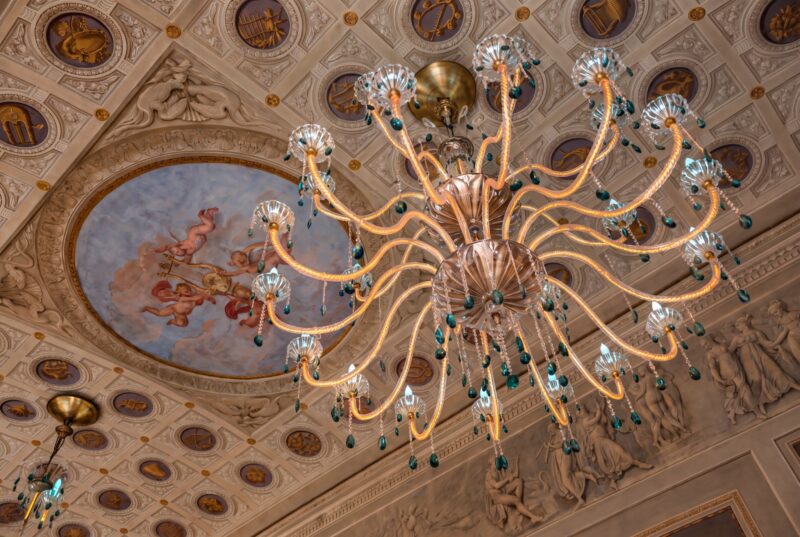
Palazzo Sogni occupies a storied structure dating back to the 16th century, originally forming a vital component of Palazzo Testa, which was meticulously constructed by the esteemed Martelli family. Among the property’s most historically significant and visually arresting features is a monumental nymphaeum complete with an intricate stone fountain traditionally attributed to the master sculptor Baccio Bandinelli. Furthermore, the building boasts a rich layering of historic frescoes spanning multiple centuries, featuring celebrated works by classical artists such as Luigi Catani and Antonio Marini.
The comprehensive conservation process required painstaking restoration work, including the delicate removal of accumulated layers of modern paint to unearth original decorative schemes that had remained hidden for decades. Rather than treating these invaluable historic elements as passive backdrops, Elena and Giulia Sella utilized them as the foundational blueprint for the entire interior scheme.

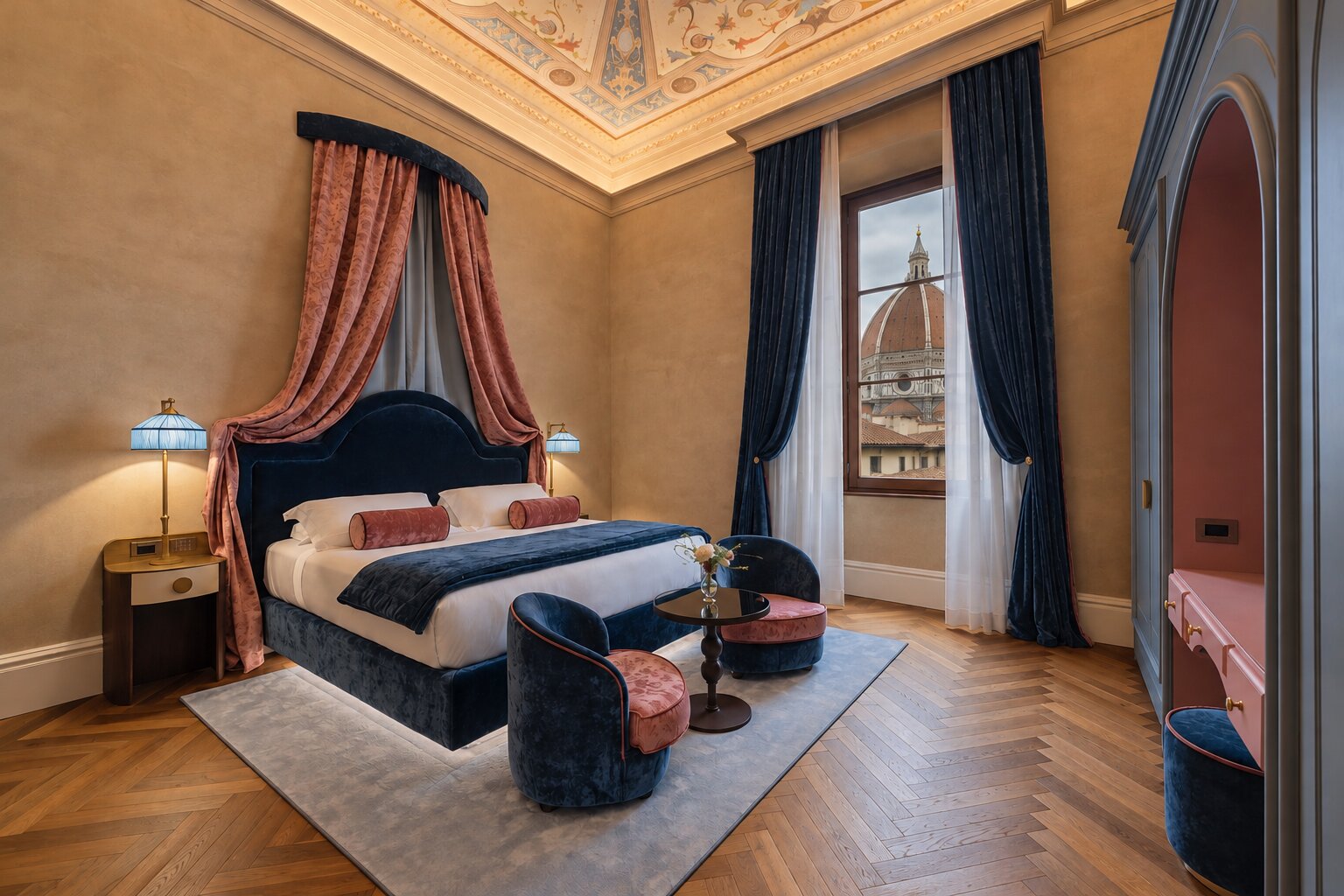
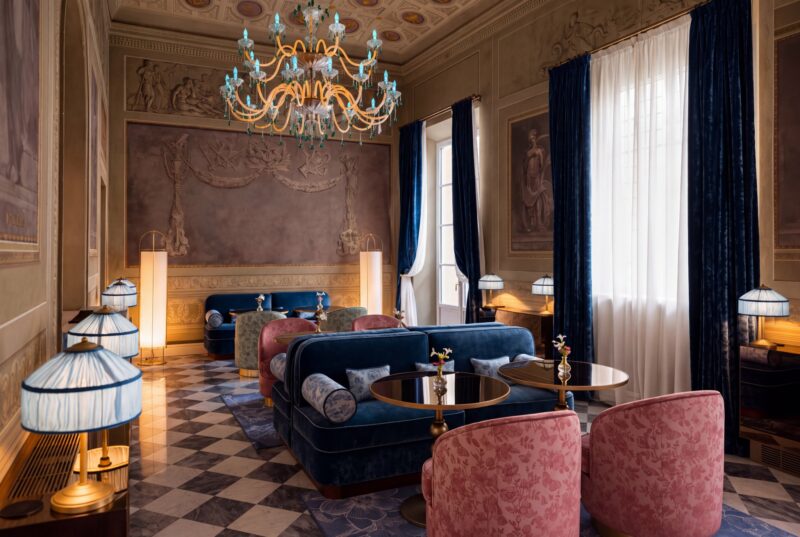
“From the beginning, it was essential to preserve the character and soul of the palazzo,” the Sella sisters explained regarding their overarching vision. Original ceiling frescoes were carefully restored by conservation experts, while traditional marble flooring was painstakingly recreated to meticulously echo the building’s original checkerboard pattern. Complementing these historic facets are contemporary interventions, including aged amber-toned mirrors, custom-manufactured furnishings, and richly textured fabrics deliberately developed in direct response to the existing Renaissance architecture.
Chronology and the Conservation Process
The realization of Palazzo Sogni is the culmination of years of archaeological discovery, historical research, and artisanal collaboration. The developmental chronology of the property moved deliberately from structural stabilization and meticulous historical stripping to custom interior fabrication:
- 16th Century: Construction of Palazzo Testa by the Martelli family, establishing the foundational architecture and commissioning early sculptural features, including the Bandinelli-attributed nymphaeum.
- 17th to 19th Centuries: Successive generations integrate extensive fresco cycles by notable artists such as Luigi Catani and Antonio Marini, reflecting evolving aesthetic tastes across the Baroque and neoclassical periods.
- Pre-Renovation Phase: Years of structural neglect and superficial modern alterations obscure significant portions of the original wall and ceiling decorations.
- Acquisition and Planning: Elena and Giulia Sella assume the interior design mandate, conceptualizing a design language that bridges historic preservation with a "couture" contemporary hospitality experience.
- Restoration and Artisanal Production: A multi-year conservation effort uncovers hidden frescoes, restores lime-based wall finishes, and commissions bespoke furnishings and textiles from specialized Florentine workshops.
- Opening: Palazzo Sogni officially welcomes guests as a 30-room luxury boutique hotel, restaurant, and cultural touchstone in the heart of Florence.
Tailored Interiors and Bespoke Craftsmanship
Rather than relying on off-the-shelf commercial furniture collections, Elena and Giulia Sella designed every individual piece specifically for Palazzo Sogni, partnering closely with specialized artisans and workshops throughout Florence and the surrounding Tuscan region. This bespoke approach yielded a comprehensive collection comprising sculptural wardrobes, four-poster canopy beds, upholstered headboards, benches, armchairs, occasional tables, and custom lighting fixtures.
“One of the key ideas behind Palazzo Sogni was to create an interior identity that could only belong to this place,” the designers noted. “Rather than sourcing existing products, we developed what we like to describe as a couture design collection: a bespoke language conceived for the hotel, where wonder, history, and contemporary design come together.”
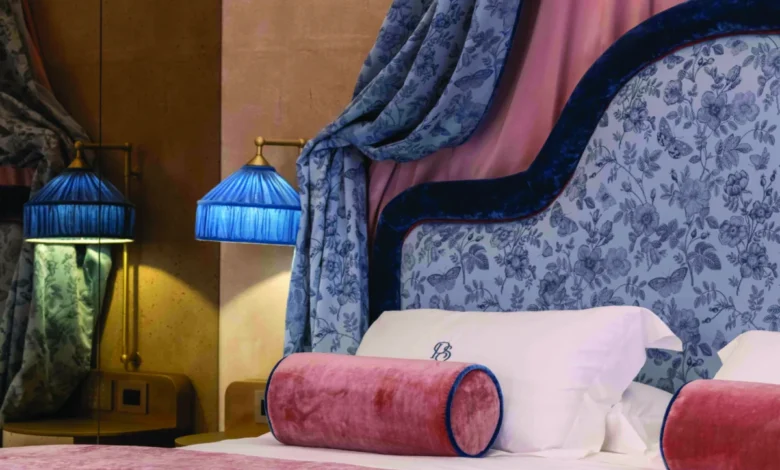
This dedication to local production and hyper-localized authenticity extends directly to the hotel’s textiles. The signature Floral Butterfly pattern was developed through a specialized collaboration with Florence-area textile institution Alessandro Bini, which engineered a dedicated loom setup to translate the intricate pattern into a silk-based jacquard featuring extraordinary texture and relief. This signature fabric appears prominently on bed canopies, armchairs, and wardrobe interiors, while bespoke linens and terry collections supplied by renowned Italian manufacturer Rivolta Carmignani add an additional layer of tactile luxury.
Tableware within the hotel’s dining spaces similarly reflects this bespoke ethos. Ginori 1735 reinterpreted its historic Antico Doccia collection specifically in the hotel’s signature powder-blue colorway, deftly incorporating the property’s recurring floral and butterfly motifs into fine porcelain.

Color Theory, Lighting, and Spatial Dynamics
The interior color palette at Palazzo Sogni is derived directly from the historic decorative schemes discovered during the conservation process. Powder blue serves as the property’s signature shade, symbolizing the overarching conceptual theme of "dreaming" and making frequent appearances throughout the reception areas, corridors, and hotel boutique. Supporting tones of mint green, blush pink, and ochre provide a harmonious balance, frequently paired with opulent velvets, silks, and warm metallic accents.
“We focused on materials that create richness through texture rather than excess,” the designers emphasized. Certain velvets feature a subtly iridescent finish that introduces dynamic depth and movement, while original lime-based wall finishes were preserved wherever feasible. This thoughtful layering enables contemporary furnishings to hold their own against elaborate historic architecture without visually competing for dominance.

Lighting design plays a critical role in unifying the disparate eras within the hotel. Integrated architectural illumination draws the eye toward intricate ceiling paintings, while dedicated directional fixtures highlight specific wall frescoes. Furthermore, aged amber mirror surfaces—strategically integrated into bathrooms, elevators, and larger architectural vertical planes—visually lighten substantial structural volumes while introducing warmth and reflecting natural light throughout the deep historic floor plates.
Public Spaces and Experiential Amenities
Beyond the 30 uniquely configured guest rooms and suites, Palazzo Sogni features an array of public spaces that offer varied interpretations of its historic setting.

- The Secret Garden and Nymphaeum: Centered around the historic stone fountain attributed to Baccio Bandinelli, the courtyard utilizes a precise visual axis from the main entrance to draw visitors outward. Traditional Italian garden planting, custom outdoor furnishings, and ambient low-level lighting frame the courtyard without overwhelming the monumental antiquity of the nymphaeum.
- Segreto Restaurant: The hotel’s signature dining venue pairs botanical design references with expansive, uninterrupted views of the courtyard garden.
- La Sala della Musica: Preserving the stately atmosphere of a historic salon, this space integrates original frescoes with contemporary soft seating.
- Sotto le Stelle Rooftop: An open-air terrace providing panoramic views across the historic rooftops of Florence toward the iconic Duomo.
Injecting a distinct sense of modern whimsy into the historically reverent environment, unexpected details such as brass "Press for Champagne" buttons are mounted within guest rooms, illustrating the designers’ commitment to curating memorable guest experiences that extend well beyond visual aesthetics.
Broader Impact and Industry Implications
The completion and opening of Palazzo Sogni mark a significant milestone in the evolution of historic adaptive reuse within European hospitality. For decades, interior interventions within heritage palazzos frequently fell into one of two polarized extremes: overly austere museum-grade preservation that sacrificed modern guest comfort, or generic luxury hotel redesigns that obliterated historical context in favor of standardized international branding.

By pioneering a middle ground defined by rigorous conservation paired with unapologetically bespoke contemporary craftsmanship, the Sella sisters have demonstrated how historic properties can remain economically viable and culturally relevant without compromising their architectural integrity. The project underscores the viability of localized supply chains, proving that sustained collaboration with regional Tuscan artisans, textile mills, and porcelain manufacturers can yield a commercial product of unmatched authenticity.
As historic cities across Europe grapple with the pressures of over-tourism and the commercialization of architectural heritage, Palazzo Sogni offers a compelling paradigm. It illustrates that the past and the present do not need to exist in perpetual conflict; rather, when handled with scholarly respect and creative vision, they can coalesce into an entirely new cultural expression.