AI set to take control of warehousing by 2028 as new research challenges automation myths

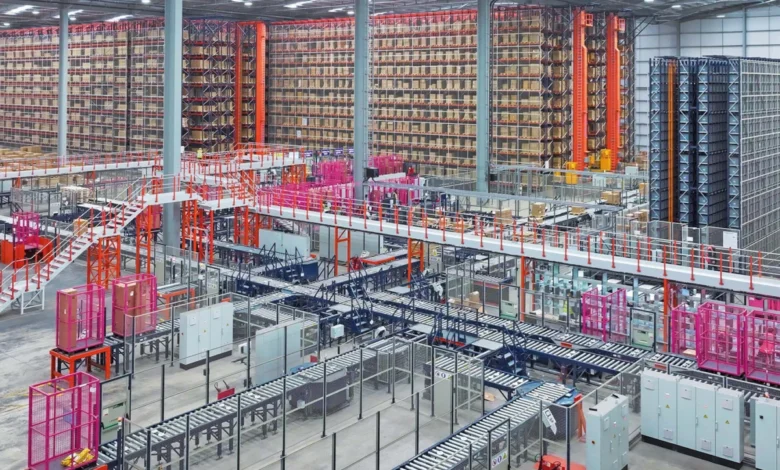
The global logistics landscape is undergoing a profound transformation as artificial intelligence (AI) transitions from a theoretical novelty to an operational cornerstone within warehouse environments. A comprehensive study released on November 18, 2026, by the Intelligent Logistics Systems Lab at the Massachusetts Institute of Technology (MIT) Center for Transportation & Logistics (CTL), in partnership with Spanish warehouse technology specialist Mecalux, reveals that the industry is on the cusp of an autonomous revolution. The report, titled "The state of generative and agentic AI in warehouse operations," highlights that by 2028, over half of global organizations expect AI systems to independently execute more than 25% of all operational warehouse decisions.
This shift signifies a maturation of logistics technology, moving away from simple robotic automation toward cognitive systems capable of decision-making. The research, which surveyed 1,967 supply chain professionals across 21 countries, underscores a near-universal commitment to this technology, with 90% of organizations planning to increase their AI investments over the next three years.
A Chronology of Adoption and Current Deployment
The integration of AI into the warehouse floor has accelerated rapidly over the last two years. While early logistics AI focused primarily on predictive analytics for demand forecasting, 2026 marks the arrival of "agentic" AI—systems that not only analyze data but take independent action based on defined parameters.
According to the study, 61% of organizations have reached a stage of large-scale deployment or full integration for generative AI (GenAI). Agentic AI, while slightly newer to the mainstream, has achieved a 56% adoption rate. Despite these impressive figures, the industry remains in a "nascent" phase; roughly 75% of these implementations have been operational for less than 12 months. This suggests that the current era is one of pilot expansion and infrastructure hardening rather than established legacy usage.
The Human-on-the-Loop Paradigm
A central theme of the research is the emergence of the "human-on-the-loop" management model. Rather than a binary choice between total human control and complete machine autonomy, organizations are opting for a collaborative framework. In this structure, AI agents handle routine, high-volume decision-making—such as inventory rebalancing or data entry corrections—while human supervisors monitor the system, intervening only when exceptions occur or high-stakes variables are introduced.

Data from the survey indicates a clear hierarchy of trust. While 51% of organizations grant AI agents the authority to independently authorize inventory movements, the threshold for human oversight remains high for commercial and financial matters. Only 22% of respondents permit AI to make customer-facing commitments, and a mere 12% allow systems to execute financial decisions without direct human approval. This demonstrates that while the technology is technically capable of higher-level autonomy, corporate governance remains a critical bottleneck, reflecting a conservative approach to risk management.
Quantifying Operational Benefits and Performance Metrics
The report serves as a reality check for the industry regarding the "AI hype cycle." While 87% of generative AI use cases and 81% of agentic AI deployments reported at least moderate improvements in key performance indicators (KPIs), the ability to document these gains remains inconsistent. Only 39% of organizations using GenAI and 36% using agentic AI have successfully quantified and documented their results.
Where the data is robust, the impact is undeniable. Organizations that have successfully tracked their progress report an average performance improvement of approximately 20% against their primary operational metrics. These metrics typically include throughput speed, order accuracy, and labor efficiency. However, the study warns that the lack of standardized documentation makes it difficult for firms to justify further investment or scale their operations effectively.
The Governance Factor: A Catalyst for Success
Perhaps the most significant finding in the MIT-Mecalux study is the correlation between governance and performance. The researchers identified that organizations with rigorous, actively enforced AI governance frameworks are twice as likely to achieve significant, documented improvements from their investments.
For organizations utilizing GenAI, 51% of those with strong governance reported substantial, proven gains, compared to only 26% of those without such frameworks. Similar disparities exist for agentic AI, where 46% of well-governed firms reported major success, versus 23% of those lacking formal oversight. This suggests that the barrier to AI success is less about the sophistication of the algorithms and more about the maturity of the organization’s management processes.
Overcoming Structural Obstacles
Despite the enthusiasm, the path to full autonomy is obstructed by significant legacy integration issues. Approximately 40% of survey respondents cited difficulties integrating new generative AI tools with legacy IT architecture as the primary barrier to scaling. Furthermore, 54% of respondents noted that better interoperability with existing Warehouse Management Systems (WMS) and Enterprise Resource Planning (ERP) platforms is the single most important factor for accelerating adoption.

The reliance on outdated "siloed" software represents a major hurdle for logistics firms that have spent decades building complex, fragmented digital environments. Without a unified data architecture, AI agents often lack the visibility required to make accurate, warehouse-wide decisions.
Challenging the Displacement Narrative
Perhaps the most noteworthy aspect of the report is its refutation of the long-standing assumption that automation inevitably leads to a shrinking workforce. The findings provide a more nuanced outlook on labor dynamics:
- Job Reductions: Only 11% of surveyed organizations reported that AI adoption led to a net reduction in headcount.
- Skill Shifts: More than 50% of organizations reported that the primary effect of AI was to transition employees away from repetitive, low-value tasks toward higher-value, more complex roles.
- Commitment to Training: A significant 73% of organizations are actively investing in retraining programs for warehouse-floor staff to help them manage and collaborate with AI systems.
This data suggests that the labor crisis in the logistics sector—characterized by high turnover and difficulty in recruitment—is being addressed through upskilling rather than downsizing. AI is acting as a force multiplier for existing human staff, allowing them to oversee larger swaths of the supply chain with greater efficiency.
Implications for the Future of Warehousing
The implications of the MIT-Mecalux study are far-reaching. As Matthias Winkenbach, director of the Intelligent Logistics Systems Lab, noted, the goal of this research is to move beyond the abstract sentiment surrounding AI and provide a pragmatic roadmap for implementation. The report suggests that the next two years will be defined by a "consolidation of competence," where the early adopters who invested in data governance and infrastructure will pull ahead of competitors who rely on experimental, disconnected tools.
For organizations aiming to thrive by 2028, the path forward is clear: prioritize data quality, ensure seamless integration with legacy ERP systems, and establish robust, transparent governance frameworks. As Javier Carrillo, CEO of Mecalux, emphasized, "Warehouse decision-makers need AI they can measure." The era of "black box" AI is coming to an end, replaced by a demand for evidence-based logistics.
As the industry approaches 2028, the focus will likely shift from whether AI can be used in the warehouse to how effectively it can be scaled across global networks. With 29% of organizations planning to increase their AI expenditure by more than 25% over the next three years, the logistics sector is clearly entering a period of aggressive, technology-led expansion. The winners of this shift will be those who view AI not as a replacement for human labor, but as a critical infrastructure upgrade that enables the workforce to navigate an increasingly complex global supply chain.
Related posts: