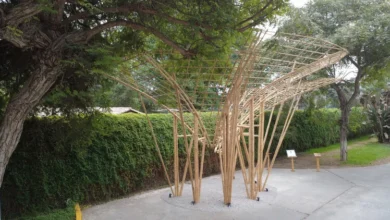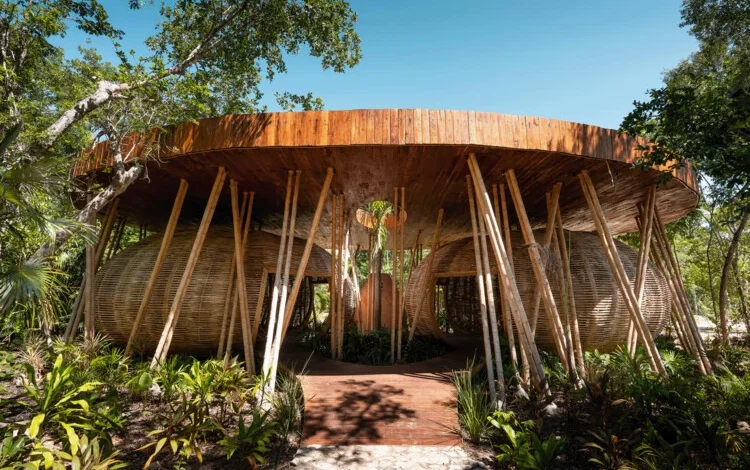
The Kaybé Multisensorial Park stands as a landmark achievement in contemporary landscape architecture, redefining how modern developments integrate with the fragile ecosystems of the Mexican Caribbean. Located in the heart of the Tulum jungle, the project—designed by the architectural firm Arquitectura Mixta—serves as an immersive, bio-climatic sanctuary that bridges the gap between human urban activity and the untouched wilderness. By utilizing sculptural bamboo structures as its primary vernacular, the park provides a multisensory experience that prioritizes environmental harmony, sustainable material usage, and the psychological well-being of its visitors.
The Evolution of Sustainable Design in Tulum
Tulum has experienced an unprecedented surge in real estate development over the last decade. As the town transitioned from a quiet coastal village to a globally recognized tourist destination, the pressure on local ecosystems reached a critical tipping point. The Kaybé project was conceived as a response to this rapid urbanization, aiming to prove that high-density residential and recreational spaces do not necessarily require the total clearing of native vegetation.
The development timeline for Kaybé began with a vision to create a "green corridor" that acts as a transition zone between the bustling town center and the deeper, protected jungle. Construction commenced with a rigorous site analysis to identify existing flora and fauna, ensuring that the placement of the park’s primary nodes would minimize soil disruption. By 2026, the project reached its full maturity, with the bamboo structures fully integrated into the surrounding canopy, demonstrating the long-term viability of bio-climatic architecture in tropical climates.
Structural Innovation and Bamboo Engineering
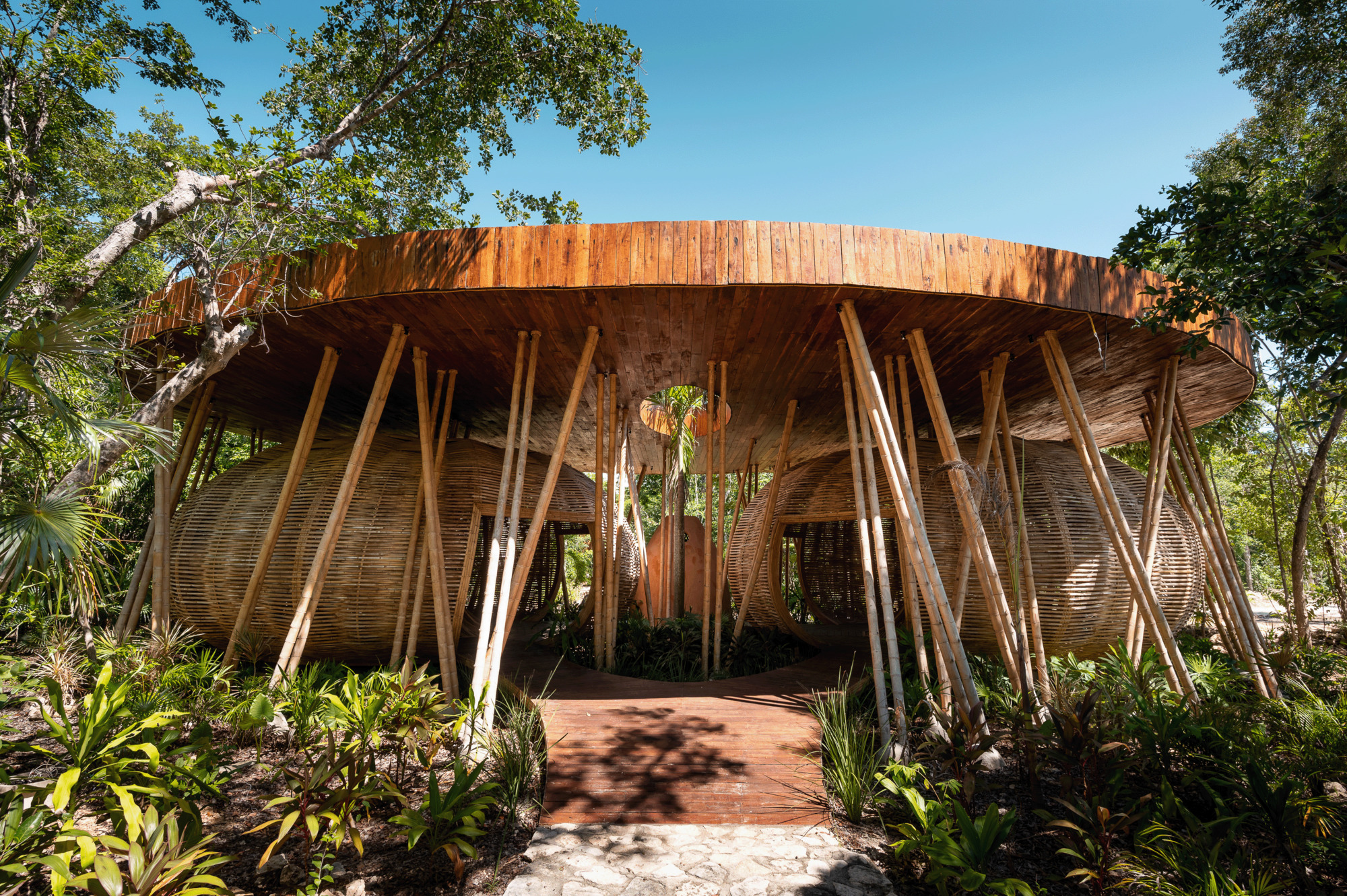
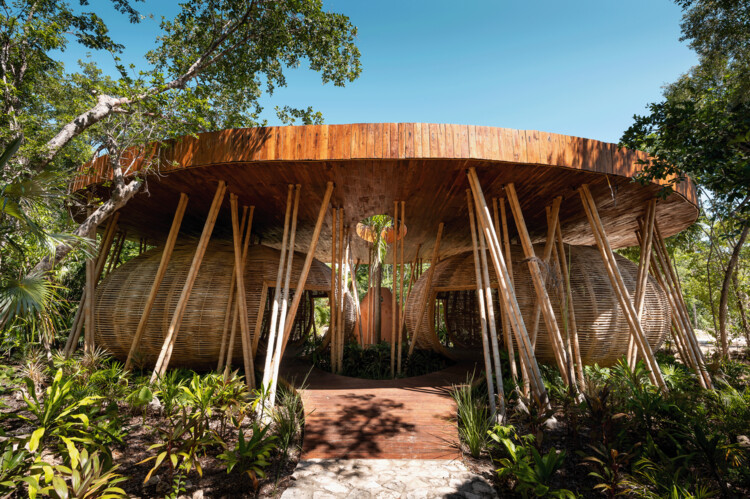
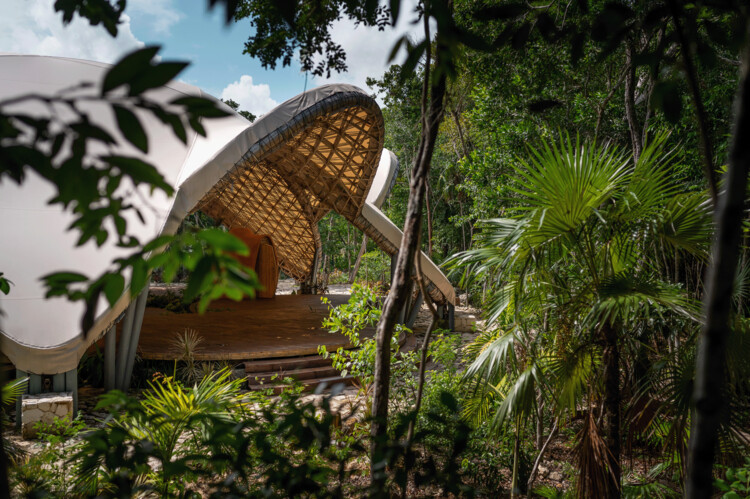
At the center of the project’s success is the innovative use of bamboo, a material long favored in tropical architecture for its rapid growth, high tensile strength, and low carbon footprint. Arquitectura Mixta employed advanced structural engineering to push the boundaries of what bamboo could achieve, moving beyond traditional hut-style construction into complex, sculptural forms.
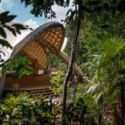
The park features a series of interconnected, organic structures that mimic the undulating shapes of the surrounding jungle. These forms are not merely aesthetic; they are functional, designed to facilitate natural cross-ventilation, shading, and the channeling of rainwater into bio-retention systems. The use of bamboo serves as a deliberate contrast to the concrete-heavy developments typically found in the region, offering a lower embodied energy profile while providing a unique texture and warmth that aligns with the organic nature of the Tulum environment.
Multisensory Integration and Human Perception
The "multisensorial" aspect of the park is rooted in the philosophy of phenomenology, which argues that architecture should be experienced through all five senses rather than just sight. As visitors navigate the bamboo-defined pathways, they encounter deliberate changes in light, temperature, and acoustic environments.
- Acoustics: The dense vegetation and bamboo lattices serve as natural sound dampeners, creating pockets of quietude that contrast with the typical noise of urbanized Tulum.
- Tactility: The material palette focuses on raw, locally sourced textures. Visitors are encouraged to engage with the structures, feeling the grain of the treated bamboo and the cooling surfaces of natural stone pathways.
- Olfactory: The landscape design incorporates endemic, aromatic flora, which releases distinct scents throughout the day, reinforcing the connection to the local ecosystem.
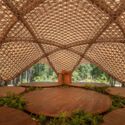
- Visuals: The play of light and shadow—or chiaroscuro—is managed through the apertures in the bamboo lattice, which shift as the sun moves across the sky, effectively turning the architecture into a living, breathing sundial.
Supporting Data and Environmental Impact
The impact of the Kaybé project is best measured through its contribution to the local micro-climate. According to environmental impact assessments provided by the design team, the project maintains a significantly higher percentage of permeable ground cover compared to neighboring developments. This is crucial for the Yucatan Peninsula, where the porous limestone bedrock makes the management of the underground aquifer a priority.
Furthermore, the integration of native reforestation initiatives within the park has resulted in a net increase in local biodiversity. By creating a corridor for pollinators and small fauna, the park acts as a functional ecological bridge. The energy-neutral approach, utilizing passive cooling techniques, reduces the reliance on electrical grid support for climate control, setting a precedent for future residential developments in the region.
Official Perspectives and Architectural Significance
Arquitectura Mixta has emphasized that the Kaybé Multisensorial Park was not designed as an isolated object, but as an intervention in a larger system. In their project documentation, the architects noted that their primary goal was to "de-center the human experience," shifting the focus from the comfort of the building to the health of the surrounding environment.
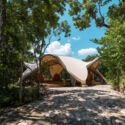
Critics and urban planners have noted that this project represents a shift in the "Tulum aesthetic." While the region has been criticized for "resort-style" architecture that ignores environmental consequences, the Kaybé approach suggests a maturing market that values sustainability as a core luxury feature. The design has been widely cited in professional journals for its ability to reconcile the conflicting demands of commercial development and nature conservation.
Broader Implications for Tropical Urbanism
The success of the Kaybé project raises important questions about the future of urban expansion in sensitive ecological zones. As climate change increases the frequency of extreme weather events, the durability of building materials becomes paramount. Bamboo, while often viewed as a temporary or rustic material, has been proven in this context to be a robust, long-term solution when treated and maintained with modern engineering standards.
The broader implications of this project suggest that governments and developers in similar tropical regions could implement "nature-first" mandates. By enforcing strict ratios of permeable surface area and promoting the use of locally renewable materials, cities can mitigate the "urban heat island" effect that has plagued cities like Cancun and Tulum. The Kaybé model provides a tangible roadmap for how to balance the economic necessity of development with the ethical imperative of environmental stewardship.
Looking Toward the Future
As the project continues to age, it will offer a longitudinal study on the maintenance of bamboo structures in high-humidity environments. The ongoing success of the park depends on the continued stewardship of its landscape, ensuring that the structures remain in harmony with the shifting jungle canopy.
For the residents of the Kaybé development and the visitors who traverse the park, the space serves as a daily reminder of the delicate balance required to live in the tropics. The park is more than a recreational facility; it is an educational tool that demonstrates the potential for human habitats to contribute positively to their environments. By prioritizing the multisensory experience of nature, Arquitectura Mixta has succeeded in creating a space that feels timeless, rooted in the ancient traditions of the region while looking firmly toward a sustainable future.
The Kaybé Multisensorial Park stands as a testament to the fact that when architecture is allowed to breathe with the land, it does not just occupy space—it enhances the very ecosystem it inhabits. This project is a benchmark for what is possible when design, science, and nature are brought into alignment, proving that the future of luxury development is not in conquering the jungle, but in learning how to reside within it gracefully.