The Cost of Convenience: How the Advertising Industry is Grappling with AI-Driven Quality Erosion and Change Management

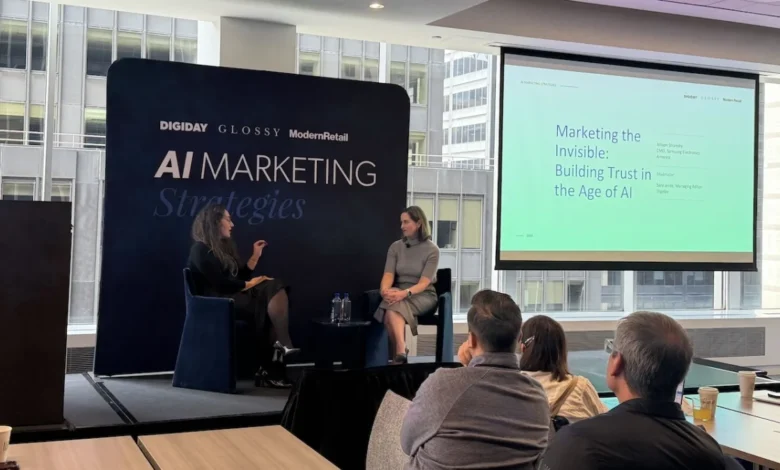
The advertising industry has officially entered a phase of profound fatigue. It is the peak of the 2026 autumn events cycle, and while conference centers across the United States, Western Europe, and global markets continue to echo with corporate presentations on artificial intelligence, the mood on the ground has shifted dramatically. In the nascent days of the generative AI boom, industry pitches were dominated by starry-eyed optimism regarding operational innovation and unprecedented efficiency. Today, however, that relentless pursuit of speed has given way to mounting anxieties, widespread job losses across adland, and a noticeable, alarming decline in creative standards.
As automated workflows become the default operating procedure for many brands and agencies, marketers are increasingly forced to reckon with the collateral damage of moving too fast. The race to replace human labor with algorithms has triggered a cultural and operational reckoning. At recent industry gatherings, such as the inaugural AI Marketing Strategies event co-hosted by Digiday, Glossy, and Modern Retail, brand-side leaders, agency executives, and technological strategists gathered behind closed doors to confront an uncomfortable reality: efficiency without rigorous oversight is eroding brand equity.
The Genesis of the AI-First Paradigm: A Rapid Chronology
To understand the current crisis of confidence in the advertising sector, one must examine the compressed timeline of the generative AI era. Beginning in late 2022 and accelerating aggressively through 2023 and 2024, advertising holding companies and independent agencies alike rushed to integrate machine learning and generative tools into their core workflows. The initial promise was irresistible: reduce production times from weeks to minutes, slash overhead costs, and scale content generation across infinite channels.
By 2025, however, the economic realities of these implementations began to bite. The aggressive automation of media planning, copywriting, and basic asset generation coincided with significant waves of layoffs across major agency networks. Junior and mid-level roles—traditionally the breeding ground for creative talent and the primary workforce for quality control—bore the brunt of these cutbacks. Agencies attempted to bill themselves as "AI-native," promising clients faster turnarounds and leaner budgets.
Yet, by late 2026, the cracks in this shiny facade had widened into chasms. Marketers began noticing that while their output volume had skyrocketed, the distinct, resonant voice of their brands was getting lost in a sea of generic, algorithmically generated noise. The industry had successfully optimized for volume, but in doing so, it had compromised the very essence of brand value.
The Crisis of Declining Standards and the 10/80/10 Rule
Nowhere is this tension more palpable than in high-stakes consumer verticals such as the beauty, luxury, and premium goods sectors, where heritage, nuance, and visual perfection are paramount. During a candid town hall session held under Chatham House Rules at the recent AI Marketing Strategies event, brand-side marketers pulled back the curtain on the day-to-day friction of managing automated digital supply chains.
Participants voiced severe concerns over the plummeting quality of agency deliverables. "The quality control is so bad," confessed a senior marketing executive representing a global premium beauty brand. "Establishing brand standards into AI-driven ad platforms is challenging all of us."
This sentiment underscores a broader industrial failing: the abdication of thorough craftsmanship in favor of automated expediency. Several brand guardians reported instances where agency-submitted creative assets featured glaring errors, such as misrendered brand logos, incorrect color grading, or tone-deaf messaging that failed to align with the brand’s core ethos.
To cope with this deficit, some marketers have resorted to rigid frameworks to force accountability back into the creative pipeline. One executive detailed their adoption of a strict "10/80/10 formula" for managing automated workflows. Under this system, 10% of human labor is front-loaded into precise, careful prompting and direction; the AI is left to handle the heavy lifting for the 80% middle phase; and a final, non-negotiable 10% of human time is spent meticulously polishing, editing, and correcting the output to ensure it meets acceptable commercial standards.
Crucially, brand leaders complain that their agency partners display a worrying apathy toward safeguarding these standards. With many agencies hollowing out their junior talent pools and relying heavily on inexperienced personnel to oversee complex AI platforms, the institutional knowledge required to spot and correct algorithmic errors is rapidly disappearing. This has fostered a dangerous corporate culture best summarized by one frustrated marketer as a growing industry-wide acceptance of a "good enough—go" mentality.
Navigating Change Management and Preserving the Human Element
Beyond the immediate headaches of creative quality control, the rapid pivot to artificial intelligence has triggered profound organizational anxiety. In a separate conference session dedicated to change management, leaders from brands, agencies, and tech vendors debated how to delicately guide their workforce through an era of existential professional uncertainty.
The consensus among industry leaders is that corporations have systematically failed to appreciate "the human element" in their haste to automate. While the technological capabilities of AI allow teams to achieve campaign implementation in hours rather than weeks, leadership is now forced to confront a difficult question: What is the distinct value proposition of a human employee in an AI-first world?
Small agency chiefs, who are often more nimble in navigating structural shifts, have drawn parallels between the current AI transition and the turbulent digital-first transformations of the 2000s and early 2010s. Back then, the advent of social media and programmatic advertising sparked similar fears of obsolescence. However, industry veterans note that while the tools change, the need for strategic empathy, emotional intelligence, and genuine creative direction remains uniquely human.
"People are going to feel very threatened," noted one agency head during the leadership panel. "But we can help them work out how we fit in that world." Doing so, however, requires a deliberate departure from the slash-and-burn cost-cutting strategies that characterized the early wave of AI adoption. Sustainable change management demands retraining, upskilling, and a cultural shift that views AI as a powerful assistant rather than a wholesale replacement for human ingenuity.
Adapting to the Internet of Two Audiences: Strategy in a Zero-Click World
As agencies and brands grapple with internal quality and workforce friction, the external technological landscape is shifting beneath their feet. Addressing the audience in a keynote presentation, Isabel Perry, Global Executive Vice President of Strategy at DEPT, urged marketers to rethink foundational digital strategies designed for a bygone era.
Perry pointed out that the advertising industry is rapidly approaching a critical tipping point where bot- and agent-driven internet traffic will definitively outweigh human internet traffic. In this emerging paradigm, traditional measurement metrics—such as raw impressions and generic engagement rates—are no longer fit for purpose.
"We are drowning in measurement," Perry stated. "Instead of just measuring numbers, we need to measure gaps. If you’re measuring the gap, you can actually start allocating budgets to the pieces that really matter, instead of just chasing semi-generic industry metrics, which are useful but not actually strategic."
This strategic realignment requires marketing budgets to be dynamically partitioned based on an accurate understanding of which parts of the consumer journey still demand human touchpoints and which are successfully handled by autonomous AI agents.
Echoing these sentiments in a session on product discovery in a "zero-click world," Rajiv Ragu, Vice President of Digital at Thorne, emphasized that the shift toward an internet populated by two distinct audiences—human consumers and algorithmic agents—demands aggressive curation of legacy digital content.
According to Ragu, brands cannot afford to treat their digital archives as static set-pieces. In an AI-first environment, discovery is increasingly mediated by language models and automated agents that crawl existing web ecosystems for factual, authoritative, and up-to-date information.
"You need to see what content is still being picked up," Ragu told attendees, stressing that maintaining the relevance of historical content libraries requires ongoing financial and operational investment. Neglecting tasks such as updating author credentials, refreshing data points, and ensuring technical optimization can leave legacy content vulnerable to misinterpretation by AI agents, posing a severe, unmonitored risk to overall brand reputation.
The Broader Implications for the Future of Adland
The conversations dominating the 2026 conference circuit reveal an advertising industry at a major crossroads. The initial honeymoon phase of generative artificial intelligence—characterized by unbridled enthusiasm, rapid headcount reductions, and an obsession with raw output speed—has officially matured into a sobering awareness of its limitations.
The widespread decline in creative standards, the erosion of brand equity through sloppy automated execution, and the psychological toll on a depleted workforce have forced a necessary reassessment. Marketers are no longer willing to accept the hidden costs of frictionless automation.
Moving forward, the successful agencies and brands will not be those that automate the fastest, but those that implement rigorous change management frameworks, restore human oversight to creative pipelines, and strategically adapt their measurement models to a world shared by humans and algorithms alike. The era of "good enough" is facing a fierce pushback, signaling that in the high-stakes arena of modern advertising, human craftsmanship remains an irreplaceable asset.