300 fashion brands and retailers sign the International Safety Accord

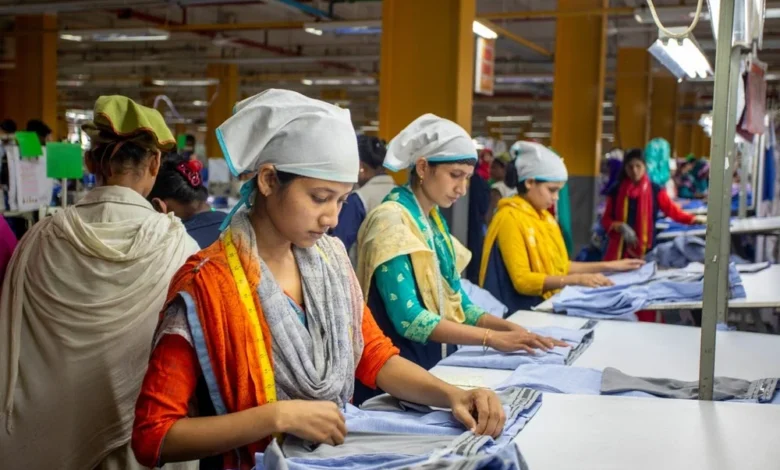
The global garment industry has reached a significant milestone in supply chain accountability as participation in the International Accord for Health and Safety in the Textile and Garment Industry (International Accord) officially surpasses 300 signatory brands and retailers. Global labor unions IndustriALL and UNI Global Union have celebrated the achievement, which marks the highest level of brand participation recorded since the safety mechanism’s inception. This broad coalition of companies collectively sources approximately $26bn worth of apparel and textiles from key manufacturing hubs, predominantly focusing on Bangladesh and Pakistan. By binding themselves to this legally enforceable agreement, the participating corporations have committed to maintaining rigorous safety standards across more than 2,000 supplier factories, directly protecting the livelihoods and physical well-being of over 3.4m garment workers worldwide.
The milestone arrives at a critical juncture for international fashion supply chains. While the expansion of the Accord demonstrates an unprecedented degree of corporate alignment on worker safety, ongoing industrial hazards and fatal accidents continue to threaten factory floors across South Asia. Industry stakeholders emphasize that while regulatory frameworks have evolved considerably over the past decade, persistent compliance gaps mean that rigorous oversight remains as vital today as it was in the immediate aftermath of historical industrial disasters.
Historical Context and the Genesis of the Accord
To understand the profound significance of the 300-brand milestone, it is necessary to examine the tragic catalysts that forced the global fashion industry to reevaluate its approach to worker safety. For decades, the outsourcing of garment manufacturing to developing nations with lax labor laws and weak regulatory enforcement created an environment where systemic safety violations went unchecked. Brands frequently prioritized speed-to-market and low production costs over the structural integrity of supplier facilities.
The turning point for the global textile industry occurred on April 24, 2013, when the Rana Plaza complex in Savar, Bangladesh, collapsed. The disaster, which claimed the lives of more than 1,100 people and injured thousands of others, stands as the deadliest accidental structural failure in modern history. The tragedy exposed the lethal consequences of unregulated manufacturing, revealing that many global brands were sourcing apparel from buildings that failed to meet basic structural standards and lacked adequate fire exits and safety protocols.
In the wake of Rana Plaza, public outrage and intense pressure from labor advocates compelled international brands, retailers, and trade unions to forge a new path forward. This collaboration led to the creation of the original Accord on Fire and Building Safety in Bangladesh in May 2013. Unlike previous voluntary corporate social responsibility initiatives, which critics often dismissed as public relations exercises, the Accord introduced a binding, enforceable contract. It legally obligated signatory brands to ensure that their supplier factories were safe, providing unions with the legal leverage to hold corporations accountable if they failed to remediate identified hazards.
Evolution and Expansion of the Legal Framework
Over the subsequent decade, the scope of the Accord expanded beyond its initial geographic boundaries and institutional framework. Following the successful stabilization of factory safety in Bangladesh—where thousands of structural, electrical, and fire safety renovations were successfully completed—labor leaders and brand representatives sought to institutionalize these protections for the long term.
In 2023, the framework underwent a critical renewal process, establishing a new three-year term coupled with an automatic renewal clause for an additional three years. This structural shift represents the longest continuous commitment in the history of the safety accord, signaling to suppliers and workers alike that international oversight is a permanent fixture of modern apparel sourcing.
Furthermore, the operational mandate of the Accord was extended beyond Bangladesh to encompass Pakistan, a nation with a vast textile sector that has historically faced significant challenges regarding workplace accidents, inadequate safety committees, and insufficient fire suppression systems. Today, the International Accord operates as a comprehensive mechanism that integrates independent safety inspections, structured remediation monitoring, extensive worker safety training programs, and accessible grievance mechanisms that allow employees to report hazards without fear of retaliation.
Quantitative Scope and Economic Footprint
The inclusion of 300 active signatories underscores the sheer economic weight and operational reach of the International Accord. The participating companies represent a diverse cross-section of the global retail market, ranging from fast-fashion giants and high-street retailers to luxury houses and outdoor apparel brands. Together, these entities command massive purchasing power, which they leverage to drive compliance across manufacturing networks.
According to data released by the International Accord secretariat, the 300 signatory brands source garments worth an estimated $26bn annually from Bangladesh and Pakistan. This economic footprint translates into direct oversight of more than 2,000 individual production facilities. Within these factories, approximately 3.4m garment workers carry out daily operations, ranging from spinning and weaving to cutting, sewing, and finishing.
The mechanism’s success relies heavily on this economic leverage. By tying continued business relationships to safety compliance, the Accord incentivizes factory owners to invest in necessary infrastructure upgrades. Under this model, thousands of industrial fire doors have been installed, complex fire alarm and sprinkler systems have been integrated, building foundations and load-bearing structures have been reinforced, and joint labor-management safety committees have been thoroughly trained to identify and mitigate risks proactively.
Perspectives from Leadership and Industry Stakeholders
Joris Oldenziel, executive director of the International Accord, addressed the significance of the new milestone, emphasizing both the tangible progress achieved and the persistent vulnerabilities that remain within global supply chains.
"This is the highest number of brands that we have to date," Oldenziel stated. "This represents a very strong commitment to workplace health and safety to ensure that workers who are producing your clothes can work in safe factories."

Highlighting the mechanics of the initiative, Oldenziel added, "Under the Accord, we implement the program at 2,000 factories covering 3.4 million workers in both Pakistan and Bangladesh. We do that through safety inspections, monitoring remediation, worker training and providing access to remedy."
He noted that over recent years, brands and their suppliers have taken concrete, measurable steps to transform factory environments. However, Oldenziel also offered a sobering assessment of the current industrial landscape, noting that systemic risks have not been entirely eradicated.
"At the same time, we do see there are still reports of accidents and fires happening on a regular basis in garment factories," Oldenziel cautioned. "Therefore, the continued commitment from the brands to the Accord is as important now as it was a decade ago. For the workers themselves, of course, but also for the brands to fulfil their human rights due diligence responsibilities."
Labor organizations, including IndustriALL and UNI Global Union, echoed these sentiments, framing the 300-brand milestone as a testament to the resilience of workers and the enduring validity of collective bargaining and binding agreements. Union leaders pointed out that voluntary corporate codes of conduct have consistently proven insufficient when left unchecked by independent, worker-empowered oversight bodies.
The Ongoing Threat of Industrial Accidents
Despite the extensive remediation efforts undertaken across thousands of facilities, recent events underscore that the threat of catastrophic accidents remains an omnipresent reality in the garment sector.
Last year, a major fire broke out at a garment manufacturing facility in Mirpur, Dhaka, resulting in the tragic deaths of at least 16 workers. The incident sent shockwaves through the international apparel industry, serving as a grim reminder that isolated compliance failures or lapses in day-to-day safety management can lead to catastrophic loss of life.
In the aftermath of the Mirpur disaster, representatives from the International Accord issued formal statements describing the event as a "stark reminder of the devastating human cost of inadequate safety measures." Industry analysts point out that while structural engineering audits and fire door installations are foundational, maintaining safety requires constant vigilance, unannounced inspections, and an organizational culture that empowers workers to refuse unsafe work without facing economic retribution or termination.
Broader Implications: Human Rights Due Diligence and Regulatory Pressures
The expansion of the International Accord occurs against a backdrop of rapidly evolving international trade laws and regulatory frameworks. Governments and regional bodies, particularly within the European Union, are increasingly enacting mandatory human rights and environmental due diligence (mHREDD) legislation. These legal frameworks hold corporations legally liable for labor abuses and safety violations occurring anywhere within their global supply chains, regardless of whether operations are outsourced to third-party suppliers.
In this context, participation in the International Accord serves a dual purpose for fashion brands and retailers. Beyond its moral and humanitarian imperative, the Accord provides a robust, verifiable compliance framework that helps companies satisfy stringent legal due diligence requirements. By delegating safety monitoring, remediation tracking, and worker training to an established, independent institution, brands can demonstrate active risk management to regulators, investors, and consumers.
Furthermore, consumer expectations have shifted dramatically over the past decade. Modern shoppers, particularly within younger demographic cohorts, increasingly demand transparency and ethical accountability from the brands they support. Supply chain opacity is no longer tolerated, and scandals involving unsafe working conditions can inflict severe, lasting damage on a brand’s reputation and market valuation.
Looking Ahead: Challenges and Future Expansion
As the International Accord moves forward under its renewed framework, leadership faces several key strategic challenges. Chief among these is the potential for geographic expansion. Worker advocates and labor unions have continuously campaigned for the principles of the Accord to be extended to other high-risk manufacturing nations where garment and textile workers face systemic exploitation and unsafe infrastructure, such as parts of Southeast Asia and North Africa.
However, scaling the model requires delicate negotiations with local governments, manufacturing associations, and brand conglomerates, all of which may have competing economic and political priorities. Additionally, ensuring the long-term financial sustainability of the Accord’s inspection and training infrastructure remains a continuous priority for the secretariat and its signatory partners.
Ultimately, the enrollment of 300 brands and retailers into the International Accord marks a watershed moment in corporate accountability. It demonstrates that the lessons learned from past tragedies have not been entirely forgotten and that legally binding frameworks offer a viable path toward industrial safety. Yet, as ongoing factory fires and safety breaches continue to demonstrate, the work of protecting the millions of individuals who sustain the global fashion economy is far from complete. Maintaining zero-tolerance for negligence will require unwavering dedication from brands, suppliers, unions, and regulatory bodies alike in the years to come.