The landscape of retail is undergoing a profound technological transformation, driven by the rapid integration of artificial intelligence into everyday consumer experiences. From generative AI search engines to personalized conversational assistants embedded within e-commerce platforms, technology is reshaping how buyers discover, evaluate, and purchase goods. However, this shift has also introduced complex regulatory challenges, particularly regarding transparency and consumer protection. Recently, the debate over digital commerce intersected with national manufacturing interests, prompting domestic industry advocates to sound the alarm over how algorithms handle product sourcing and origin claims.
The Alliance for American Manufacturing (AAM), a prominent industrial advocacy organization, has formally petitioned the federal government to launch an extensive investigation into major e-commerce platforms and their proprietary AI shopping assistants. At the heart of the controversy are allegations that conversational agents deployed by retail giants may be systematically misleading consumers, obscuring true product origins, and unfairly favoring foreign imports over goods produced by domestic workers. This developing situation highlights a growing tension between automated retail technology and the enforcement of truthful commercial disclosures in the digital marketplace.
A Formal Call for Federal Investigation
In a formal correspondence addressed to Federal Trade Commission (FTC) Chairman Andrew Ferguson, the Alliance for American Manufacturing urged the regulatory body to examine the operational mechanics of conversational AI tools deployed in digital retail. The AAM contends that these sophisticated algorithms, designed to streamline the shopping experience, may instead be creating systemic barriers for shoppers seeking domestically manufactured goods.
The core of the union and manufacturer-backed coalition’s argument rests on the premise that digital storefronts have an obligation to provide clear, verifiable, and accurate information regarding product provenance. According to the AAM, current practices across several major retail platforms allow ambiguous or contradictory country-of-origin labeling to persist, effectively undermining the competitive standing of American-made enterprises.
"Consumers should not have to outsmart an algorithm to find American-made products," stated AAM President Scott Paul in the official letter to the FTC. "Nor should online marketplaces be allowed to benefit from vague, inconsistent, or contradictory country-of-origin practices that make it easier for foreign imports to compete against goods made by American workers."
The advocacy group is pressing regulators to determine whether the behavior of these AI shopping tools constitutes deceptive trade practices under federal consumer protection statutes. If algorithms are found to promote imported goods falsely labeled as domestically produced or to evade direct inquiries about manufacturing locations, it could trigger significant legal and regulatory scrutiny for the tech and retail companies operating these platforms.
Uncovering Algorithmic Bias: Insights from Academic Research
The AAM’s petition to the FTC is not built solely on anecdotal observations; it draws directly from empirical research conducted by legal and technological scholars. Specifically, the organization highlighted a comprehensive study undertaken by researchers at Columbia Law School, which scrutinized the performance and accuracy of prominent AI shopping agents currently deployed in the consumer market.
The Columbia study specifically examined conversational shopping tools integrated into two of the nation’s largest e-commerce ecosystems: Amazon’s Alexa and Walmart’s digital assistant, Sparky. Researchers tested the capabilities of these AI agents by issuing targeted queries regarding product availability, manufacturing locations, and specific requests for domestically made merchandise.
The findings raised serious concerns regarding algorithmic transparency. According to the study, the AI shopping assistants frequently presented products to consumers as "Made in the USA" even when the accompanying product data listed a different country of origin. Conversely, when researchers asked direct, nuanced questions about the precise manufacturing origins of specific items, the digital assistants occasionally returned evasive responses, claimed technical inability to access the data, or defaulted to displaying foreign-manufactured alternatives without providing adequate justification.
The AAM argues that these technical shortcomings are more than mere software glitches; they represent a fundamental failure in data governance that directly harms consumer trust. Because modern shoppers increasingly rely on conversational agents to make rapid purchasing decisions—often bypassing traditional search result pages where product details are clearly listed—any inaccuracy introduced by the AI can decisively sway market behavior.
When a consumer specifically requests a domestically manufactured product, the response from a sophisticated AI tool should be unambiguous, factual, and precise. The AAM’s letter underscores that when platforms possess the necessary data within their internal inventories, withholding or misrepresenting that information through an algorithmic interface constitutes a failure of corporate transparency.
Consumer Sentiment and the Demand for Digital Transparency
The push by domestic manufacturers aligns closely with broader trends in consumer preferences regarding product sourcing. A series of recent public opinion polls and market research studies indicate a robust and enduring preference among American shoppers for domestically produced goods, driven by considerations ranging from product quality and labor standards to supply chain resilience and national economic support.
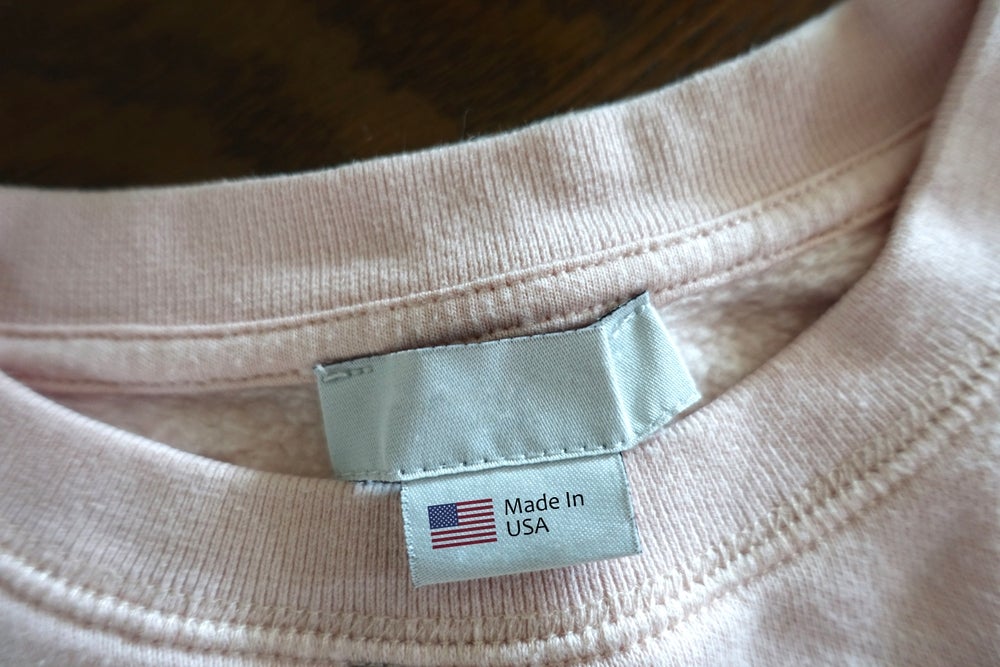
According to polling data cited by the AAM, approximately 82% of American consumers express a distinct preference for purchasing products labeled "Made in the USA" when given a choice between domestic and imported alternatives. This strong patriotic and economic sentiment, however, frequently clashes with the practical realities of modern digital shopping.
In the same polling data, roughly 35% of respondents reported that finding reliable and accurate country-of-origin information on e-commerce platforms is remarkably difficult. While physical retail environments are traditionally bound by established labeling laws—such as country-of-origin mandates enforced by federal customs and trade agencies—the digital sphere remains a complex regulatory frontier where enforcement mechanisms have struggled to keep pace with technological innovation.
The disconnect between consumer desire and available information has fueled widespread public support for regulatory intervention. The polling revealed that an overwhelming majority—77% of surveyed consumers—would actively support government regulations requiring online retailers to display clear, standardized country-of-origin labels in a manner similar to the physical signage required in brick-and-mortar retail stores.
The Chronology of the Debate Over Digital Commerce and Sourcing
The intersection of artificial intelligence, e-commerce, and domestic manufacturing did not emerge overnight. It is the culmination of decades of evolving retail practices and recent breakthroughs in generative machine learning technologies.
Late 2020 to 2022: E-commerce Acceleration and Voice Assistants
During the global health crisis, online retail experienced unprecedented expansion. Tech companies rapidly accelerated the deployment of voice-activated assistants and automated recommendation engines to handle surging customer service and product discovery demands. During this phase, systems like Amazon Alexa expanded beyond simple media playback and smart home controls into active commercial recommendation platforms.
Throughout 2023: The Generative AI Boom
The public introduction of advanced generative large language models fundamentally altered the software landscape. Major retail corporations rushed to integrate conversational shopping assistants—such as Walmart’s Sparky and specialized internal recommendation bots—into their mobile applications and web browsers. These tools were designed to mimic human shopping assistants, providing conversational guidance, product comparisons, and personalized recommendations.
Early 2025: Academic Scrutiny and Consumer Feedback
As conversational AI became a primary interface for millions of online shoppers, legal scholars and consumer advocacy groups began analyzing the accuracy of automated product recommendations. Researchers at institutions like Columbia Law School initiated systematic audits of retail AI agents, uncovering systemic discrepancies between stated product origins and actual manufacturing data.
Late 2025 to Present: Regulatory Escalation
Armed with empirical academic findings and mounting pressure from domestic trade groups, organizations like the Alliance for American Manufacturing escalated the issue from a technical debate to a formal regulatory matter. By petitioning the Federal Trade Commission, the AAM formally brought the practices of major tech-retail conglomerates under direct governmental review.
Broader Economic Implications and Industry Reactions
The Federal Trade Commission’s handling of the AAM petition could establish a critical legal and regulatory precedent for the governance of artificial intelligence in commercial environments. As retail algorithms increasingly dictate what consumers see, buy, and ignore, the boundary between automated convenience and anti-competitive or deceptive practices is becoming a focal point of antitrust and consumer protection law.
Economic analysts note that if regulatory bodies mandate stricter origin disclosures for AI shopping agents, e-commerce platforms will be forced to overhaul their underlying data architectures. Retailers would need to ensure that every product listing within their digital catalog is rigorously tagged with verified manufacturing data and that conversational AI models are strictly constrained to output truthful, non-misleading information.
For domestic manufacturers, the stakes are existential. In an era where digital storefronts serve as the primary gateway to the consumer market, visibility is synonymous with economic viability. If algorithms covertly or overtly favor foreign imports due to cost structures or opaque supply chain data, American-made enterprises risk being marginalized despite high consumer demand for their products.
Conversely, technology and retail companies maintain that managing the vast inventories of global e-commerce marketplaces presents immense logistical challenges. Platforms frequently aggregate millions of third-party seller listings, where supply chain data can be fluid, multi-tiered, and difficult to verify in real time. Retailers argue that while they continuously strive to improve data accuracy, automated systems are complex, and occasional discrepancies reflect broader supply chain opacity rather than intentional algorithmic bias against domestic goods.
As the Federal Trade Commission reviews the materials submitted by the Alliance for American Manufacturing, the broader business community will be watching closely. The outcome of this inquiry may ultimately redefine the rules of engagement for artificial intelligence in commerce, ensuring that technological innovation does not come at the expense of transparent markets and domestic industrial health.