The Art of Thoughtful Design: Curating the Ultimate Holiday Gift Guide Under $100

With the seasonal shopping window opening earlier each year, consumers and design enthusiasts alike increasingly face the challenge of sourcing presents that feel both personal and elevated without breaching a strict budget. A $100 price ceiling, while modest in the grand scheme of luxury retail, frequently serves as the sweet spot for contemporary housewares, functional accessories, and clever design objects. Navigating this threshold successfully relies on identifying items that transcend their monetary value through material integrity, clever functionality, and a distinct point of view. Rather than opting for mass-market novelties, design-conscious buyers are turning toward objects that merge daily utility with sculptural art, transforming everyday routines into moments of visual and tactile pleasure.

The Anatomy of a Sub-$100 Design Object
The criteria for evaluating objects within the sub-$100 tier have evolved significantly over the past decade. Industry analysts note that modern consumers place a higher premium on narrative, sustainability, and provenance than ever before. A gift costing under $100 must offer something compelling—be it an innovative production method like 3D printing with recycled plastics, artisan-level handcrafting using mixed domestic hardwoods, or a whimsical nod to historical design movements, such as 1920s surrealism.

When curating collections for the holiday season, retailers and editors evaluate items based on three core pillars: utility, aesthetic longevity, and emotional resonance. An everyday essential executed with an unexpected twist—such as a teapot styled to look like an initial cardboard model or a minimalist chess set designed to double as permanent coffee table decor—achieves the rare balance of being simultaneously practical and collectible. This curation strategy reflects a broader macroeconomic shift toward intentional consumption, where buyers prioritize fewer, better-designed things that resist the disposable cycle of fast retail.
Culinary Craft and Tabletop Innovations

Kitchenware and dining accessories consistently rank among the most popular categories for holiday gifting, bridging the gap between communal gathering and domestic artistry. For the 2026 holiday season, heritage cookware brands and independent designers alike are leaning into playful geometry and rich, tactile materials.
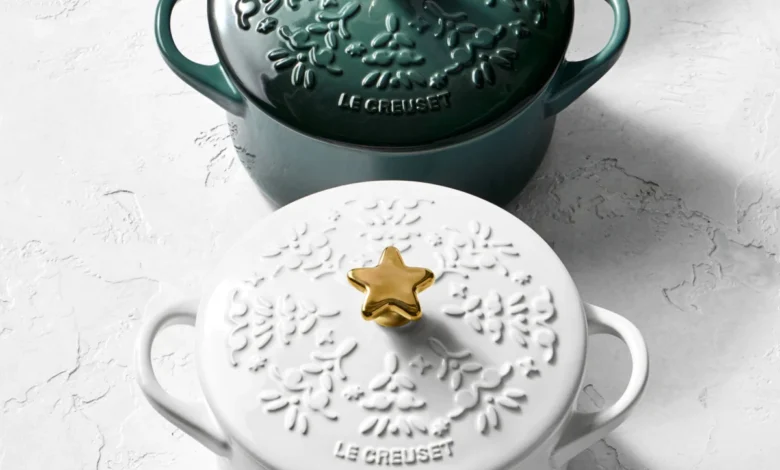
Le Creuset has expanded its seasonal offerings with the Noël Mini Cocotte featuring an embossed Christmas tree lid and a gold-finished star knob. Crafted from durable glazed stoneware and retailing for $62 via Williams-Sonoma, the 24-ounce vessel bridges oven-to-table functionality while injecting a dose of nostalgic holiday magic. Similarly, East Fork has introduced its Mixed Wood Rolling Pin, handcrafted in Tennessee from contrasting black walnut, cherry, and maple hardwoods. Priced at $98, the French-style tapered pin celebrates natural timber variations while offering superior dough control, marking it as a kitchen heirloom built to last for generations.

For tea enthusiasts, Dutch designer Annebet Philips collaborated with Serax to create the Carte Blanche Teapot. Priced at $98, the porcelain vessel challenges traditional ceramic forms by preserving the uneven edges and fold lines of its original cardboard prototype, finished with hand-painted black outlines that lend it a striking, cartoonish profile. On the beverage front, Maison Balzac’s borosilicate glass Bedside Carafe ($90) reinterprets traditional French nightstand drinkware into a modular, dishwasher-safe sculpture where a matching tumbler caps the vessel, available in six vibrant colorways.
Illuminating Spaces: Lighting and Decor Under $100

Ambient lighting and decorative home accents have similarly seen a surge in creative engineering, allowing gift-givers to introduce high-design aesthetics into smaller spaces. Brooklyn-based Wooj has captured consumer attention with its Kinoko Lamp ($95), a mushroom-shaped table light 3D-printed from recycled plastic. Drawing inspiration from the pleated architecture of Issey Miyake, the lamp’s accordion-like texture softly diffuses light while offering an eco-conscious alternative to traditional injection-molded lighting.
Surrealism continues to influence contemporary interiors, most notably through the Les Objets Mouleversants Candle Holder Set ($85.30) designed by Belgian jewelry house Wouters & Hendrix for Serax. Inspired by 1920s surrealist art, the hand-painted stoneware trio combines graphic checkerboard motifs and contrasting silhouettes. Meanwhile, Sophie Lou Jacobsen has introduced a Spiral Coaster Set ($85) featuring sand-cast aluminum coils finished with nickel plating, transforming a mundane tabletop staple into a fluid, looping graphic installation.

Organization as Art: Travel and Lifestyle Accessories
Beyond stationary home decor, the sub-$100 market successfully caters to the mobile lifestyle through cleverly engineered travel accessories and organizational tools. Calpak’s Luka Mini Duffel ($98) offers a puffy, quilted silhouette available in 18 colors, combining water-resistant construction with practical features like padded shoulder straps, dedicated bottle pockets, and a luggage sleeve featuring a hidden security compartment.

For frequent flyers seeking a touch of whimsy, British luggage brand Antler has released the Heritage Leather Aeroplane AirTag Holder ($75). Crafted from scratch-resistant green leather with precise stitching, the miniature aircraft neatly conceals an Apple AirTag while attaching securely to travel bags via a leather lanyard.
Organization has also been elevated to an art form through Printworks’ range of lifestyle products. The brand’s Classic Chess Set ($79) features a sleek acrylic-topped board and wooden playing pieces designed to remain permanently displayed on a coffee table. Complementing this is Printworks’ line of Jewelry Boxes ($49), cleverly disguised as colorful, cloth-covered coffee table books featuring bold typography and padded velvet interiors meant to keep accessories organized without being relegated to hidden drawers.

Educational Objects and Playful Interventions
The intersection of education and sculpture remains a fertile ground for avant-garde gift curation. Present & Correct has sustained production of its Wood Polyhedra Set, a 15-piece collection of solid beechwood geometric shapes originally conceived as Spanish classroom teaching aids in 1934. Ranging from $41 for a small box to $82 for a large edition, the set invites tactile engagement with mathematical proportion and form, functioning equally well as a desktop sculpture or an interactive puzzle.

Similarly, exterior spaces receive a modern design update through the Pidänt Silo Bird Feeder ($75), distributed via Goodee. Constructed from upcycled plastic in three earthy tones, the Finnish-designed feeder mimics the geometry of a grain silo to support vertical-clinging birds while maintaining a weatherproof seed-dispensing mechanism.
Economic and Cultural Implications of Micro-Luxury Gifting

The proliferation of high-design objects in the sub-$100 price bracket underscores a structural evolution in the retail landscape. Independent design studios, historically reliant on high-margin, low-volume production scales, are increasingly utilizing advanced manufacturing techniques—such as 3D printing, precision casting, and sustainable upcycling—to democratize access to collectible design.
Industry analysts point out that this "accessible luxury" segment acts as a vital funnel for emerging brands. Consumers who purchase a sub-$100 item from a studio like Wooj, Sophie Lou Jacobsen, or East Fork are introduced to the brand’s broader ecosystem, often converting into long-term collectors of larger, higher-priced catalog items. Furthermore, the emphasis on multifunctional, visually engaging objects reflects a post-pandemic nesting phenomenon, where consumers view their living spaces as extensions of personal identity and emotional well-being.

As the retail market navigates shifting economic pressures, the sub-$100 gift category proves that financial restraint does not necessitate a compromise in aesthetic vision. By investing in objects defined by thoughtful material choices, witty narrative contexts, and enduring utility, gift-givers can successfully navigate the holiday season with discernment, creativity, and style.