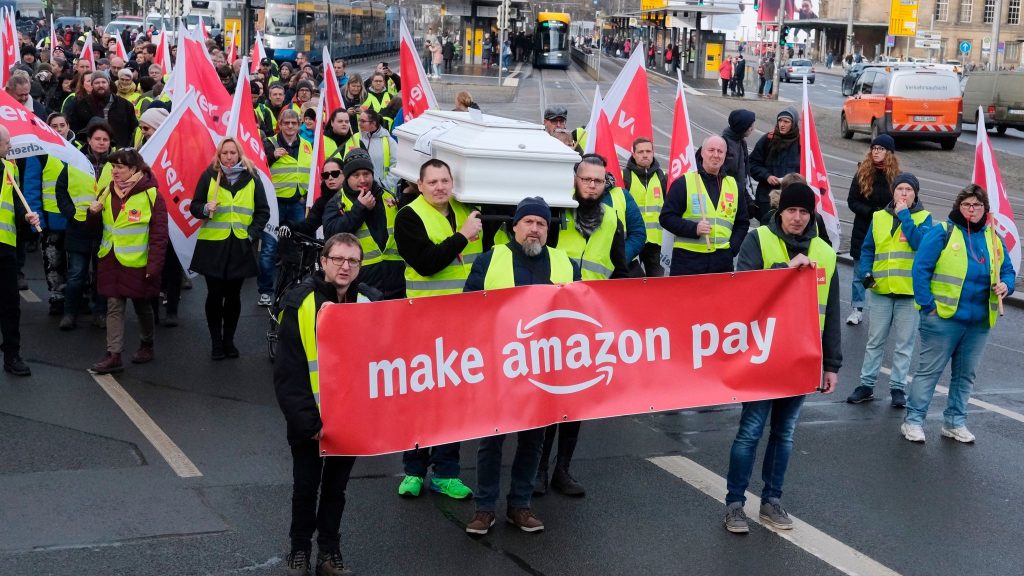
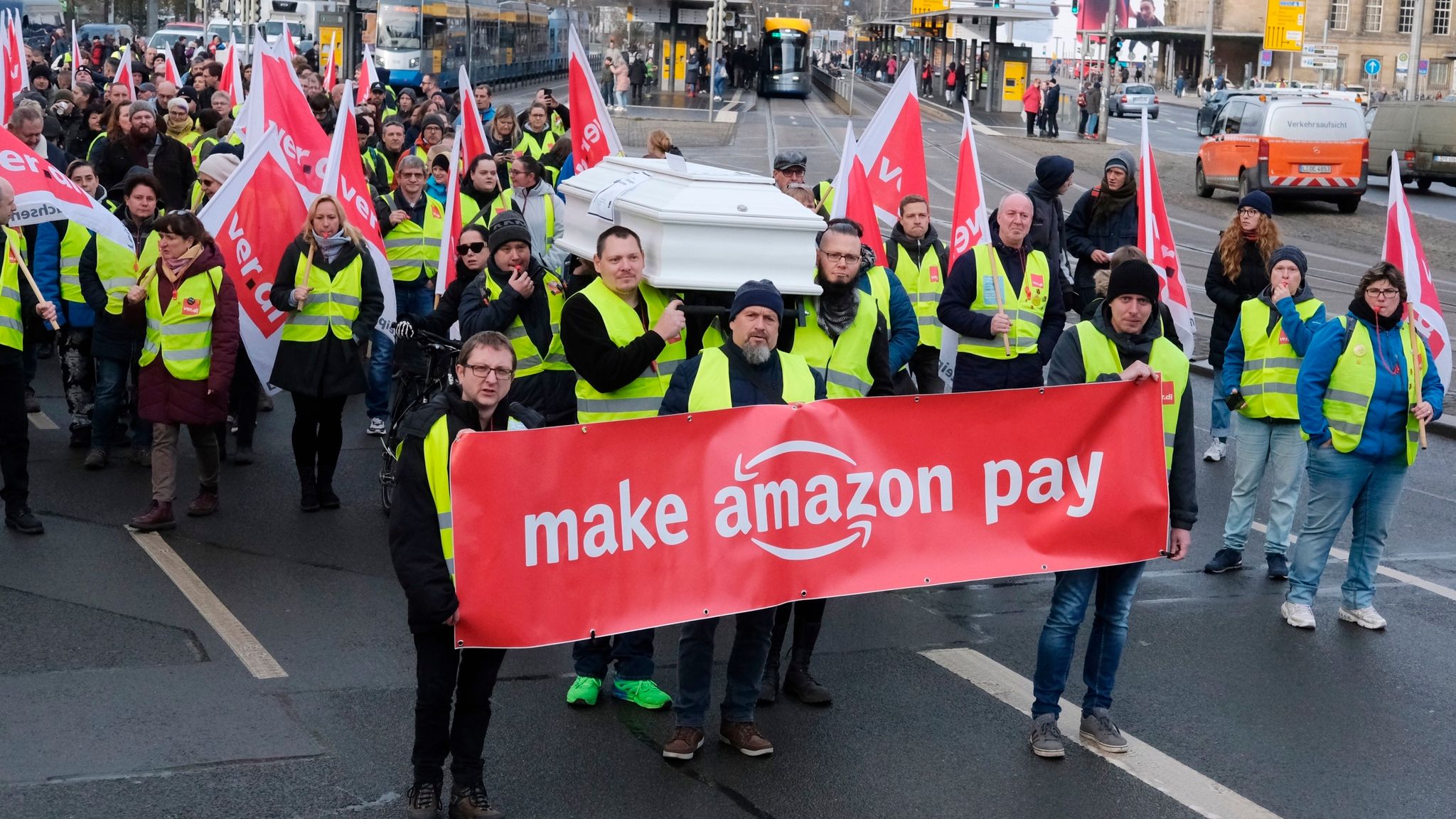
Amazon workers at 11 sites are set to strike on Black Friday, with unions planning protests in more than 20 countries over pay and working conditions.


This coordinated industrial action, which spans from Black Friday through Cyber Monday, marks a significant escalation in the ongoing global tension between e-commerce giant Amazon and its massive, decentralized workforce. The "Make Amazon Pay" campaign, a broad coalition orchestrated by UNI Global Union and Progressive International, seeks to leverage the busiest retail weekend of the year to bring attention to long-standing grievances regarding wage stagnation, labor rights, and the internal monitoring systems used by the company to maintain its high-speed logistics operations.
The Scope of the Global Movement
The strikes and protests are not confined to a single jurisdiction. While the most visible walkouts are occurring at 11 locations across Germany, the ripple effects are expected to reach across more than 20 countries. In addition to Germany, workers and activists in the United States, India, Japan, and Canada are organizing rallies and picketing activities. This international mobilization highlights a growing trend of cross-border labor solidarity within the technology and retail sectors, where workers are increasingly seeking to challenge the standardized operating models of multinational corporations.
The German union Verdi, the primary architect of the local strikes, is demanding that Amazon formally recognize collective bargaining agreements. These agreements are the bedrock of the German retail industry, yet Amazon has historically maintained that it is a logistics company rather than a retailer, a classification that allows it to circumvent traditional retail-sector wage standards. Beyond pay, Verdi is pushing for a specific, binding agreement on workplace health and safety, arguing that the relentless pace of warehouse operations creates a high-risk environment for physical and mental exhaustion.
The Core Dispute: Surveillance and Supervision
A central point of contention in this year’s campaign is the use of digital monitoring technology. Verdi has leveled accusations against the company, alleging that Amazon employs sophisticated digital trackers to monitor staff productivity in real-time. According to the union, these systems track every movement, keystroke, and break, effectively turning employees into components of a high-efficiency machine.
Amazon’s German division has formally denied these claims, asserting that it does not use "trackers" in the manner described by critics. Instead, the company maintains that it utilizes standard inventory management systems necessary to coordinate the flow of millions of products. However, this defense has failed to satisfy workers. In various testimonials and campaign materials, employees have described the oversight as "soul-breaking," noting that the pressure to meet productivity targets often supersedes individual well-being or safety protocols. This disconnect between management’s operational efficiency and the human experience of the workforce remains the most significant hurdle in labor-management relations.
A History of Contention: The UK Perspective
The friction is not unique to Germany. The United Kingdom has become a primary battleground for unionization efforts. A notable milestone in this struggle occurred in July 2024, when the GMB union attempted to secure formal recognition at Amazon’s fulfillment center in Coventry. Despite a rigorous campaign, the union fell just 29 votes short of the threshold required for legal recognition, with 49.5% of the voting workforce in favor.
The narrow loss in Coventry served as both a setback and a catalyst. It demonstrated that while Amazon has been successful in maintaining its non-unionized status in the UK, nearly half of the workforce at a major facility is willing to challenge the status quo. For labor advocates, the Coventry vote was proof of concept that union sentiment is growing, even in the face of what critics describe as an aggressive anti-union posture from the company. Since then, the discourse has shifted toward sustaining long-term organizational efforts, focusing on incremental gains and the normalization of collective bargaining as a viable pathway for workers.

Official Responses and Corporate Strategy
Amazon’s official response to the "Make Amazon Pay" campaign remains consistent with its historical stance. A spokesperson for the company stated that the retailer offers "great pay, great benefits, and great opportunities," emphasizing that it provides a safe, modern working environment for its global workforce of more than 1.5 million people. The company frequently points to its starting wages, which often exceed local minimums, as evidence of its commitment to employee welfare.
However, industry analysts suggest that Amazon’s "great benefits" narrative is increasingly being scrutinized by regulators and the public. As the company’s influence over the global supply chain grows, so too does the scrutiny regarding its labor practices. The company’s preference for individual-based performance metrics—often referred to as "management by algorithm"—is viewed by labor experts as an inherently anti-union structure, as it individualizes the relationship between the worker and the company, effectively discouraging collective negotiation.
Timeline of the "Make Amazon Pay" Escalation
- 2020: The "Make Amazon Pay" coalition is launched, bringing together environmental groups, labor unions, and tax justice activists to demand a more equitable business model.
- 2022-2023: Strikes occur in multiple European countries during Black Friday, marking the beginning of the annual tradition of using the peak shopping period to maximize visibility.
- July 2024: The GMB union narrowly fails to gain recognition in the Coventry, UK warehouse, sparking nationwide debate about labor laws and Amazon’s internal voting processes.
- November 2026 (Current): A coordinated global wave of strikes across 20 countries, with a focus on Germany’s 11 key sites, sets the stage for a contentious holiday shopping season.
Economic and Operational Implications
The timing of these strikes is deliberate. Black Friday and the ensuing Cyber Monday represent the highest-volume sales days of the year for Amazon. Any disruption in logistics—even if isolated to specific warehouses—can cause a cascading effect on delivery timelines. While Amazon has built significant redundancy into its supply chain, allowing it to reroute packages from affected sites to others, sustained, multi-day, and multi-country strikes pose a logistical challenge that can degrade the customer experience.
Furthermore, the optics of the situation present a reputational risk. As consumers become more conscious of the ethical footprint of their purchases, the sight of picket lines and public protests against the world’s largest retailer creates a narrative of "profit over people." This is particularly impactful in markets like Germany, where social partnership and collective bargaining are deeply ingrained in the national corporate culture.
Future Outlook: Toward a New Labor Model?
The persistent nature of these strikes indicates that this is not a passing phase of labor unrest, but rather a structural shift in how workers are engaging with the digital economy. As automation increases, the nature of work in Amazon’s warehouses is changing, leading to new categories of workplace stress and injury. The demand for "health and safety" agreements suggests that workers are not just looking for higher pay, but for a fundamental change in the terms of their employment—a shift from being managed by algorithms to having a voice in the design of their own working conditions.
Whether Amazon will eventually soften its stance on union recognition remains the central question. For now, the company appears committed to its current model, relying on its scale, technological prowess, and high-turnover hiring strategies to mitigate the impact of dissent. However, as the "Make Amazon Pay" coalition continues to gain support from diverse international partners, the cost of resisting unionization may eventually outweigh the cost of engaging in meaningful, systemic reform.
As the current strike wave moves through the peak shopping weekend, the eyes of the retail industry will remain fixed on the picket lines. The outcome of these protests, while unlikely to halt Amazon’s operations entirely, will serve as a bellwether for the future of labor relations in the age of global, tech-driven retail. Whether through regulatory intervention or the pressure of organized labor, the demand for a more humane workplace architecture is becoming an unavoidable component of the global commerce landscape.
Related posts: