How Netflix Transformed the Dallas Cowboys Cheerleaders Into a Global Beauty and Fashion Empire

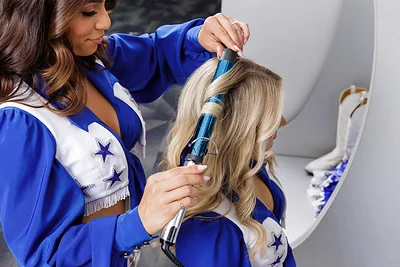
The cultural and commercial landscape surrounding professional cheerleading has undergone a seismic shift, largely catalyzed by the streaming success of Netflix’s docuseries America’s Sweethearts: Dallas Cowboys Cheerleaders. According to former Dallas Cowboys Cheerleaders (DCC) group leader Megan McElaney, the most profound change since the show’s debut is not merely the scale of recognition, but a fundamental evolution in how the public perceives the women wearing the iconic blue-and-white uniform.
Before the Netflix series brought the squad into living rooms worldwide, the DCC brand already possessed a formidable reputation built over decades of high-profile appearances, television specials, and traditional media coverage. However, the streaming platform vaulted the organization onto an entirely different global playing field, granting international audiences an intimate look at the grueling tryouts, personal sacrifices, and athletic prowess required to make the team. Consequently, the public perception has shifted steadily away from outdated stereotypes toward a modern acknowledgment of the squad members as elite performers, rigorous athletes, and multifaceted professionals. This deeper connection has, in turn, opened unprecedented commercial floodgates, drawing a wave of high-end fashion and beauty brands eager to align their marketing strategies with the culture of the squad.
The Mechanics of Streaming Success and Audience Expansion
The quantifiable growth of the DCC audience through digital platforms provides clear evidence of this expanding footprint. When the inaugural season of America’s Sweethearts premiered, it immediately captured global attention, pulling in 2.3 million views worldwide within its first four days on the platform. Viewer engagement sustained and even accelerated into the following week, climbing to 3.7 million views.
This momentum persisted through subsequent iterations. By the time season three debuted in June, it secured the No. 4 spot on Netflix’s global English-language TV chart, generating 3.2 million views in its first six days alone. For major consumer brands looking to capture the attention of demographic cohorts that traditional sports broadcasts may fail to reach consistently, these viewership metrics represent a goldmine. The docuseries successfully engaged audiences interested in dance, reality television, lifestyle aesthetics, and personal human-interest narratives—demographics that frequently overlap with beauty and fashion consumers but do not necessarily identify as traditional football fans.
Bridging Sports, Fashion, and Retail Strategy
Capitalizing on this cross-industry appeal, major fashion and beauty corporations are actively working to translate digital viewership into tangible retail revenue. The economic impact of this convergence is thoroughly documented by industry trackers. According to data from SponsorUnited, fashion and beauty sponsorship spending across the National Football League rose by 16.9% year over year, reaching an impressive $58 million during the 2025–2026 season. Concurrently, the total volume of sponsorship deals within this category grew by 11.7%, totaling 105 active partnerships.
Among all NFL franchises, the Dallas Cowboys consistently dominate this sector. Excluding venue naming-rights agreements, the Cowboys led the league in both fashion and beauty deal volume and total revenue, hauling in more than $8 million in category sponsorship spending for the 2025 season. Furthermore, the standalone social media footprint of the DCC rivals major sports properties, boasting an Instagram following that outpaces the official accounts of 12 full NFL teams.
Major retail partnerships announced recently highlight the aggressive nature of this market expansion. Sally Beauty made headlines by entering into its first-ever professional football partnership, securing the title of official beauty retailer for both the Dallas Cowboys and the DCC. Concurrently, apparel giant Abercrombie & Fitch expanded its preexisting relationship with the organization, broadening its product scope to include dedicated athlete styling, year-round retail activations, and extended merchandise lines.
Retailers Look Beyond Traditional Boundaries
The inclusion of the DCC into retail strategies often serves a dual purpose for corporate partners: driving immediate merchandise sales while spearheading broader brand transformations.
For Sally Beauty, the partnership is deliberately designed to alter consumer perceptions. Chief Marketing Officer Chris Kobus noted that the collaboration directly supports the retailer’s broader evolution and customer-acquisition strategy. The overarching goal is to introduce Sally Beauty to modern consumers who might otherwise cling to outdated notions of the business as a purely functional supplier for professional hair salons.
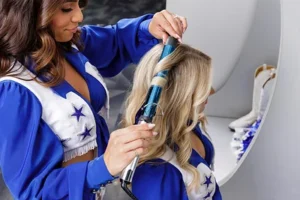
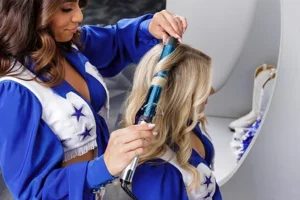
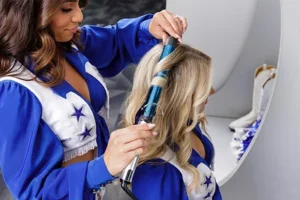
Neil Saunders, managing director of GlobalData Retail, emphasizes the strategic necessity of such moves. There has long been a lingering general perception in the consumer market that Sally is primarily a functional retailer specializing strictly in hair care, Saunders explains. While that narrow definition no longer matches the reality of the company’s inventory, capturing modern shoppers requires proactive measures. Retailers must actively cultivate an identity centered on inspiration and serve as a comprehensive destination across multiple beauty categories. By embedding the DCC into content creation, live appearances, and targeted product demonstrations—ranging from game-day hair styling tutorials to nail design and an expanding men’s hair-care assortment—Sally Beauty aims to bridge that perceptual gap.
Meanwhile, Abercrombie & Fitch has integrated the cheerleaders directly into its operational spaces. The brand installed a branded, custom closet directly inside the DCC locker room at The Star in Frisco, Texas. This exclusive product assortment undergoes monthly refreshes, serving as the functional wardrobe utilized by squad members for their off-field appearances and daily routines. Furthermore, the broader Abercrombie x Cowboys collection benefits from robust distribution channels, reaching consumers globally via NFLShop.com and locally at AT&T Stadium through Abercrombie’s ongoing partnership with Fanatics.
The Academic and Industry Perspective on Cross-Industry Synergy
Industry experts and sports management academics view the integration of the DCC into mainstream retail as a masterclass in demographic diversification. Bob Heere, a professor specializing in sports management at the University of North Texas, points out that the cheerleading squad has historically acted as the Cowboys’ primary bridge to female consumers and the fashion and beauty sectors. The introduction of the Netflix docuseries, however, has exponentially widened that bridge, transforming a regional marketing advantage into an international phenomenon.
Peter Carton, executive director of sport industry engagement and partnerships at Southern Methodist University (SMU), elaborates on this unique value proposition. While the Dallas Cowboys organization as a whole provides brands with enormous reach across traditional sports demographics, the Dallas Cowboys Cheerleaders offer something distinctly different: an authentic transition zone bridging traditional sports fandom with the dynamic worlds of fashion, beauty, entertainment, and lifestyle.
This sentiment is echoed by commercial partnerships that intentionally balance overlapping portfolios. For instance, the organization maintains a high-profile beauty partnership with luxury cosmetics brand Charlotte Tilbury alongside its retail alliance with Sally Beauty. According to academic and industry analysts, these high-profile relationships can coexist harmoniously when the corporate partners are granted clearly defined product categories, distinct promotional parameters, and specialized activation rights. For Charlotte Tilbury, the partnership has traditionally focused on alleviating the financial burden of expensive game-day beauty routines for the squad, while occasionally employing individual cheerleaders to generate authentic game-day digital content.
The Ongoing Debate Over Individual Compensation and Agency
Despite the explosive commercial growth of the DCC brand and its corporate partners, important questions remain regarding how wealth and visibility are distributed among the individual women who generate this cultural value.
Megan McElaney raises critical considerations regarding individual agency and financial compensation within these high-stakes corporate arrangements. While a lucrative, team-level partnership undoubtedly generates broader exposure and opens doors for the squad as a collective unit, McElaney stresses that this visibility does not automatically translate into direct financial compensation for individual cheerleaders from every associated brand deal.
Navigating the modern landscape of digital influence requires personal choices that do not appeal to every squad member equally. While some performers embrace the opportunity to build public-facing personal brands, cultivate social media followings, and secure individual brand ambassadorships, others prefer to maintain clear boundaries between their professional performance duties and their private lives. Not every member of the squad desires to become an active internet influencer, meaning that corporate collaborations must be carefully structured to respect individual comfort levels.
Looking to the Future of Sports Commerce
As corporate spending on sports sponsorships continues to shatter previous records, industry analysts suggest that the definitive metric of success is shifting away from passive metrics. The primary challenge for brands moving forward is no longer merely calculating the number of impressions generated by a logo splashed across stadium signage or digital broadcasts.
The real opportunity lies in successfully converting sponsorship visibility into active consumer commerce. Industry observers like Peter Carton emphasize that future evaluations will focus heavily on engagement depth—specifically tracking how many consumers actively interact with a brand, enter its retail ecosystem, or complete a purchase as a direct result of the partnership.
For the women at the center of this cultural phenomenon, the ultimate measure of success involves more than corporate bottom lines or marketing milestones. As McElaney notes, the most valuable and sustainable partnerships moving forward will be those that genuinely include the performers themselves as active participants and stakeholders, ensuring they are recognized and rewarded for the immense value they bring to the table, rather than simply utilized as visual props for corporate branding.
Related posts: