Global Apparel Industry Leaders Demand Immediate Release of Detained Bangladeshi Union Officials Amid Minimum Wage Unrest

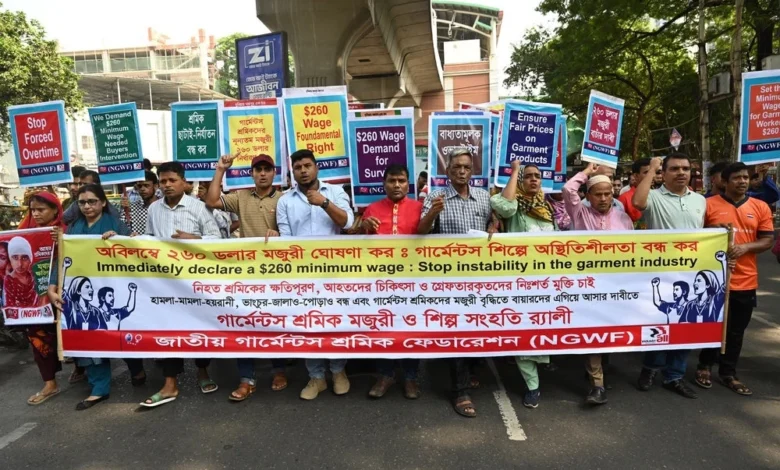
Major international labour and apparel associations have united in vehement condemnation following the arrest of two high-profile trade union leaders in Bangladesh. The detentions have thrown the country’s critical readymade garment (RMG) sector into deeper turmoil, raising profound concerns among global brands and sourcing partners regarding human rights, freedom of association, and the stability of supply chains in one of the world’s leading apparel-exporting hubs.
The arrests of Sultana Begum and MD Elias—key figures representing tens of thousands of garment workers—occurred earlier this week. In response, the Fair Labour Association (FLA) and the American Apparel and Footwear Association (AAFA) issued a joint statement demanding their immediate and unconditional release. The international bodies warned that such actions not only jeopardize ongoing wage negotiations but also severely undermine Bangladesh’s standing as a reliable and responsible partner in the global fashion ecosystem.
The unfolding crisis highlights a volatile intersection of economic pressure, worker welfare, and governmental oversight. With international stakeholders watching closely, the situation threatens to destabilize an industry that serves as the economic backbone of Bangladesh, accounting for the vast majority of its export earnings and employing millions of workers, predominantly women.
Background Context of the Dispute
The roots of the current crisis trace back to escalating frustrations over compensation and the soaring cost of living in Bangladesh. For months, garment workers have expressed deep dissatisfaction with prevailing wages, which they argue fail to cover basic survival needs such as food, housing, healthcare, and education for their families.
The baseline friction intensified significantly in late October, when widespread protests and worker unrest erupted across major industrial belts, including Dhaka, Gazipur, and Ashulia. Hundreds of garment factories were forced to suspend operations temporarily as demonstrations turned volatile, leading to clashes with law enforcement, property damage, and subsequent crackdowns on labour advocates.
At the heart of the labor dispute is a vast discrepancy between worker expectations and employer proposals. Union leaders and federations have demanded a monthly minimum wage of BDT32,000 (approximately $250 USD). This represents a substantial increase from the current baseline of BDT13,000 (approximately $105 USD) per month, a rate established during previous wage board reviews that labour advocates claim has been entirely eroded by domestic inflation and currency fluctuations.
Conversely, factory owners and manufacturing associations have resisted the demand, pointing to thin profit margins, rising utility costs, global economic uncertainties, and aggressive pricing pressures from international fashion brands. Reports indicate that employers have weighed proposals offering a minimum wage of around BDT14,000 per month—a figure that union representatives have rejected outright as inadequate and insulting.
Chronology of Events: From Protests to Detention
The sequence of events leading to the recent arrests highlights a deteriorating environment for labour rights advocacy in Bangladesh:
- Late October: Garment workers launch widespread protests across key industrial hubs, demanding an increase in the monthly minimum wage to BDT32,000 to combat surging inflation.
- Early November: Worker unrest prompts temporary closures of hundreds of factories. International labour advocacy groups, including the Clean Clothes Campaign, urge global fashion brands to support worker demands and commit to absorbing higher sourcing costs.
- Mid-November: In an effort to defuse tensions, the Bangladeshi government announces the formation of a reconstituted Minimum Wage Board, scheduling a pivotal meeting in Dhaka for November 16 to deliberate on proposals.
- Shortly Before the Scheduled Board Meeting: Sultana Begum, president of the Green Bangla Garments Workers Federation (GBGWF), and MD Elias, the organization’s general secretary, participate in an online webinar discussing the garment workers’ calls for a revised wage structure.
- This Week: Local reports confirm that both Begum and Elias have been arrested following their participation in the online discussion. Concurrently, the scheduled meeting of the Minimum Wage Board is postponed with minimal official explanation, stalling the formal negotiation process.
- Present: The AAFA, FLA, and various international human rights and labour organisations issue sharp rebukes, demanding the immediate release of the detained union officials and a return to transparent, peaceful dialogue.
Profiles of Detained Leadership
The detention of Sultana Begum and MD Elias targets prominent and influential voices within the Bangladeshi labour movement. Begum serves as the president of the Green Bangla Garments Workers Federation (GBGWF), a pioneering, woman-led union federation that represents more than 65,000 garment workers across the nation. Under her leadership, the GBGWF has been vocal in advocating for gender equality in the workplace, safer factory conditions, and fair compensation commensurate with the nation’s economic development.
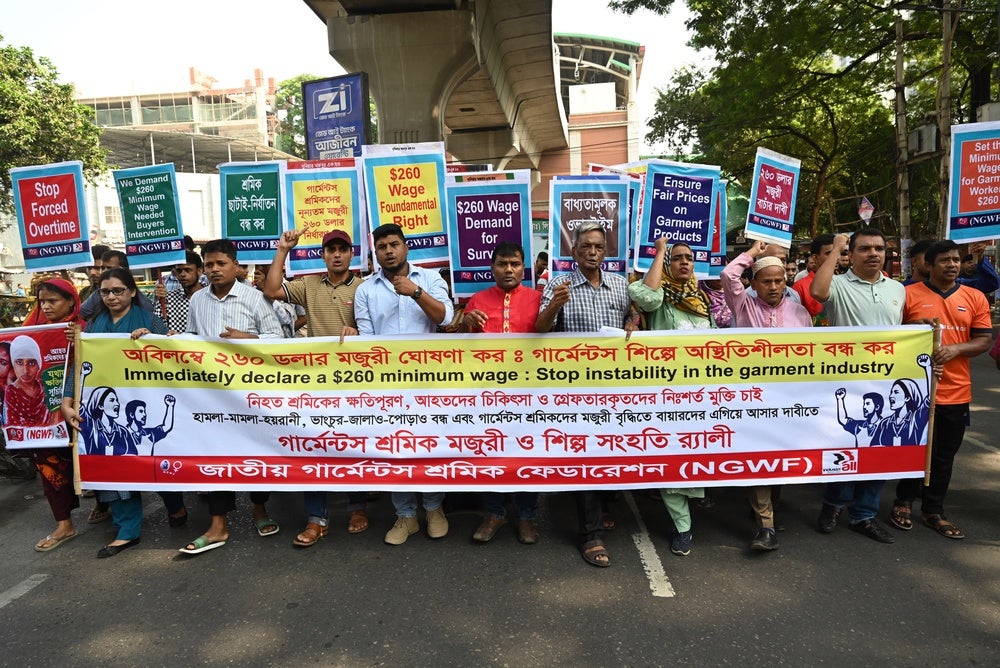
MD Elias, acting as the general secretary of the GBGWF, has worked closely with Begum to organize workers, negotiate with factory management, and liaise with international labour rights organizations. Their arrests are viewed by domestic and international observers not merely as isolated law enforcement actions, but as a calculated attempt to silence organized labour and suppress collective bargaining efforts during a critical negotiation cycle.
Official Reactions and International Condemnation
The joint statement released by the AAFA and the FLA serves as a stern rebuke to both the Bangladeshi government and manufacturing stakeholders.
“We have urged an expedient and peaceful negotiation of a fair minimum wage. The arrest and detention of these union officials severely disrupt that process and damage the reputation of Bangladesh as a responsible sourcing partner,” the AAFA and FLA stated.
The associations further emphasized the fundamental importance of democratic workplace rights: “As the government of Bangladesh considers changes to the minimum wage, we urge the government to respect the right of workers and trade unions to freedom of association and their calls for a fair wage that allows garment workers to support themselves and their families.”
Underscoring a zero-tolerance approach toward intimidation, the groups added: “We unequivocally condemn violence, threats, and intimidation against workers and union officials. We urge the government and all parties to publicly join us in this condemnation, both during the minimum wage review and after.”
Parallel to these statements, international advocacy groups like the Clean Clothes Campaign have placed direct pressure on Western fashion brands and retailers that source their apparel from Bangladesh. These entities are being urged to break their silence by publicly endorsing the BDT32,000 wage demand and providing contractual guarantees that future purchasing prices will be adjusted upward to absorb the increased labour costs, thereby preventing factory owners from shifting the financial burden downward onto the workers.
Economic and Sourcing Implications
The ongoing crisis carries profound implications for the global apparel supply chain. Bangladesh stands as the second-largest apparel exporter in the world, surpassed only by China, supplying garments to many of the world’s most recognizable high street brands, fast-fashion giants, and luxury labels.
For international brands, sourcing from Bangladesh has historically offered cost-effective production at scale. However, prolonged social unrest, factory shutdowns, and heavy-handed government interventions introduce critical operational risks. Global brands increasingly face pressure under mandatory human rights due diligence legislation in Europe and growing consumer scrutiny in North America to ensure that their supply chains are ethical, transparent, and free from labour abuses.
If the Bangladeshi government and manufacturing associations continue to suppress peaceful labour representation and fail to negotiate a realistic, living minimum wage, the country risks facing sustained boycotts, reputational damage, and the diversion of orders to competing manufacturing nations such as Vietnam, Cambodia, or India. Conversely, a constructive resolution that respects worker rights and establishes a fair wage could reinforce Bangladesh’s long-term viability as a modern, progressive sourcing destination.
As the situation continues to evolve, international observers, human rights advocates, and global retail executives will maintain intense scrutiny on Dhaka, waiting to see whether authorities will heed international calls for justice, release the detained union leaders, and return to the negotiating table in good faith.