Sophisticated Negative SEO Attacks Target Luxury Jewelry E-commerce Through Typosquatting Exploits

The digital landscape for high-end luxury jewelry retailers is facing a sophisticated new form of cyberattack that blends traditional typosquatting with aggressive negative Search Engine Optimization (SEO) tactics. Unlike standard phishing attempts or credit card fraud, this emerging threat is designed to undermine the search engine visibility and brand authority of established jewelers by exploiting the way modern algorithms interpret brand signals. Industry experts from Opulent Jewelers, a prominent retailer in the luxury pre-owned market, have documented a significant surge in these coordinated attacks, which began intensifying in late 2024 and have continued into early 2025.
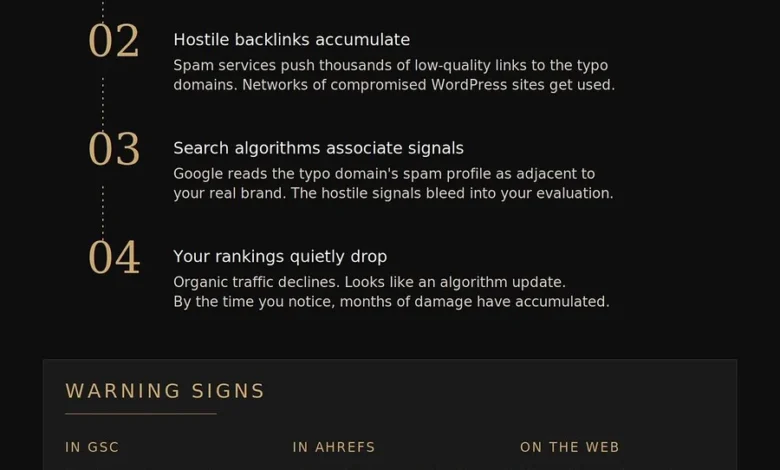
These attacks do not follow the traditional playbook of setting up a fake storefront to steal customer credentials. Instead, attackers are registering domain names that are minor misspellings of legitimate brands—known as typosquatting—and then inundating those empty domains with thousands of spam-heavy, toxic backlinks. This strategy creates a hostile "backlink profile" that search engines like Google may inadvertently associate with the legitimate brand, leading to a precipitous drop in organic search rankings and a subsequent loss in revenue.
The Evolution of Typosquatting in the Luxury Sector
Historically, typosquatting was a relatively straightforward form of cybercrime. An attacker would register a domain such as "Guggi.com" instead of "Gucci.com" and host a page designed to trick users into entering sensitive information. However, the new pattern identified in the luxury jewelry space is far more patient and technical. The typosquatted domains often host no content at all; they sit as "parked" pages with zero outbound links.
The malicious intent lies in the inbound link profile of these fake domains. Attackers utilize automated infrastructure—including link-spam services, networks of compromised WordPress sites, and aged-domain marketplaces—to build a massive volume of referring domains to the typosquatted site within a very short window. Because search engines increasingly use "entity-based" search, where they try to understand the broader ecosystem around a brand name, the toxic signals from a "near-match" domain can "bleed" into the real brand’s reputation.
According to technical analysis provided by the owner of Opulent Jewelers, search engines do not merely look at direct links to a domain. They evaluate the broader signal landscape. If a domain that is one letter off from a legitimate brand is suddenly associated with thousands of spam-flagged sources, the algorithm may flag the entire brand entity as being involved in manipulative link schemes, leading to a "guilt by association" penalty that suppresses the legitimate site’s rankings.
Chronology of the 2024-2025 Negative SEO Surge
The timeline of these attacks suggests a highly coordinated effort rather than isolated incidents of mischief.
In the third quarter of 2024, several luxury jewelry retailers began noticing anomalies in their Google Search Console reports. Initially, these were dismissed as routine web spam, which is common for high-authority sites. However, by December 2024, the pattern became undeniable. Multiple retailers reported that hundreds of new referring domains were appearing in their reports weekly. None of these domains had any relevance to the jewelry industry, and many featured anchor text that combined the jeweler’s brand name with high-competition commercial keywords.
By early 2025, the attacks had transitioned from simple link-blasting to a multi-layered infrastructure. Attackers were found to be using "aged domains"—older websites that already had some historical authority—to host the initial waves of spam, making the links appear more "legitimate" to automated filters before the eventual transition to the typosquatted targets. This evolution suggests that the actors behind these campaigns are well-funded and possess a deep understanding of SEO mechanics.
Why Luxury Jewelry is a Primary Target
The targeting of luxury jewelry e-commerce is driven by specific economic and technical factors that make the industry uniquely vulnerable.
First, the average order value (AOV) in the luxury jewelry sector is exceptionally high. In the pre-owned market, transactions for items like Cartier Love bracelets or Van Cleef & Arpels Alhambra necklaces frequently reach four or five figures. Consequently, even a minor fluctuation in search engine results page (SERP) positions can have a massive impact on the bottom line. A 5% or 10% drop in organic traffic for a jeweler selling $20,000 watches represents a significant loss in monthly revenue compared to a high-volume, low-margin retailer.
Second, the keyword landscape for authenticated luxury goods is highly competitive but contains a limited number of authoritative players. Terms such as "authenticated pre-owned Van Cleef" carry immense commercial intent. By pushing a legitimate competitor down just one or two positions on the first page of Google, an attacker can effectively redirect millions of dollars in potential annual search traffic toward other competitors or their own affiliate networks.
Third, the nature of the jewelry business relies heavily on trust and provenance. Legitimate retailers invest heavily in content that proves their expertise, such as authentication guides and detailed product histories. This high-quality content is exactly what the attackers seek to undermine. By polluting the brand’s search signals, they attack the very foundation of digital trust that these retailers have spent years building.
Technical Indicators: How Retailers Can Detect an Attack
For jewelers managing their own e-commerce platforms, the symptoms of a negative SEO attack are often mistaken for algorithm updates or seasonal shifts in consumer behavior. However, there are specific technical markers that indicate a coordinated assault.
In Google Search Console, retailers should monitor for sudden spikes in referring domains that have no logical connection to their marketing efforts. A particularly alarming sign is the appearance of new URLs in the "Links to your site" report that use anchor text matching the brand name plus commercial suffixes, such as "[Brand Name] discount" or "buy [Brand Name] cheap." Geographic mismatches are also a key indicator; a US-based jeweler seeing a sudden influx of links from Eastern European or Southeast Asian domains without a corresponding marketing campaign in those regions is likely under attack.
Using third-party SEO tools like Ahrefs or Semrush, retailers can identify referring URL paths that contain randomized hash strings or auto-generated patterns. Another hallmark of these attacks is the use of compromised sites that have an extremely high count of unrelated outbound links—sometimes in the thousands—pointing to various unrelated industries.
On the typosquatting side, the clearest signal is the registration of multiple variants of a brand name (e.g., missing a letter, doubling a consonant) that host no content but show rapid backlink growth. This combination has no legitimate business purpose and is a definitive sign of hostile intent.
Defensive Strategies and Legal Remedies
Defending against a sophisticated negative SEO attack requires a multi-layered approach involving technical maintenance, platform reporting, and legal action.
The primary technical defense is the consistent maintenance of a Google Search Console disavow file. This tool allows webmasters to tell Google’s algorithm which referring domains should be ignored when evaluating the site’s ranking. While Google has stated in recent years that its AI is better at automatically ignoring spam, the documented "bleed-over" effect from typosquatted domains suggests that manual intervention remains necessary for sites under active attack. Some retailers have been forced to update these files weekly, maintaining lists of thousands of malicious domains.
Beyond technical fixes, retailers have legal avenues through the Uniform Domain-Name Dispute-Resolution Policy (UDRP) and the Anticybersquatting Consumer Protection Act (ACPA). The UDRP is a process managed by the World Intellectual Property Organization (WIPO) that can result in the transfer or cancellation of a typosquatted domain. While effective, the process typically takes 60 to 75 days and requires the jeweler to have established trademark rights.
For more severe cases, the ACPA provides a federal court remedy in the United States, allowing for statutory damages ranging from $1,000 to $100,000 per domain. While more expensive and time-consuming than the UDRP, the threat of significant financial penalties can change the risk-reward calculation for attackers. Experts emphasize that having a federally registered trademark is the single most important factor in strengthening a legal case against typosquatters.
Industry Implications and the Path Forward
The rise of typosquatting-linked negative SEO represents a shift in the "arms race" between search engines and bad actors. It exploits the architectural reality of how search engines build trust. As long as brand association signals and link velocity remain core components of search algorithms, the potential for manipulation exists.
For independent and boutique jewelers, the resource asymmetry is a major concern. Attackers can deploy automated scripts for a few hundred dollars, while the defender must invest in expensive monitoring tools, SEO consultants, and legal counsel. This "asymmetric warfare" puts smaller retailers at a distinct disadvantage, potentially leading to a consolidated market where only the largest players can afford to defend their digital footprint.
However, the luxury jewelry industry is beginning to respond through increased awareness and information sharing. Digital security experts suggest that the most effective protection is a proactive stance: registering common misspellings of a brand name before attackers can, maintaining a rigorous backlink monitoring schedule, and ensuring all trademarks are federally registered and up to date.
As search engine algorithms continue to evolve, there is hope that AI-driven detection will become more adept at identifying the specific "fingerprint" of a typosquatting negative SEO campaign. Until then, the burden of defense remains with the brands themselves. The consensus among industry leaders is that the era of "set it and forget it" SEO is over; in the high-stakes world of luxury e-commerce, digital vigilance is now as essential as a physical vault.