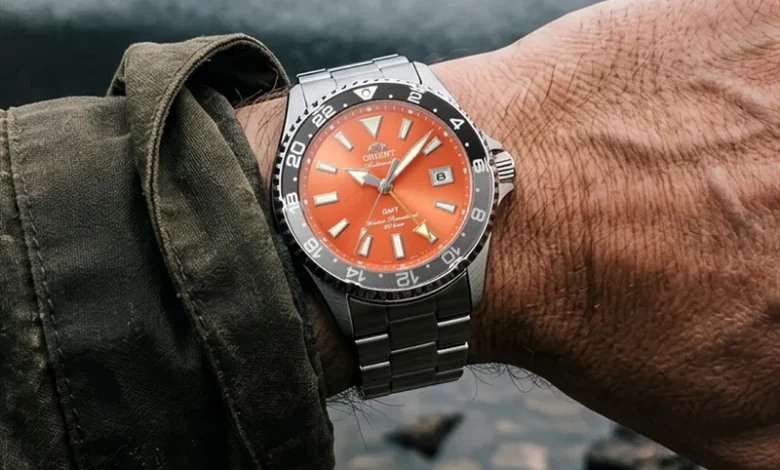
The Japanese watchmaker Orient, a subsidiary of the Seiko Epson Corporation, has officially expanded its most popular dive watch collection with the introduction of the Orient Kamasu GMT. This release marks a significant evolution for the brand’s "Kamasu" line—named after the Japanese term for barracuda—which has long been considered a benchmark for value in the entry-level mechanical watch market. By integrating a GMT complication into its flagship diver, Orient is targeting the growing demographic of horology enthusiasts who require dual-time functionality without moving into the luxury price tier.
Evolution of the Kamasu Lineage
The original Orient Kamasu, launched in 2019, quickly established itself as a primary competitor to entry-level divers from Seiko and Citizen. Its defining characteristics were an accessible price point, an in-house automatic movement, and a distinctive, sharp-edged dial design that earned it the "toothy" moniker. For over five years, the Kamasu remained a standard three-hand automatic, serving as the cornerstone of Orient’s sports watch catalog.
The introduction of the GMT iteration follows a broader industry trend where established dive watch platforms are being retrofitted with additional complications. Market data suggests that GMT (Greenwich Mean Time) watches have seen a surge in popularity, driven by increased global travel and a consumer preference for versatile "go-anywhere, do-anything" timepieces. The new Kamasu GMT effectively bridges the gap between a rugged, 200-meter water-resistant diver and a functional travel watch.
Technical Specifications and Engineering
The new model features a significant increase in physical dimensions compared to its predecessor. The case diameter has been expanded to 42.8mm, representing a nearly 1mm increase over the original Kamasu. The thickness is measured at 13.4mm, with a lug width of 22mm, establishing a presence on the wrist that favors those with average to larger-sized wrists.
At the heart of the timepiece is the in-house mechanical caliber F6P22 automatic movement. This movement is a workhorse within the Orient portfolio, offering the convenience of hacking—the ability to stop the seconds hand for precise synchronization—and manual winding capabilities. The power reserve is rated at 40 hours, consistent with the brand’s standard for this price category. Notably, the timepiece features a solid caseback rather than an exhibition window, prioritizing structural integrity and water resistance over aesthetic transparency. The watch is topped with a scratch-resistant sapphire crystal, a standard upgrade that has become expected at this price point.
Market Positioning and Pricing Strategy
Orient has positioned the Kamasu GMT at a retail price of $495, though current promotional incentives allow the unit to be acquired for $445.50 using the code "SAVEBIG." This pricing strategy places it in direct competition with microbrand GMTs and established entry-level offerings from larger conglomerates.
The market for sub-$500 GMT watches has become increasingly crowded. Historically, mechanical GMTs were reserved for the luxury segment due to the complexity of the gear train required to track a second time zone independently. However, the development of more efficient, mass-produced GMT movements has allowed brands like Orient to democratize this feature. By leveraging its vertical integration—Orient manufactures its own movements, cases, and dials—the company maintains a competitive advantage that few other brands can replicate at this specific price point.
Design Considerations and Aesthetic Choices
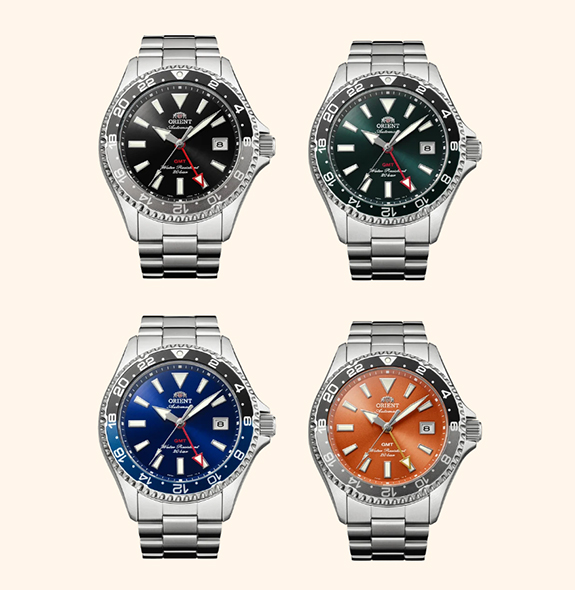
The visual identity of the Kamasu GMT remains true to its roots, maintaining the sharp, angular indices that give the watch its "barracuda" reputation. However, the introduction of a two-tone bezel option—specifically the black and gray configuration—indicates a shift toward more contemporary color palettes. The bezel insert serves as the primary indicator for the 24-hour GMT scale, a departure from the traditional elapsed-time bezels found on standard divers.
Design analysts have noted that the 42.8mm diameter is a deliberate choice. While the industry has seen a general trend toward smaller case sizes (38mm to 40mm) over the last three years, Orient appears to be banking on the expectation that dive watch enthusiasts prefer a substantial, tool-like aesthetic. The increased diameter also provides better legibility for the GMT hand, which is a critical functional requirement for international travelers.
Broader Industry Implications
The release of the Kamasu GMT reflects a broader transition within the watch industry where "utility" is the primary driver of new product development. As quartz and smartwatch adoption remains high, the mechanical watch industry has leaned heavily into "value-add" features. The GMT complication is particularly relevant because it offers tangible, everyday utility that appeals to both novice collectors and experienced enthusiasts.
Furthermore, the longevity of the Kamasu series demonstrates the importance of "platforming" in modern watch manufacturing. By using a proven chassis and upgrading the movement and dial features, Orient is able to minimize research and development costs while maximizing the brand equity built over the previous half-decade. This "evolutionary" approach to design is a hallmark of the most successful watch brands, allowing for a consistent brand language that resonates with long-term customers.
Chronology of the Launch
- 2019: The original Orient Kamasu launches, setting a new standard for value-oriented dive watches.
- 2020–2023: The Kamasu line receives several dial color variations, solidifying its status as a best-seller in the entry-level mechanical space.
- 2024: Industry rumors circulate regarding the integration of GMT movements into the brand’s popular sports lines.
- Late 2026: Orient officially unveils the Kamasu GMT, featuring the F6P22 movement and an updated 42.8mm case profile.
- Q4 2026: Product distribution begins globally, accompanied by a targeted promotional campaign to capture the holiday market.
Official Stance and Consumer Feedback
While Orient has not issued a formal press statement regarding the design philosophy behind the size increase, industry insiders note that the brand is highly responsive to community feedback. The decision to retain the sapphire crystal and the 200-meter water resistance rating is a direct response to customer demands for durability.
Preliminary reactions from the watch community suggest that while the size may be a deterrent for those with wrists under 6.5 inches, the overall package represents a high degree of "bang for the buck." The watch is currently being evaluated by independent reviewers to determine how the F6P22 movement performs in real-world conditions, particularly regarding its accuracy and the smoothness of the GMT hand adjustment.
Future Outlook for the Collection
The success of the Kamasu GMT will likely dictate whether Orient chooses to expand its GMT offerings into its other collections, such as the Mako or Ray lines. If sales metrics meet expectations, it is plausible that the brand will continue to refine its GMT offerings, perhaps exploring thinner profiles or alternative bracelet designs in future iterations.
For the average consumer, the Kamasu GMT serves as a reliable, functional, and aesthetically pleasing entry point into the world of mechanical travel watches. By offering a high-performance movement in a robust, water-resistant housing, Orient continues to occupy a unique space in the watch market—a space that prioritizes objective value over luxury branding. As the market continues to evolve, the Kamasu GMT stands as a testament to the enduring appeal of the mechanical tool watch, proving that even a well-established design can find new life with the right technical enhancements.