Planning a wedding is frequently celebrated as one of the most exciting milestones in a couple’s life, yet it is simultaneously recognized as one of the most financially complex and stressful undertakings a household can manage. As couples look ahead to matrimonial celebrations in 2024, 2025, and subsequent years, the economic realities of hosting large-scale events demand meticulous organization. Rising inflation, fluctuating vendor rates, and the sheer volume of logistics required to orchestrate a modern wedding have made financial transparency and structured planning more critical than ever before. To address these growing pressures, industry platforms have introduced comprehensive digital resources designed to transition couples away from chaotic paperwork and toward streamlined, data-driven financial management.

The Anatomy of Wedding Inflation and Financial Stress

In recent years, the wedding industry has experienced a significant shift in cost structures. According to recent economic analyses within the events sector, the average cost of hosting a traditional wedding has climbed steadily, driven by increased demand for venues, specialized catering, and professional multimedia services. For many engaged couples, the initial phase of wedding planning begins with unrealistic financial expectations, often leading to budget overruns before invitations are even printed.

Financial planners and bridal consultants consistently emphasize that the root cause of wedding-related stress is not necessarily a lack of funds, but rather a lack of tracking mechanisms. Without a centralized system to monitor estimated costs versus actual expenditures, couples frequently find themselves blindsided by hidden fees, service charges, and gratuities. The integration of digital tools, specifically customizable spreadsheets compatible with Google Sheets and Microsoft Excel, has emerged as the gold standard for modern couples seeking to maintain absolute control over their financial parameters.

Option 1: The Essential Free Wedding Budget Spreadsheet

For couples seeking a straightforward, no-nonsense approach to financial tracking, foundational templates provide an accessible entry point into budget management. Developed from the personal planning framework utilized by industry experts Elizabeth and Zee, a free wedding budget spreadsheet offers a practical solution for foundational cost estimation.

This resource is engineered to accompany couples from the earliest stages of engagement through the final payment deadlines. By utilizing structured columns for estimated costs, actual expenditures, and payments rendered, users can instantly assess their financial standing at any given moment. Furthermore, the inclusion of a dedicated vendor tracking section ensures that contractual obligations and payment schedules are seamlessly aligned with budgetary allocations. Available at no cost for both Google Sheets and Excel, this tool eliminates financial barriers to entry, ensuring that every couple—regardless of their overall spending limit—has access to professional-grade organizational frameworks.

Option 2: The Comprehensive Premium All-in-One Wedding Planner

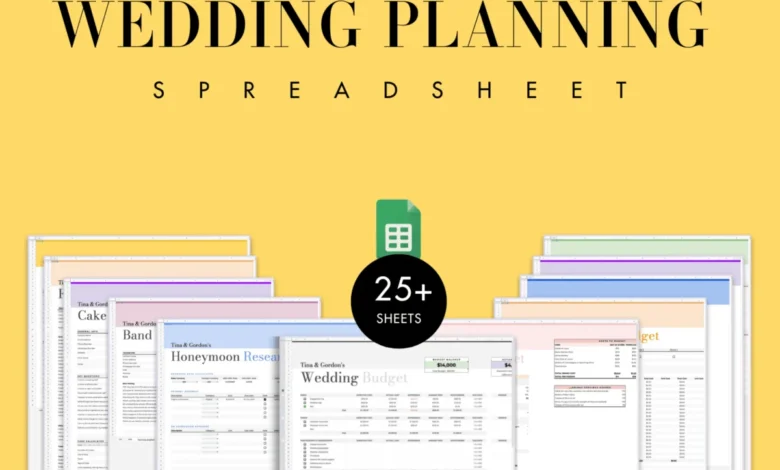
Recognizing that budget management is intrinsically linked to broader logistical coordination, industry developers have expanded upon basic financial trackers to introduce comprehensive, all-in-one planning suites. Available through specialized platforms such as The Creations, the Premium Wedding Planning Spreadsheet represents an evolution in DIY event management. Originally valued at $105, the suite has been made available at a promotional price point of $69 through the end of September, offering an economical alternative to traditional, high-priced human wedding coordinators.

Unlike single-purpose budgeting tools, this premium offering consolidates more than 25 custom-designed sheets into a single, cohesive workbook. The architecture of the spreadsheet reflects extensive research into every micro-decision required during the wedding planning lifecycle. Couples are provided with specialized calculators designed to tackle notoriously difficult estimation tasks, such as alcohol and beverage consumption metrics, catering overhead, floral arrangements, and custom wedding cake expenditures.

Chronology and Implementation of Planning Tools

The successful deployment of a wedding planning spreadsheet relies on a phased chronological approach. Industry best practices suggest that financial planning should commence immediately following the engagement, setting a realistic ceiling based on personal savings and family contributions.

During the initial 12 to 18 months prior to the event, couples are advised to utilize venue research, vendor comparison tabs, and preliminary guest list modules. As the timeline progresses toward the 6-month mark, focus shifts dynamically toward tracking formal invitations, seating arrangements, and detailed timeline creation. In the final weeks leading up to the ceremony, the spreadsheet serves as an operational command center, housing emergency kit checklists, weekend itineraries, and honeymoon logistics, including packing lists for both brides and grooms.

Data-Driven Analysis and Industry Implications

The broader implications of utilizing centralized digital planners extend beyond mere convenience; they represent a fundamental shift in consumer behavior within the multi-billion-dollar wedding industry. As couples face tighter economic constraints, transparency and accountability have become paramount. Tools that aggregate vendor pricing research—covering everything from videographers and photographers to live wedding bands—empower consumers to negotiate effectively and avoid predatory pricing structures.

Moreover, the availability of specialized modules, such as wedding registry gift trackers and rehearsal dinner planners, mitigates the risk of oversight during high-stress periods. By centralizing data, couples reduce the likelihood of miscommunication with vendors, minimize waste in areas like catering and bar service, and protect their mental health throughout the engagement period.

Official Responses and Expert Perspectives

Industry insiders and lifestyle commentators have universally praised the democratization of professional planning resources. Elizabeth, co-founder of the initiative behind these templates, noted that the motivation stems from firsthand experience with the chaotic nature of event planning. "We wanted to build something that reflects the actual granularity of a modern wedding," she explained, emphasizing that detail-oriented design is the ultimate antidote to planning anxiety.

Financial advisors echo these sentiments, pointing out that establishing a clear budget early in a marriage sets a positive precedent for joint financial management long after the wedding day has concluded. By treating the wedding as the first major financial project of a combined household, couples develop collaborative problem-solving skills that benefit their long-term financial health.

Conclusion and Availability

As the wedding season for 2024 and 2025 reaches peak planning velocity, the demand for reliable, adaptable organizational tools remains at an all-time high. Whether couples opt for the streamlined efficiency of the free basic budget spreadsheet or the expansive capabilities of the 25-in-one premium planning suite, the availability of these resources ensures that financial oversight is within reach of every engaged pair. With promotional pricing for the premium package active through the end of September, accessibility to professional-grade event management has never been more attainable.